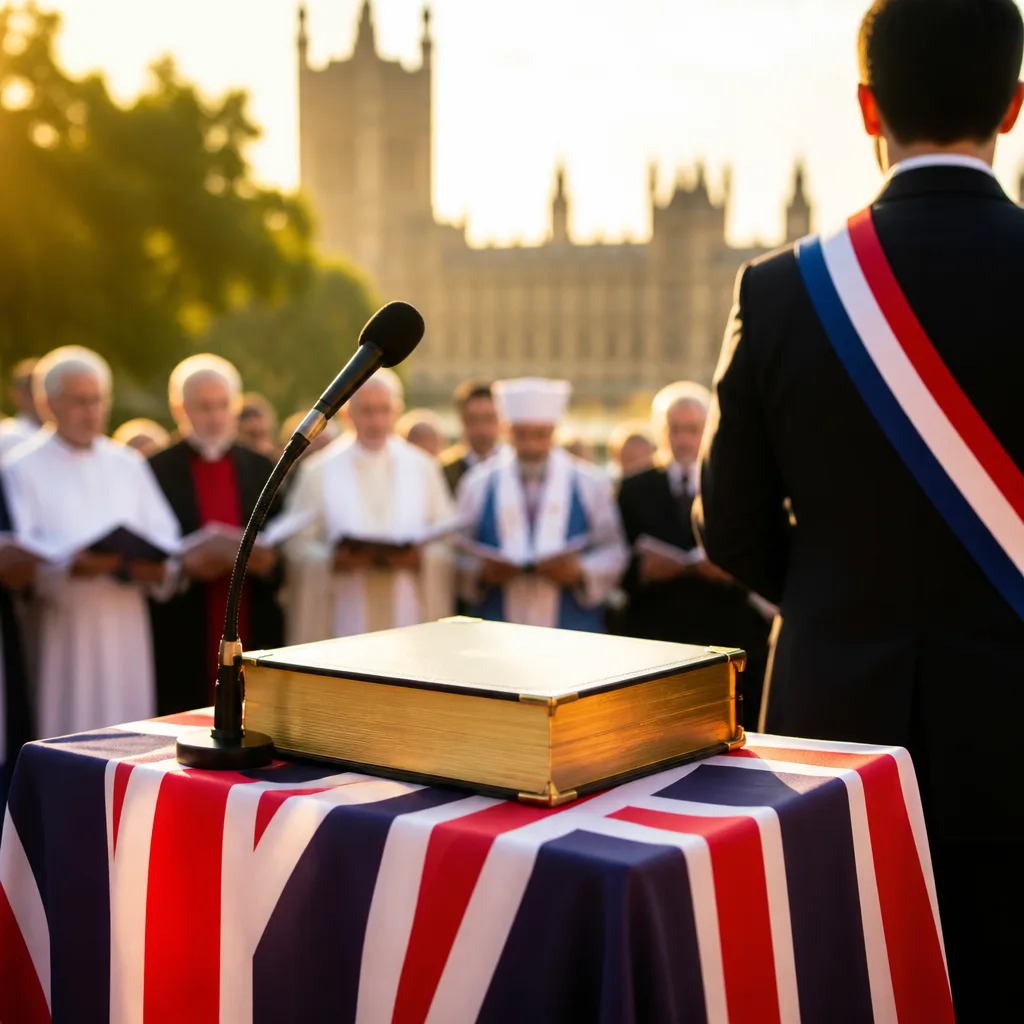
Prayer and religious symbolism have become a conspicuous element of the public exercise of presidential authority in Kenya under William Ruto, prompting debate about how far the personal faith of an officeholder should shape state institutions and political legitimacy.
Analysts writing for the independent platform The Elephant argue that while religion has long been woven into Kenya’s public life, the current presidency stands out for the prominence of the president’s born‑again identity in political narrative and ritual. That visibility appears across personal biography, formal engagements with faith leaders and the use of religious imagery around state performance.
Faith as a frame for political biography
The argument advanced in the source material is twofold. First, religion is not new to Kenya’s political arena. Churches have historically provided social services, organised communities and at times have either bolstered or challenged governments. Second, what is distinctive now is the way in which the president’s evangelical credentials are repeatedly presented as part of the story of his rise and as a component of his claim to public authority.
This has translated into several observable developments. Public prayers and religious ceremonies have featured more regularly around the presidency. The administration has maintained visible and frequent contact with evangelical and Pentecostal leaders. And there have been suggestions — discussed in public fora — of formalising religious presence within state spaces. Each of these prompts questions about influence, patronage and the appropriate boundary between private conviction and public office.
Practical consequences and contested boundaries
Those consequences are practical as well as symbolic. The source indicates financial links between political actors and churches, which critics say raise concerns about access and influence. Proposals to embed religious institutions in state contexts would test constitutional and institutional arrangements that separate personal faith from official functions.
- Public ritual: Prayer and religious symbolism have become part of presidential events.
- Access to power: Evangelical and Pentecostal leaders have maintained close relationships with the presidency.
- Financial ties: Monetary connections between politicians and religious bodies have attracted scrutiny over patronage.
- Institutional questions: Debates over proposals to create formal religious roles within state spaces are ongoing.
None of these developments, the source cautions, equates to a theocracy. Churches in Kenya do not form a monolithic political bloc, and the presence of faith in public life remains varied. Nonetheless, the pattern raises a sharper question about how democratic legitimacy is constituted when religious authority becomes part of the apparatus of power.
| Area of concern | Observed development |
|---|---|
| Symbolism | Prayer incorporated into presidential ceremonies |
| Relationships | Regular engagement with evangelical and Pentecostal leaders |
| Finance | Reported monetary links between politicians and churches |
| Institutional debate | Proposals to situate religious institutions within state spaces |
Scholars and commentators note that the deeper issue is not participation by faith groups in politics — which is a longstanding feature of Kenyan public life — but the extent to which religious authority begins to confer an additional claim to political legitimacy on officeholders. That becomes especially sensitive where religious leaders enjoy privileged access to power or where resources flow between church and state actors.
The discussion also has implications for pluralism. Kenya’s religious landscape is diverse, and the assertion of a particular religious identity at the heart of state performance can generate friction with communities who feel excluded. How the executive, legislature and judiciary respond to such tensions will shape the durability of institutional safeguards designed to protect both freedom of religion and the secular character of public office.
For now, observers recommend careful scrutiny of proposals that would formalise faith within state structures, and a clear accounting of any material relationships between public officials and religious bodies. The central question remains constitutional and civic: how to preserve the right of citizens and leaders to be guided by faith, while ensuring that state power remains accountable to all.