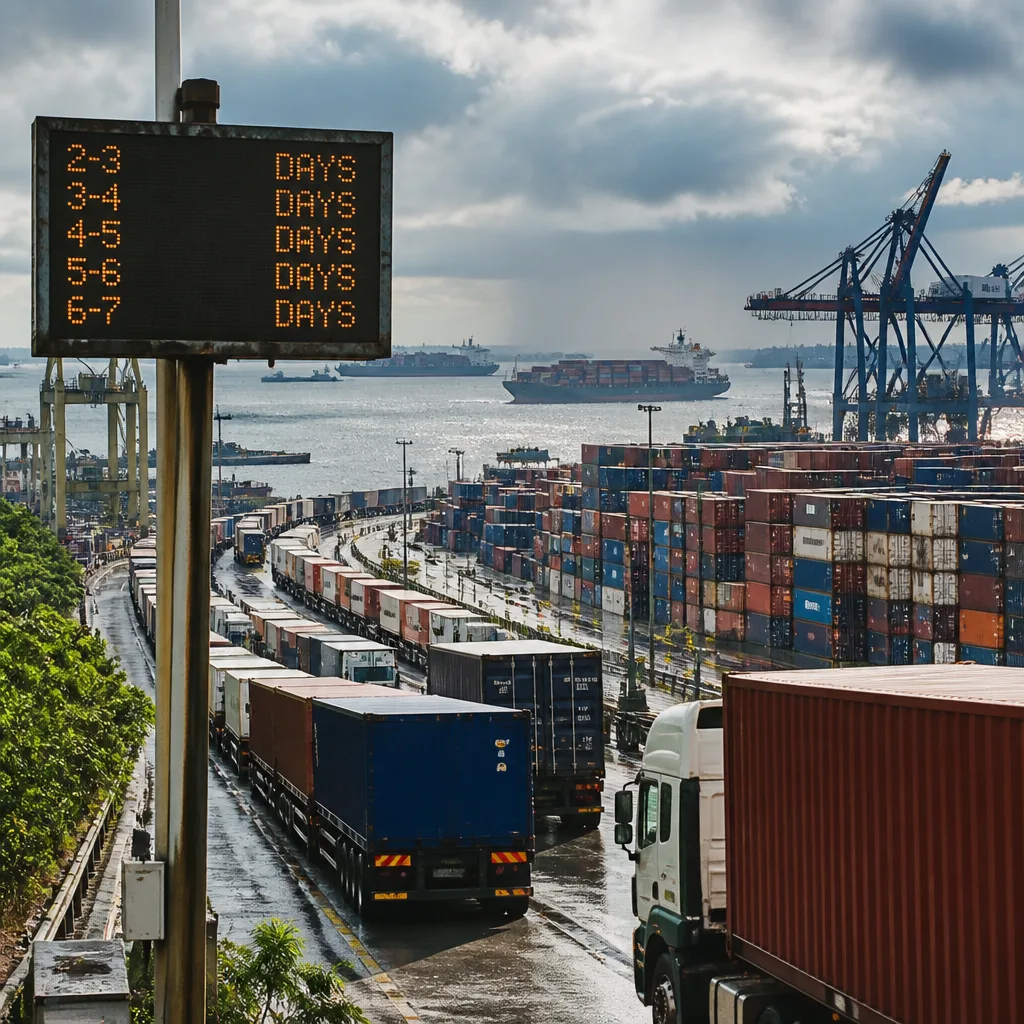
A logistics update on international port operations has highlighted continuing delays at several African terminals and generally mixed conditions worldwide, with the pace of cargo handling and local infrastructure constraints determining how quickly ships can be processed.
Key ports in Africa showing pressure
The week-long snapshot from Kuehne+Nagel records that several West and East African ports are experiencing significant yard pressure and vessel waiting times. Among the ports listed:
- Conakry (Guinea) registered one of the longest average waits at about 11.13 days, attributed to limited storage for dry, refrigerated and empty containers.
- Abidjan (Ivory Coast) showed an average wait near 8.33 days, with yard utilisation running at approximately 93%, while road congestion and maintenance have reduced productivity.
- Tema (Ghana) reported a seven-day average wait around 6.29 days, with landside congestion, container imbalances and feeder schedule slippage adding to delays.
- Mombasa (Kenya) had a more moderate average delay of about 2.43 days, though customs procedures and road bottlenecks continue to impede cargo evacuation.
- Tanger Med (Morocco) was operating with minimal delay, with an average vessel wait of around 1 day, and only minor maintenance expected to affect throughput.
| Port | 7‑day average vessel waiting time | Noted operational issues |
|---|---|---|
| Conakry | ~11.13 days | Limited container storage; high congestion |
| Abidjan | ~8.33 days | High yard utilisation (~93%); road congestion; maintenance |
| Tema | ~6.29 days | Landside congestion; container imbalances; feeder issues |
| Mombasa | ~2.43 days | Customs and road transport bottlenecks |
| Tanger Med | ~1 day | Minor maintenance only |
Operational impacts and common constraints
The report highlights several recurring factors harming port efficiency across different locations. These include high yard occupancy, restricted availability of empty and reefer units, seasonal weather effects and local road or customs bottlenecks. Kuehne+Nagel notes specific measures in places such as Conakry, where a 24/7 truck circulation initiative has been introduced to improve flows, though recovery from the backlog is still in progress.
Other ports in the region face more localised difficulties: heavy rainy‑season conditions in Douala (Cameroon) combine with truck weight limits to slow operations, while Banjul (The Gambia) has seen some improvement with waiting times falling to roughly 2–3 days, although terminal capacity and flooding remain risks.
- Common operational risks include: yard saturation, equipment or terminal maintenance, feeder schedule slippage, and landside transport constraints.
- Local weather and seasonality — such as rainy seasons — continue to influence cargo handling rates in several ports.
- Governance and processes — customs clearance and truck circulation arrangements are repeatedly cited as causes of delay or improvement, depending on local management.
Broader consequences and uncertainty
Persistent waits and capacity constraints at key transshipment and gateway ports can ripple through supply chains. For exporters and importers this can mean delayed deliveries, higher inventory holding times and increased logistics costs. Feeder and road network problems intensify the effect by slowing evacuation and redistribution of containers once offloaded.
While some hubs such as Tanger Med are handling vessels on arrival with little disruption, the cluster of West African ports with multi‑day waits underlines the uneven recovery of global cargo flows. The picture remains fluid: short‑term maintenance, weather events and changes in truck or customs operations can either ease or worsen congestion at relatively short notice.
Logistics operators and traders reliant on these routes are likely to monitor local measures, such as the 24/7 trucking initiative in Conakry, and plan contingencies around yard capacity and feeder reliability.
— Analysis by the World desk