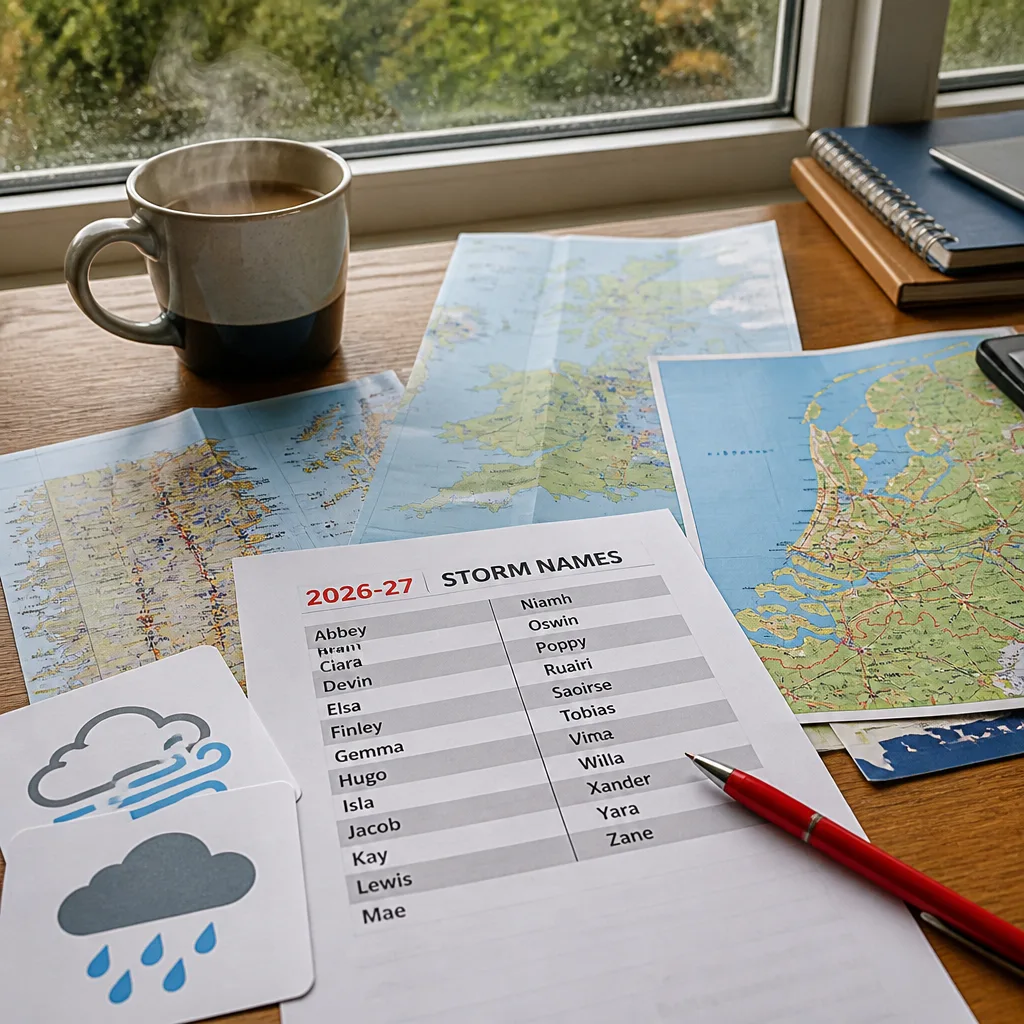
More than 40,000 public suggestions have been used to produce the list of named storms that will be used in the 2026–27 season by the UK Met Office, Ireland’s Met Éireann and the Dutch forecasting service KNMI. The list, released jointly by the three agencies, covers the period from early September through to the following August and is intended to flag weather systems that may pose a threat to life and property.
What has been chosen and why it matters
Storm names have been applied by the Met Office, Met Éireann and KNMI since 2015 to help the public recognise and respond to warnings issued for significant low-pressure systems. The names for 2026–27 were selected from a public call for suggestions that attracted in excess of 40,000 entries, reflecting a broad level of public engagement with the naming scheme.
The final list is designed to be usable across the three countries; the agencies considered pronunciation, potential differences in meaning between languages, connections to public figures and the risk of causing offence when confirming names for the official roster.
Examples from the new list and how they were chosen
Several names on the list were suggested with personal dedications or light-hearted inspiration. Notable entries include a nod to a popular animation character, as well as names nominated on behalf of children and pets:
- Shaun (inspired by Shaun the Sheep)
- Chloe — selected by the Met Office after being proposed more than 120 times
- Finn — put forward for a two-year-old described by family as energetic and strong-willed
- Ivy — nominated in tribute to a nine-month-old Labrador puppy
- Nicola and Theo — included after personal dedications from members of the public
“fascinated by the weather”
The three meteorological services stressed that the roster aims to reflect the communities they serve while remaining practical for international communication of warnings.
Context and operational detail
Named storms are declared when a weather system is expected to meet thresholds for potential impact, such as widespread travel disruption, damage to property or risk to life. The naming process does not change the scientific forecasting, but it provides a consistent label that can improve public awareness and media reporting. In the previous 12 months, four names from the current list were used, with storms reaching as far as the letter D — the most recent being Storm Dave on 1 April.
| Season | Start | End | Names used (example) |
|---|---|---|---|
| 2026–27 | Early September | Following August | Dave (used in previous year) |
Public involvement in selecting names helps maintain engagement with the weather services’ messaging. The Met Office, Met Éireann and KNMI said the list includes a mixture of names to reflect different communities and languages across the UK, Ireland and the Netherlands. Selection criteria removed suggestions that were hard to pronounce, could be mistaken across languages, or might be linked to public figures or controversies.
Practical advice for the public
What the public needs to know now is straightforward: a name on the roster does not mean a storm will occur, but if a named storm is forecast it will be for systems judged capable of causing significant disruption. To stay prepared:
- Keep up to date with warnings from the Met Office, Met Éireann or KNMI for your area.
- Follow local travel and safety advice when warnings are issued.
- Use the storm name in communications to avoid confusion when a system is named.
Confidence in forecast details remains highest in the short range; naming aids communication but officials continue to emphasise that people should follow specific warnings and preparedness guidance rather than focus solely on a name. The public list is now published and will be used as the season progresses.