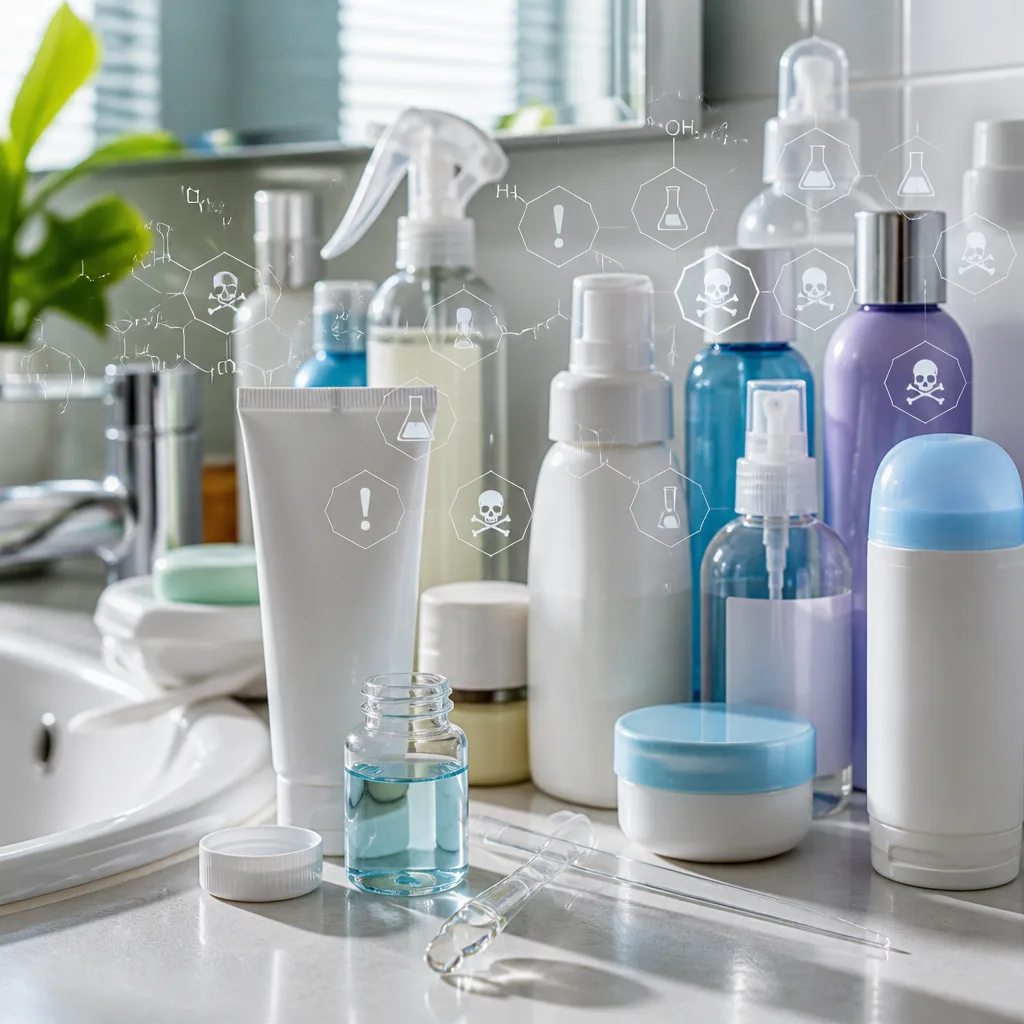
Most everyday personal-care and household cleaning products tested contained chemicals not shown on their ingredient lists, including chemicals regarded as harmful, according to a new peer-reviewed analysis published in Environment & Health. The researchers examined 113 items across 12 product categories sold through major US outlets and found widespread discrepancies between chemical content and labelling.
What the analysis examined
The team — from a number of US research institutions — analysed 113 products used for personal care and cleaning, spanning categories such as laundry detergent, sunscreen, baby lotion, shampoo, deodorant and toothpaste. The products themselves were not individually named in the paper; they were purchased from retailers including Target, Amazon, Walmart and Dollar Tree.
The laboratory screening detected undeclared substances in almost every sample and flagged a large proportion as containing compounds of potential concern:
- 98% of products contained at least one chemical not listed on the product label.
- 85% contained at least one unlisted chemical that is known or suspected to be hazardous to human health.
- More than one in four products included chemicals that directly contradicted the product’s advertised selling points.
| Finding | Proportion of products |
|---|---|
| At least one unlabeled chemical | 98% |
| At least one unlabeled chemical known/suspected hazardous | 85% |
| Chemicals contradicting selling points | >25% |
Health and regulatory implications
One category of particular concern in the study was endocrine-disrupting chemicals (EDCs), which can interfere with hormone systems and have been linked in the scientific literature to conditions such as some cancers and metabolic disorders. The authors caution that consumers who attempt to avoid particular hazards by choosing products labelled as "clean" or free of certain substances may still be exposed because the labels do not fully reflect what is present in the formulations.
"We found undisclosed harmful chemicals in products claiming to be free of them," said environmental health scientist Jenna Hua of the Million Marker Research Institute. "That means someone can carefully read ingredient lists, choose 'clean' products, and still end up exposed to the very chemicals they were trying to avoid."
The mismatch between label claims and laboratory findings poses challenges for both regulators and consumers. Labelling rules are intended to inform purchase decisions and protect public health, but these findings suggest current disclosure practices — voluntary or mandatory — may not provide full transparency.
Method and scope
The authors used targeted chemical analysis to identify substances present in the products. The study does not list brand names or provide a ranking of retailers; instead it reports the prevalence of undeclared chemicals across the sampled products. By focusing on a cross-section of commonly used items, the research aims to highlight systemic issues with disclosure rather than single out particular manufacturers.
Limitations are inherent in any screening study: the sample size, while sizeable, does not encompass the whole market, and the detection of a chemical does not by itself quantify exposure risk in typical use. Nevertheless, the near-universal detection of unlisted substances and the high proportion of products containing potentially hazardous compounds point to a widespread gap between what consumers are told and what they are exposed to.
What this means for consumers and policy
For individuals, the take-away is sobering: carefully reading ingredient lists may not be sufficient to avoid particular chemicals. For policymakers and regulators, the paper strengthens arguments for more stringent disclosure requirements, routine independent testing, and clearer definitions of claims such as "clean" or "chemical-free."
Further work will be needed to quantify actual exposure under normal use, to characterise dose–response relationships for the specific chemicals found, and to determine whether regulatory action or changes to labelling law are warranted. In the meantime, the study is a reminder that the bottle on the bathroom shelf does not always tell the whole story.