
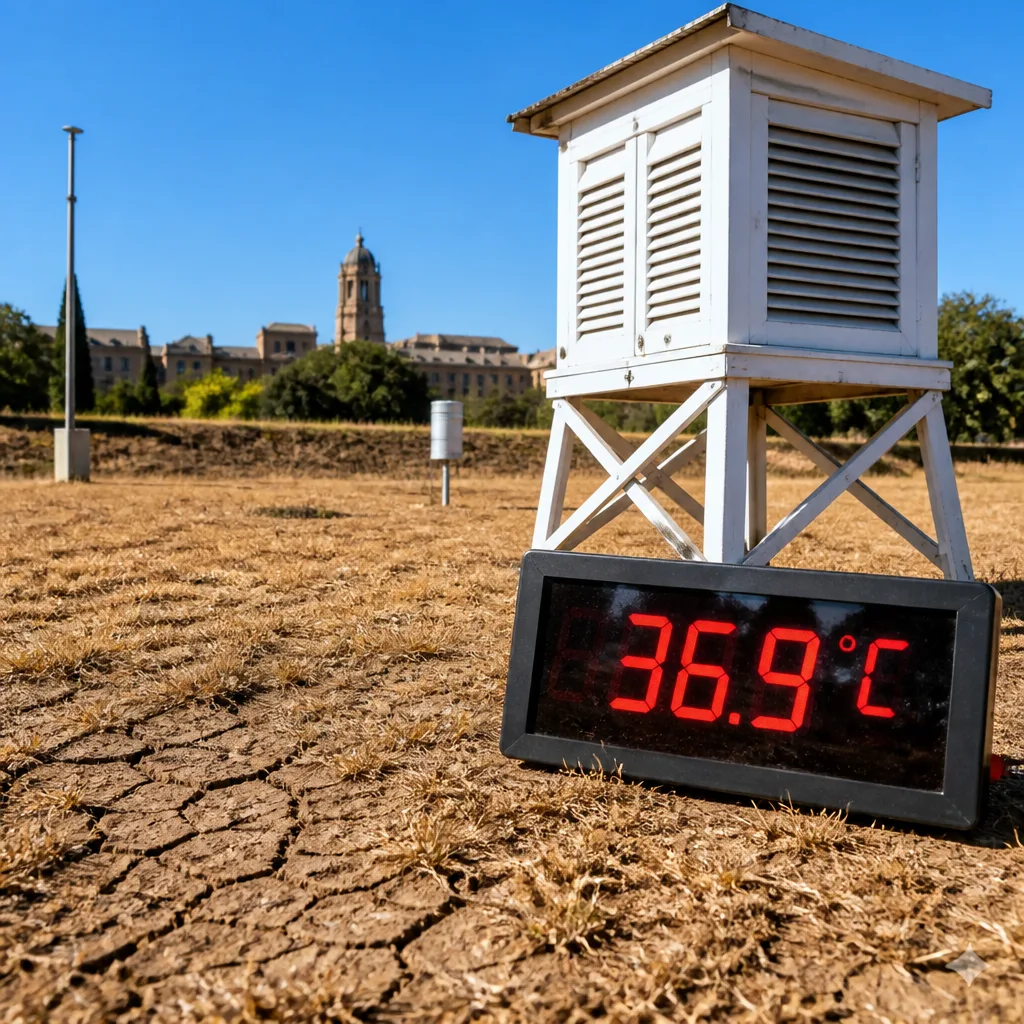
The University of Reading’s Atmospheric Observatory recorded a peak temperature of 36.9°C on Thursday 13 August, making it the hottest August day in the observatory’s 118‑year archive and the second‑highest reading on record.
How the record was set
The measurement surpasses the previous August high of 36.4°C logged on 10 August 2003 and lies just below the observatory’s all‑time maximum of 37.6°C, reached on 19 July 2022. The observatory’s dataset begins in 1908 and has been used by meteorologists to track long‑term changes in local climate and extreme weather.
| Metric | Temperature | Date |
|---|---|---|
| Highest ever (observatory record) | 37.6°C | 19 July 2022 |
| Second highest / hottest August day | 36.9°C | Thursday 13 August |
| Previous hottest August | 36.4°C | 10 August 2003 |
Physical drivers and context
University meteorologists attributed the extreme warmth to a persistent area of high pressure positioned over western Europe. Such a system acts as a cap on the atmosphere: air gradually sinks beneath it, compressing and warming, while drawing very warm air north from southern Europe and North Africa. The combination produces prolonged sunshine, light winds and low cloud cover—conditions that allow daytime temperatures to accumulate.
Experts also pointed to exceptionally dry soils following a month‑plus of very low rainfall. When the ground is dry, more incoming solar energy goes into heating the surface and the air above it, rather than evaporating moisture; that reduced evaporative cooling can amplify daytime temperature rises.
“This latest heatwave is being driven by a stubborn area of high pressure over western Europe that once again is acting like a lid on the atmosphere,” said Dr Rob Thompson, a meteorologist at the University of Reading.
Dr Akshay Deoras, a climate scientist affiliated with the National Centre for Atmospheric Science and the University of Reading’s meteorology department, warned that the record is part of a pattern in which extreme temperatures are increasing. He said natural weather features such as heat domes are interacting with background anthropogenic warming—primarily from fossil‑fuel combustion—to produce ever more severe extremes. The timing compounds local stress, following a July described by the university as the warmest, sunniest and driest on record for Reading.
Consequences and implications
The immediate effects are tangible: prolonged heat and parched soils intensify drought conditions, increasing pressure on water resources, agriculture and ecosystems. Heatwaves also carry direct human health risks, particularly for vulnerable groups, and place strain on energy systems as demand for cooling rises.
- Record context: this event is the hottest August day in Reading’s 118‑year record and the second highest overall.
- Weather mechanism: a persistent high‑pressure system combined with warm air advection from southern latitudes.
- Amplifying factors: prolonged dry ground conditions reducing evaporative cooling.
While a single observation cannot be attributed solely to climate change, the university’s scientists emphasised that the increasing frequency and intensity of heat extremes are consistent with the long‑term warming trend driven by human activities. The statement from the university situates the local record alongside broader concerns about how natural variability and anthropogenic warming interact to produce exceptional weather.
The Reading observatory’s new reading will feed into regional analyses of the heatwave as forecasters and climate researchers seek to quantify risks, update advisories and examine how such events may become more common under continued global warming.









