
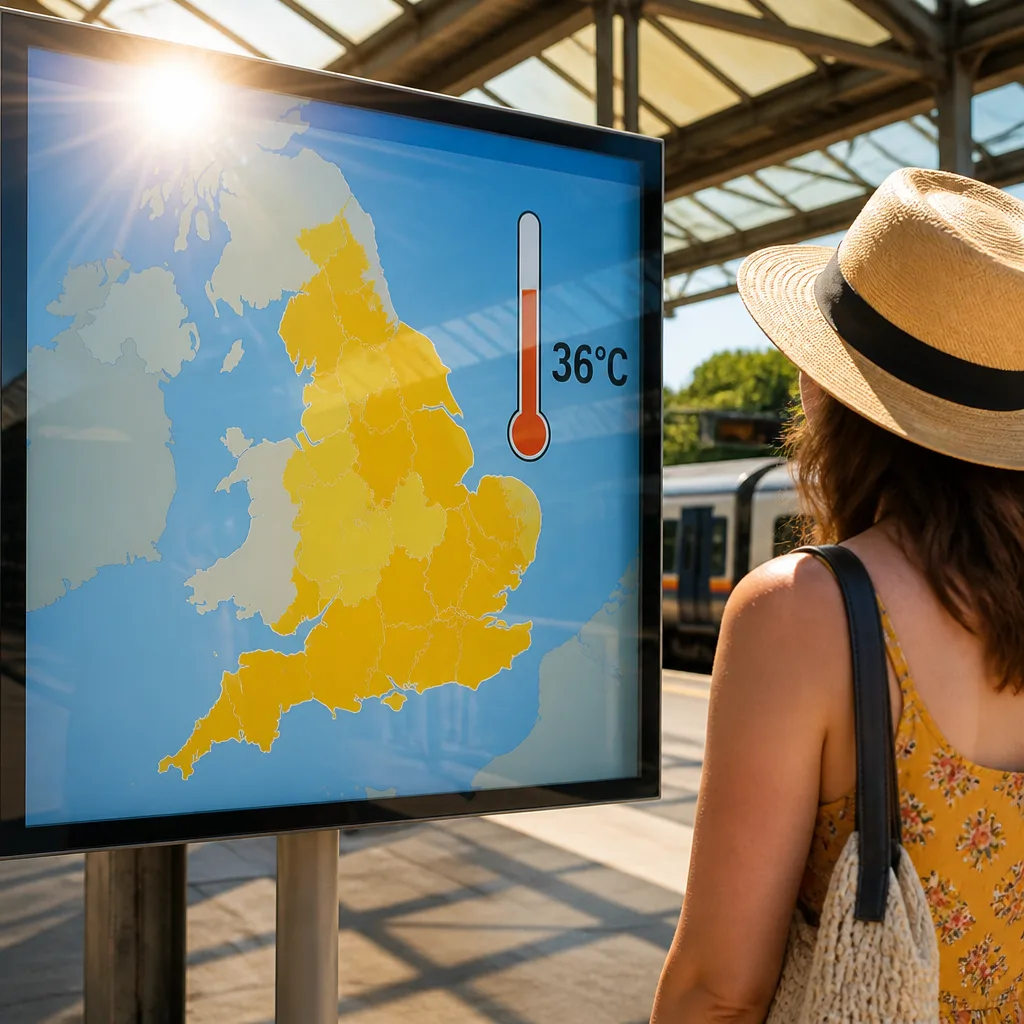
Yellow heat-health alerts were activated at 09:00 on Saturday and will remain in place until 21:00 on Tuesday as forecasters predict a fifth UK heatwave this summer, with temperatures expected to climb through the weekend and reach as high as 36°C in parts of East Anglia and the south‑east by Thursday.
What the alerts mean and where they apply
The UK Health Security Agency (UKHSA) has issued alerts for a wide swathe of England, including the East Midlands, West Midlands, South East, South West, East of England, Yorkshire and the Humber and London. The notices warn that hot conditions are likely to affect the wellbeing of the population and could place additional demand on healthcare services.
- Alerts are active from 9am Saturday until 9pm Tuesday.
- Temperatures are forecast to rise through the weekend, with a north–south contrast in weather expected.
- Scotland and Northern Ireland are likely to see spells of heavy rain while much of England and Wales remains dry and increasingly warm.
Summer context: repeated extremes and health consequences
This heat episode arrives after a series of extreme weather events across the UK this summer. Two record‑breaking heatwaves in May and June have already been associated with more than 2,800 excess deaths, and two additional heatwaves in July contributed to drought and several wildfires. The highest temperature recorded so far this year was 38°C at Lingwood in Norfolk on 28 June.
| Metric | Value |
|---|---|
| Highest temperature this year | 38°C (Lingwood, Norfolk, 28 June) |
| Days ≥ 30°C so far this year | 33 days |
| Previous record of days ≥ 30°C | 34 days (1995) |
| Estimated excess deaths linked to May–June heatwaves | More than 2,800 |
Forecasters expect temperatures to reach around 30°C on Saturday, climbing into the low 30s in southern and south‑east England on Sunday. By Tuesday, highs of up to 30°C are possible across parts of England and Wales, rising to 32–34°C on Wednesday, with the warmest conditions currently forecast for Thursday.
Implications for health services and the public
Heat health alerts are intended both to prompt public caution and to give health and social care systems advance notice to prepare for increased demand. Heat-related illness ranges from dehydration and heat exhaustion to more severe heatstroke, and vulnerable groups — including older people, those with chronic illnesses and people without access to cool environments — face the greatest risk.
Public bodies have previously stressed that the number of excess deaths linked to the spring heatwaves demonstrates the real human cost of extreme temperatures. While surveillance and modelling provide estimates of heat‑related mortality, authors of peer‑reviewed studies often emphasise that attributing deaths to heat requires careful adjustment for factors such as pre‑existing health conditions and demographic differences; correlation does not necessarily indicate direct causation in individual cases.
Meanwhile, environmental consequences have been stark: sustained high temperatures and dry weather this summer have contributed to widespread drought conditions and a series of wildfires at sites including Dunwich Heath in Suffolk, Headon Warren on the Isle of Wight, Llanwonno in the Rhondda Valleys and other locations.
Conservation organisations are calling for the government to treat climate action as a national priority. The National Trust has urged people to sign a petition pushing for a stronger governmental response to the changing climate, citing the recent spate of fires and the broader risks posed by persistent heat.
Health services and local authorities should continue to monitor UKHSA guidance and local forecasts. Individuals can reduce risks by keeping hydrated, avoiding strenuous activity during the hottest hours, checking on those who may be vulnerable and seeking medical help if heat‑related symptoms develop.














