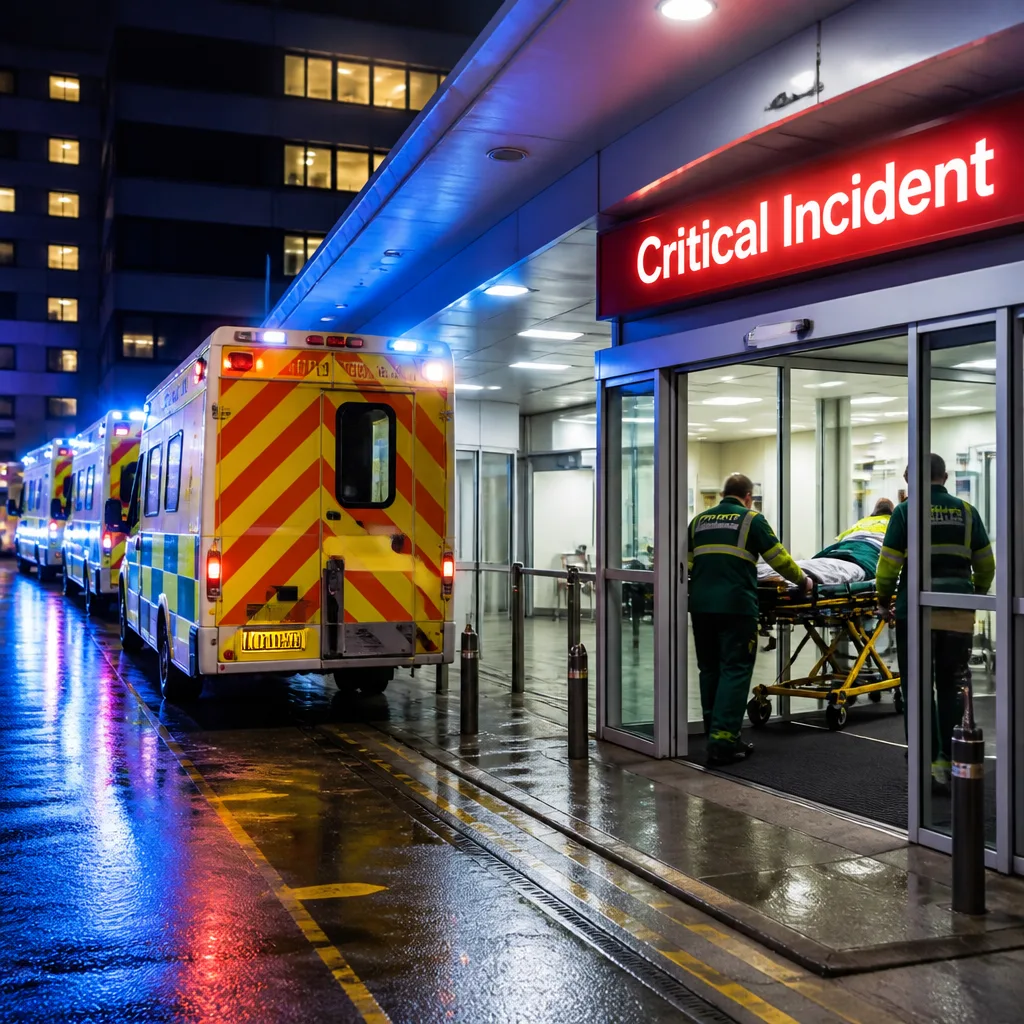
A health board in Scotland has declared a critical incident after describing emergency department pressures as extreme, prompting warnings from opposition politicians that patients and staff are being put at risk and forcing ministers to reiterate action to improve flow through hospitals.
Immediate strains and safety concerns
Responding to the declaration, Scottish Conservative North East MSP Liam Kerr said the situation was “deeply concerning”, adding that he believed lives were being placed in jeopardy and that staff were facing “intolerable strain”. He also raised the scale of ambulance diversions, saying they were being sent, in some cases, “hundreds of miles” to other regions such as the Highlands and Tayside.
"Lives are being put at risk, staff are under intolerable strain, and patients are bearing the brunt of the crisis that is continuing to unfold at the health board," Liam Kerr said.
The declaration of a critical incident is a formal recognition that usual arrangements are insufficient to manage demand and that extraordinary measures may be required to maintain services. The move signals sustained pressure on accident and emergency departments and linked parts of the urgent care system.
Government response and planned measures
Health Secretary Angela Constance said the Scottish government remained committed to improving A&E performance and tackling long delays. She pointed to a recently published national plan aimed at improving patient flow within hospitals and highlighted dedicated funding of £90 million to support patients who have been waiting the longest for treatment.
Constance said reforms to the NHS would focus on improving services for patients and reducing bureaucratic barriers she identified as hindering progress. She stressed that many of the pressures on A&E wards were compounded by delayed discharges into social care settings and noted that responsibility for those discharges lies with local councils, urging collaboration across sectors.
What this means for patients and services
When ambulances are diverted because hospitals cannot accept patients, response times and patient pathways can be disrupted. The suggestion that some ambulances are being diverted long distances underscores the knock-on effect pressure in one area can have across a region.
- Patient safety: Critical incident status indicates elevated risk to timely care.
- Workforce strain: Staff are reported to be under intolerable pressure as demand exceeds capacity.
- System pressures: Delayed discharges into social care are cited as a major contributing factor.
The government’s combination of a national plan and targeted funding aims to address both immediate waits and systemic barriers, but ministers and opposition figures alike acknowledge the challenge is complex and multi-agency.
| Measure | Detail |
|---|---|
| Declared status | Critical incident in a health board due to extreme A&E pressure |
| Targeted funding | £90 million to support those waiting longest for treatment |
| Primary contributing issue cited | Delayed discharges into social care settings |
Opposition criticism highlights political pressure on ministers to show rapid improvement, while the health secretary’s remarks point to a combination of operational changes and wider reforms. It remains essential to distinguish short-term measures – such as redistributing capacity and funding waits – from longer-term reforms that aim to change pathways of care and local authority responsibilities.
As the situation develops, independent data on waiting times, admission and discharge rates would be needed to assess whether the national plan and the £90 million package reduce pressure on emergency departments, or whether further action across health and social care is required to prevent recurrence.