The New Zealand Government has published the final learning areas of its revised Years 0–10 curriculum, completing a year-by-year framework that ministers say will give teachers clearer direction on what pupils should learn as they progress through school.
Final learning areas and national aims
Education Minister Erica Stanford released the last two learning areas — Health and Physical Education and the Arts — completing the set of updated Years 0–10 materials. The announcement follows the recent publication of Technology and Learning Languages materials.
Ms Stanford said the refreshed curriculum establishes “a clear and nationally consistent pathway for learning, helping students develop the knowledge, skills and confidence they need to succeed at school and beyond.”
“This curriculum provides a clear and nationally consistent pathway for learning, helping students develop the knowledge, skills and confidence they need to succeed at school and beyond,”
What has changed
The revised documents set out an explicit, year-by-year approach across content areas so teachers know the expected knowledge and practices at each stage. Officials highlight several notable changes in the final release:
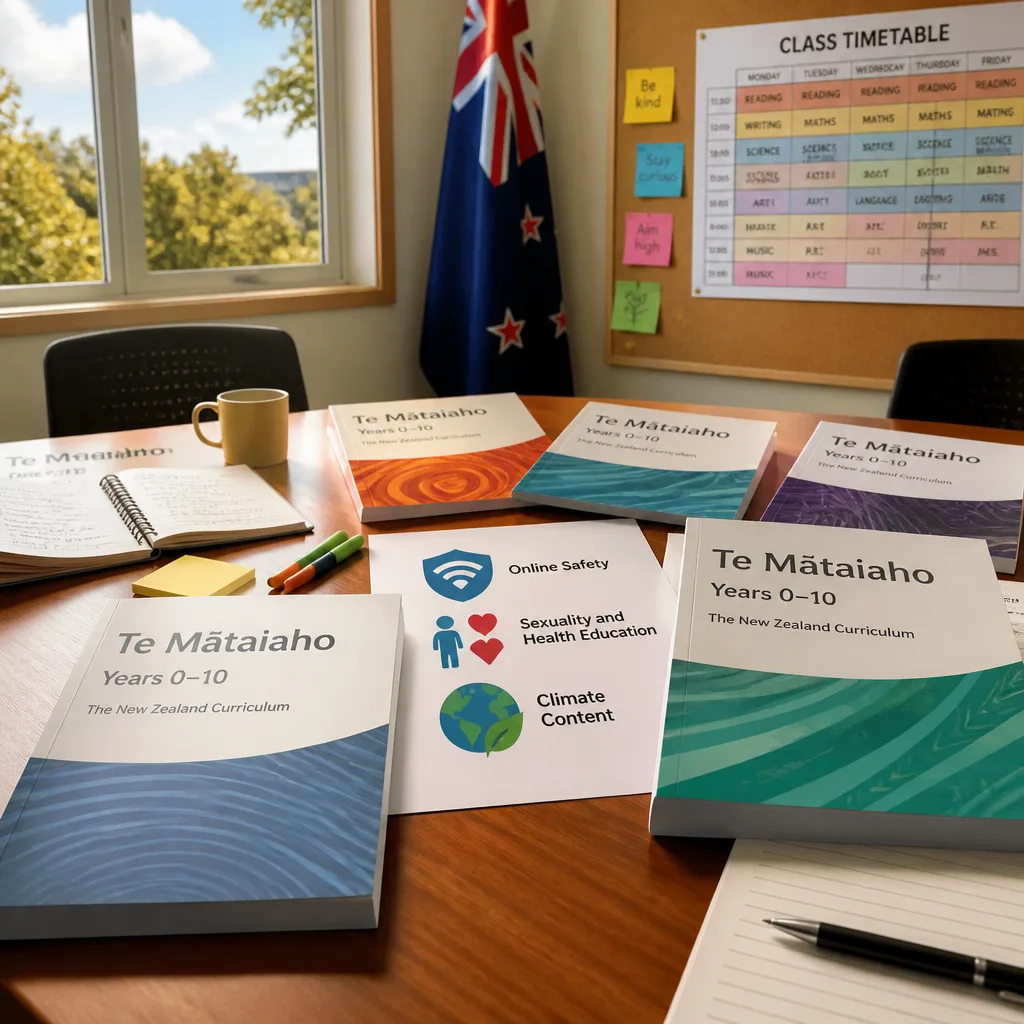
- An explicit focus on online safety, including identifying misinformation, privacy risks, extreme content and mental health impacts.
- A consistent national approach to the teaching of sexuality education, removing the previous requirement for schools to carry out community consultation every two years, while retaining parental rights to withdraw children.
- Clearer signposting of content relating to climate change, emphasising rather than introducing material that was already present in the curriculum.
Officials also published the New Zealand Curriculum Framework, Te Mātaiaho, which sets the overarching requirements schools must follow when designing and implementing their teaching programmes.
Development and consultation
The Minister said the final curriculum draws on widespread input. According to the Ministry, the drafting process involved more than 180 curriculum experts and was informed by almost 3,900 submissions from teachers, school leaders, subject associations, curriculum experts, whānau and communities.
| Input | Number |
|---|---|
| Submissions received | ~3,900 |
| Curriculum experts involved | 180+ |
Proponents say the more detailed year-by-year guidance will help teachers plan learning sequences and assess progression more consistently across the country. The Ministry indicated that intermediate schools in particular will benefit from updated guidance that replaces material dating back to 2007.
Practical consequences and rights
Two practical points in the new documents will matter for schools and families. First, the curriculum now sets out how to teach online safety explicitly — a move that reflects growing concern about young people’s exposure to harmful or misleading content and the mental health implications of online activity. Second, the change to sexuality education aims to standardise what is taught, while preserving parental rights: parents may still withhold their child from sexuality lessons.
School leaders will need to align local programmes to Te Mātaiaho and the new learning area specifications. That will require updates to planning, resources and professional learning for teachers so that classroom practice matches the curriculum’s stated progression and focus areas.
As schools move to implement the framework, attention will fall on how the changes are resourced and supported in practice — particularly the guidance and training available to teachers to deliver the new material on online safety and sexuality education, and how the curriculum’s climate change content is interpreted in local programmes.
Information on timelines for implementation and support for schools was not included in the Ministry material released with the final learning areas; school communities and sector bodies will be watching for further detail on rollout and funding.