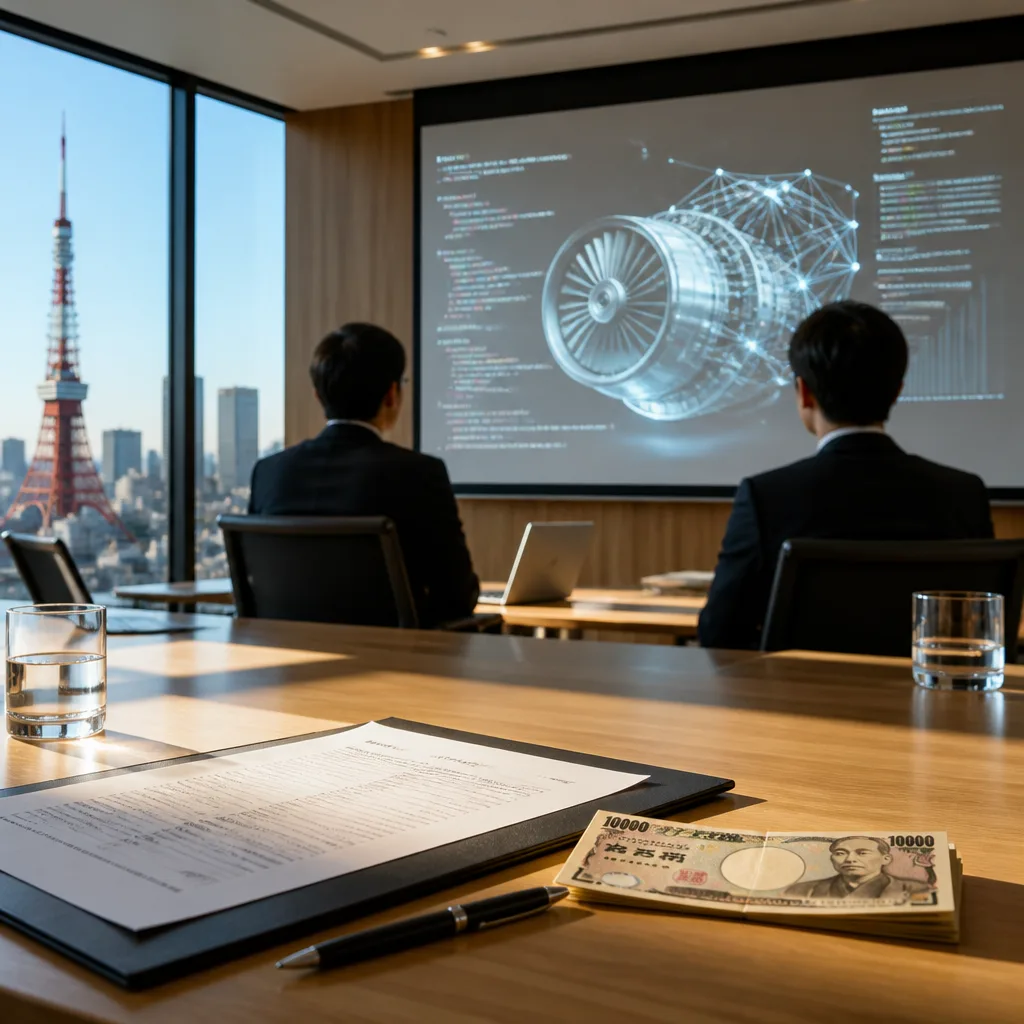
Mitsubishi Heavy Industries (MHI) has agreed to inject ¥10 billion into Tokyo‑based artificial intelligence specialist Preferred Networks (PFN) as part of a new capital and business alliance aimed at accelerating the use of cutting‑edge AI in mission‑critical machinery and systems.
What the deal involves
The companies confirmed they signed a formal alliance on 31 August 2026, following an initial business tie‑up announced in June. Under the arrangement, MHI will underwrite shares issued by PFN through a third‑party allotment and invest the stated sum, subject to completion of the necessary procedures including approvals at PFN’s general shareholders’ meeting.
The partnership is framed around the joint development of AI technologies to improve the intelligence and autonomy of equipment used in areas MHI describes as mission‑critical, including social infrastructure and national security. The companies say the work will span the medium to long term and establish a stronger cooperative framework than their earlier accord.
Why the move matters
Both firms point to a mix of structural and strategic pressures behind the deal: shifting global geopolitics, domestic labour shortages and ageing infrastructure. The statement accompanying the agreement highlighted a rising need to deploy advanced AI in settings where high reliability and fast, safe responsiveness are essential.
- Investment size: ¥10 billion committed by MHI to PFN.
- Timing: Formal capital and business alliance signed 31 August 2026; initial tie‑up announced in June 2026.
- Conditions: Investment subject to PFN shareholder approvals and other procedural steps.
For industrial groups and politicians thinking about national resilience, the stated aim of keeping AI development, data accumulation and operational expertise onshore will resonate. The firms argue that mission‑critical AI needs tight integration with field equipment and control systems and a deep operational understanding that is difficult to achieve if expertise and data are dispersed internationally.
Implications for jobs, costs and competition
For workers and employers, the deal signals where future demand for skills may rise. Developing and operating AI in safety‑sensitive environments requires engineers and technicians with combined expertise in operational systems, controls and machine learning — roles that tend to pay premium wages. If the alliance succeeds in scaling deployments, it could create higher‑paid specialist jobs, but also replace or reconfigure more routine roles, particularly in maintenance and on‑site control functions.
On prices and public budgets, use of AI in infrastructure has mixed effects. Greater automation and predictive control can lower operating costs and reduce costly failures in bridges, power plants and transport networks. Conversely, the upfront costs of integrating advanced AI into ageing assets — and maintaining secure, resilient systems — will be substantial. The investment by MHI is a private capital commitment; any public sector adoption of resulting technologies would require procurement decisions that weigh lifecycle savings against installation and governance costs.
Internationally, the alliance is another example of industrial groups tying up with specialist AI companies to capture value from automation and autonomy. For UK businesses and policymakers, the development underlines how major engineering firms are securing proprietary AI know‑how to support critical systems — a trend that may influence procurement, regulation and skills policy at home.
Questions remaining
Several practical questions remain unanswered in the companies’ public statements. The timetable for technology rollout, the specific sectors and projects that will be prioritised, and the governance frameworks to ensure the AI operates safely in mission‑critical settings were not detailed. The investment is also conditional on shareholder approval at PFN, so the deal is not yet final.
As governments and firms increasingly push AI into infrastructure and defence, industry observers will be looking for clarity on how companies like MHI and PFN will certify reliability, manage supply chains, and protect systems from cybersecurity threats — and how that will translate into jobs, costs and safety for the public.
| Item | Detail |
|---|---|
| Investor | Mitsubishi Heavy Industries (MHI) |
| Recipient | Preferred Networks (PFN) |
| Committed amount | ¥10 billion |
| Agreement date | 31 August 2026 (formal); initial alliance announced June 2026 |