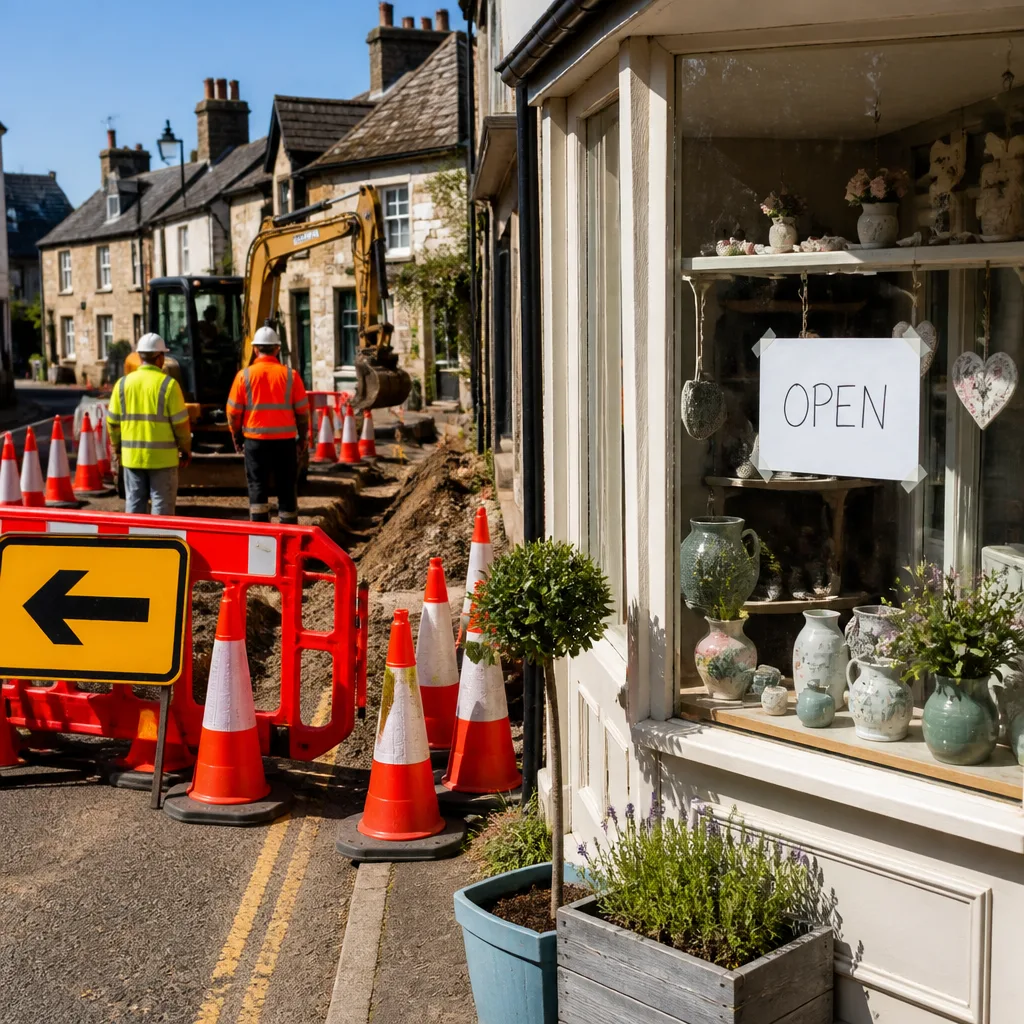
A small gift shop in Nottinghamshire says it has seen daily takings collapse from about £500 to just £20 after a combination of emergency sewer repairs and major roadworks made access to the village difficult, prompting warnings that the business could be forced to close.
Multiple schemes, one painful outcome for a small trader
Charlotte Duncan, who has run Treat Boutique on Debdale Lane in Keyworth for nearly a decade, told reporters that a road closure outside the shop for emergency works by Severn Trent, together with ongoing improvements on the A52 at Wheatcroft and Nottingham Knight roundabouts, have produced a dramatic fall in footfall.
"It's been nothing short of a nightmare. Sales have plummeted by more than 90% because of the lack of access to the shop."
The shop owner said signage and closures had left drivers believing the village was inaccessible. Although an alternative walking route exists, it requires passing through another set of works, discouraging would-be customers.
Statutory bodies defend safety and long‑term benefits
Severn Trent said the partial road closure was necessary to protect workers and the public while a complex repair took place close to a gas main. A company spokesperson said manual excavation had been required for safety reasons, and added that it apologised for the disruption and thanked residents and businesses for their patience.
National Highways programme manager Thomas Beasley framed the A52 works as a longer‑term improvement, saying: "The improvements to the A52 will bring significant benefits, improving journey reliability and removing bottlenecks. We appreciate the disruption roadworks can cause and thank businesses and communities for their patience."
What this means for small firms and local economies
The figures given by the shop owner — a drop from roughly £500 to £20 daily — amount to a fall in turnover of more than 90%. For a micro or small retail business operating on tight margins, such a shock can quickly render trade unviable.
When revenues slump so sharply, owners must decide whether to continue absorbing losses, cut staffing hours, draw on savings, or close altogether. While the statements from Severn Trent and National Highways stress safety and future benefits respectively, they do not alter the immediate cashflow pressures faced by traders in the area.
- Duration: One site is an emergency sewer repair requiring manual digging near a gas main.
- Scale: Two separate major junction works on the A52 provide key links to the village.
- Impact: Shop owner reports takings down from about £500 a day to approximately £20 a day.
| Metric | Reported value |
|---|---|
| Typical daily takings (before works) | £500 |
| Daily takings (during works) | £20 |
| Revenue change | ≈90% fall |
At stake are not only the livelihoods of shop owners but also local employment, supplier relationships and the town centre’s vibrancy. If footfall is diverted or suppressed for an extended period, rents may become unsustainable and staff hours or jobs could be cut.
Questions for policymakers and utility companies
The case in Keyworth highlights recurring tensions between necessary infrastructure works and the immediate economic harm they inflict on small businesses. Emergency repairs raise particular difficulties because they cannot be scheduled to avoid busy trading periods and may preclude extensive advance mitigation.
Officials frequently point to future benefits from road upgrades, but that does not compensate for acute revenue losses while schemes are under way. For affected traders, the practical issues include clearer signage to reassure drivers, co‑ordination of works to reduce simultaneous closures, and access to compensation or business support where losses are severe.
For now, the owner of Treat Boutique faces the daily arithmetic of vastly reduced takings and the hard choice of whether to keep trading through what she describes as "a nightmare." The balance between public safety, long‑term infrastructure improvements and the short‑term survival of small firms will remain a live national policy question as Britain continues to repair and upgrade its roads and utilities.