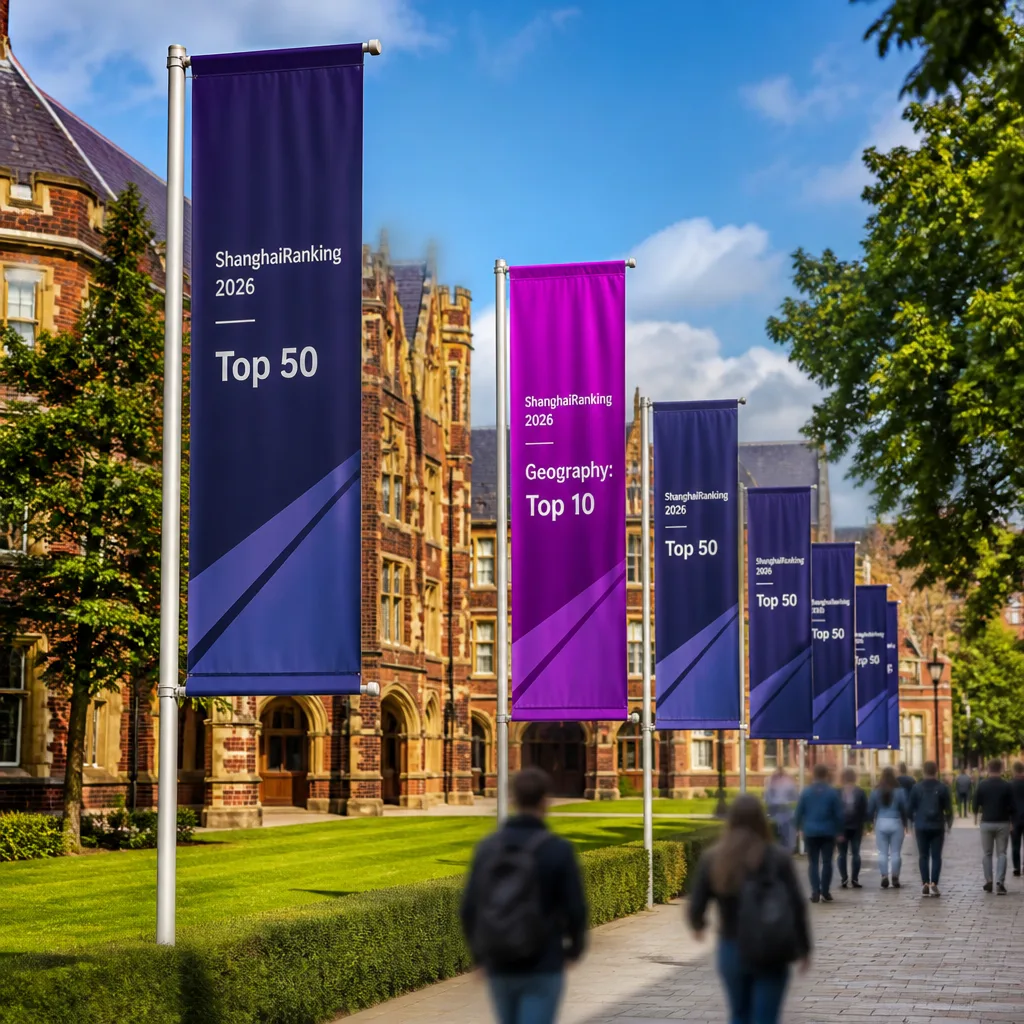
The University of Manchester has seen ten subjects secure places among the world’s top 50 in the 2026 ShanghaiRanking Global Ranking of Academic Subjects, the institution announced on Wednesday. Of those, five subjects are ranked inside the global top 25, while Geography has been placed within the world’s top 10.
Recognition across faculties
The results span all three of the university’s faculties, reflecting a breadth of performance across disciplines rather than strength in a single area. University leaders said the ranking provides one set of measures among many for assessing academic quality and impact, and that the data will be used to help steer future research and teaching priorities under the institution’s Manchester 2035 strategy.
“These results are a welcome recognition of the quality and reach of academic work taking place across The University of Manchester… Rankings don’t measure everything we value, but are useful tools for reflecting on where progress is being made and where further work is needed,” Professor Duncan Ivison, President and Vice-Chancellor, said in a statement.
The university did not publish a full subject-by-subject breakdown in its brief release, but emphasised that the recognised subjects come from across its humanities, science and social science portfolios. The institution's communications framed the rankings as both a validation of recent investments and a spur to further development in research excellence and innovation.
What the ShanghaiRanking measures
The ARWU (Academic Ranking of World Universities) subject lists assess disciplines using a set of metrics which typically include research output, citation impact and international collaboration. While the ShanghaiRanking is one of a handful of widely cited league tables, university officials and sector commentators caution against treating any single ranking as definitive.
In their statement, the university argued that rankings should inform strategy but not supplant qualitative assessments of teaching, public engagement or local economic contribution. That reflects a broader debate in the higher education sector about how to balance global competitiveness with wider institutional missions.
Implications for students and research
High subject rankings can influence recruitment of both staff and students, affect the success of grant bids, and shape partnerships with industry. For prospective undergraduates and postgraduates, placement in the global top 50 may be a factor when choosing where to apply, particularly for international students for whom global subject standing is often a key comparator.
- 10 subjects in the global top 50 (University of Manchester announcement)
- 5 subjects in the global top 25
- Geography ranked in the global top 10
| Measure | Result |
|---|---|
| Subjects in world top 50 | 10 |
| Subjects in world top 25 | 5 |
| Geography | Top 10 |
Manchester’s vice-chancellor framed the result as useful intelligence to guide improvement rather than a final judgement. The university said it intends to deploy insights from the rankings to bolster research, teaching and innovation — core pillars of its Manchester 2035 strategy, which sets out ambitions for growth and impact over the coming decade.
Across the UK, universities are navigating a more competitive global environment in which subject-level reputation can affect international student recruitment and research collaborations. While league tables attract public attention, they also prompt institutions to interrogate their strengths and weaknesses in detail and to prioritise resources accordingly.
For the University of Manchester, confirmation that multiple subjects are performing at a global level will be used by leaders and subject heads as a platform for further investment. At the same time, officials recognise the need to continue improving in areas not captured by rankings, such as local partnerships, equality of access and teaching quality.
The full ShanghaiRanking Global Ranking of Academic Subjects 2026 was published this week; the university release summarised its own performance within that global dataset.