
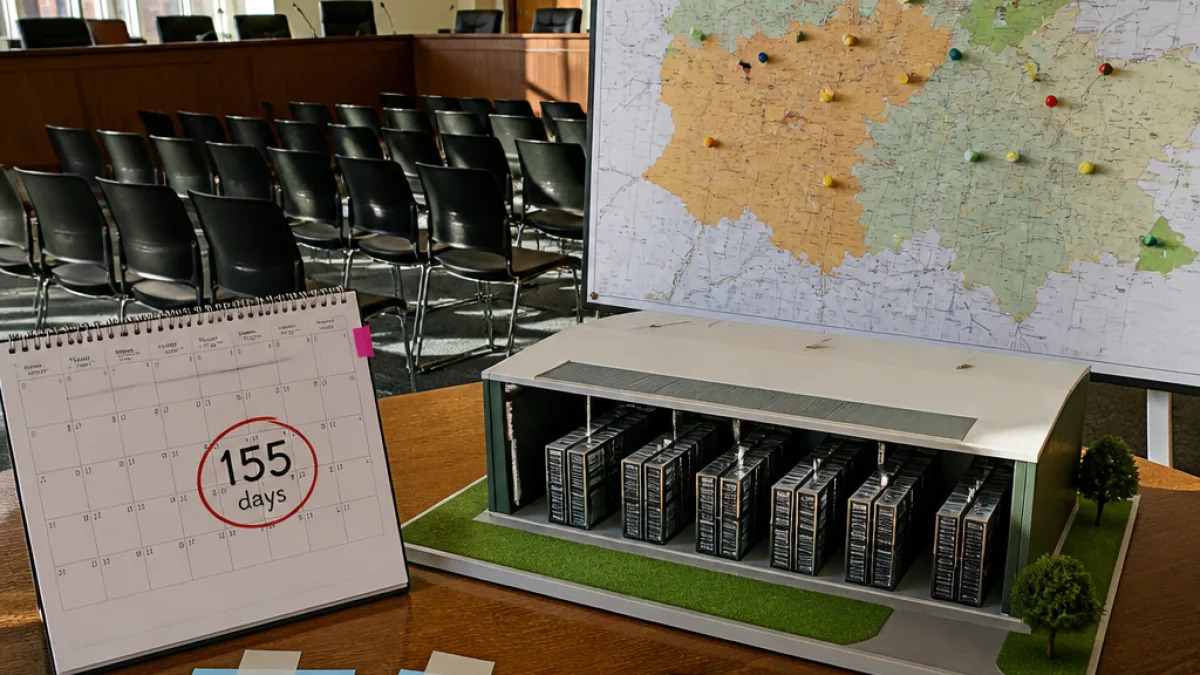
The Chatham County Board of Commissioners in Georgia has voted unanimously to impose a temporary moratorium on large-scale data centre development in unincorporated areas, placing a 155-day pause on proposals that would have an electrical capacity of 10 megawatts or greater and on conversions of warehouses and large industrial buildings into data centres.
Scope and reasons for the pause
The moratorium, passed on Friday, is designed to give county officials time to examine a broad set of concerns linked to rapid data-centre growth. Commissioners said they want clearer information on how such facilities affect local infrastructure and communities — including electricity demand, water use, noise and other potential complications — before permitting further developments.
Discussion before the vote revealed uncertainty about smaller installations often described as "micro data centres". Some commissioners proposed widening the ban to cover these smaller units, but county lawyers advised more time was needed to draw a legally sound definition that would avoid infringing property rights.
"We can't really restrict somebody from their private house or private residence from them creating or having a box installed on there, and then it's functioning as a data center because it's so small,"
The remark came from Chatham County Attorney Andre Pretorius, who warned against overbroad restrictions that might not withstand legal challenge.
How the moratorium will operate
The pause covers two specific elements:
- All proposals for data centres with electrical capacity of 10MW or greater in unincorporated Chatham County.
- Conversions of warehouses and large industrial buildings into data-centre facilities.
Commissioners debated whether the initial suggestion — a year-long moratorium put forward by Chairman Pro Tem and 7th District Commissioner Dean Kicklighter — should stand. County attorneys recommended a shorter interval of 155 days, a period Kicklighter acknowledged could be extended if necessary.
Practical considerations and next steps
Members said the pause will allow staff and legal advisers to craft precise definitions and regulations, including how to address smaller "micro" centres and how to reconcile restrictions with private property rights. The county will use the time to gather data on:
- Electricity consumption and grid impacts;
- Water usage by cooling systems and other infrastructure;
- Noise and other environmental or neighbourhood effects;
- Where warehouse conversions might change industrial landscapes.
Commissioner Anthony Wayne Noha of the 1st District urged the board to revisit the issue at the next meeting, suggesting the commissioners consider whether a moratorium should apply to data centres regardless of size.
Details at a glance
| Measure | Detail |
|---|---|
| Moratorium length | 155 days |
| Capacity threshold | 10 megawatts or greater |
The unanimous vote reflects growing caution among local elected officials faced with the rapid rise of data-centre projects nationwide. While the decision is rooted in local law and technical definitions, its aims are straightforward: to ensure the county can balance economic development with the needs of residents and the limits of public utilities.
The moratorium does not permanently ban large data centres; rather, it halts approvals while the county defines what it will and will not allow. If the county cannot gather the information it needs within the allotted time, commissioners retain the option to extend the pause, according to comments from the meeting.
For residents and businesses, the immediate effect is a temporary halt to any planning or conversion proposals that would meet the stated threshold — a window for officials to tighten rules and for the public to weigh in on how future data-centre growth is managed.