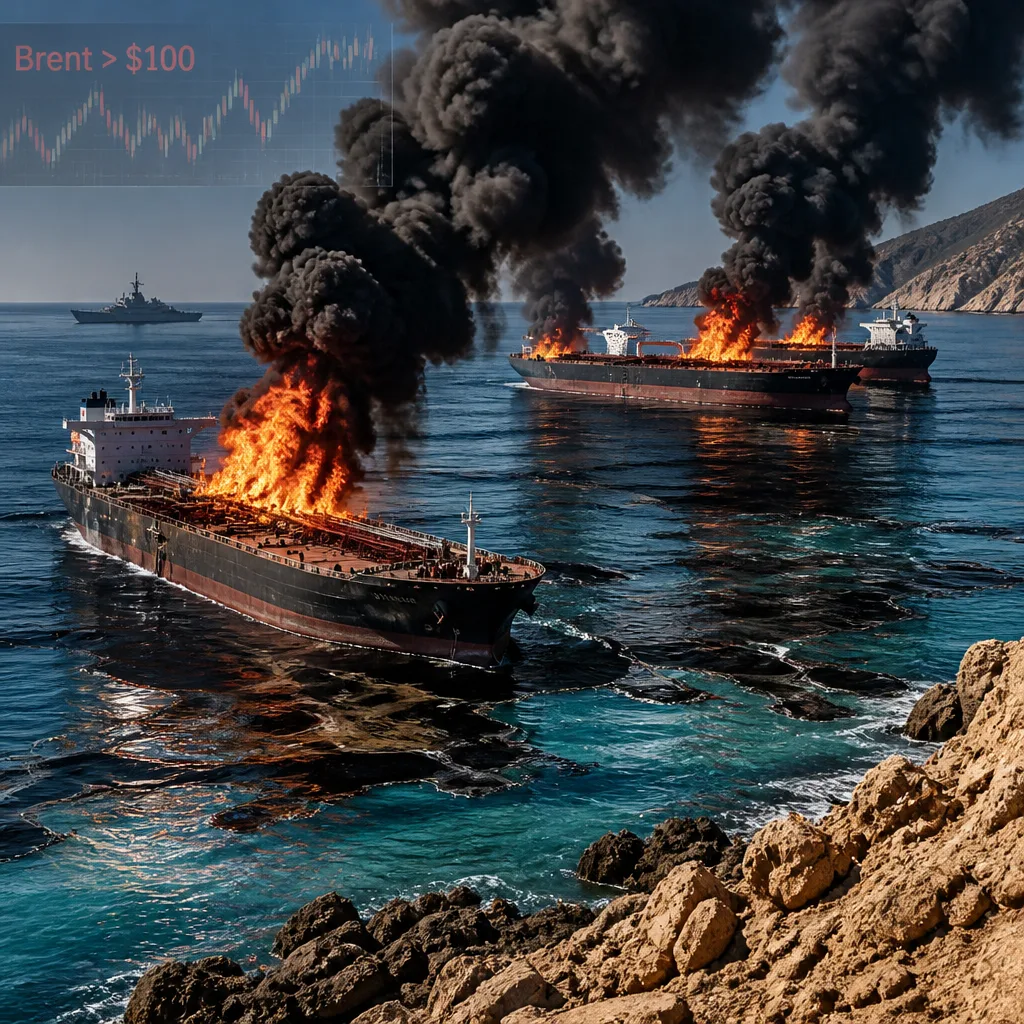
The United States military said it destroyed five Iranian oil tankers this week, a move that has intensified an already dangerous confrontation in the Middle East and pushed global oil benchmarks above $100 a barrel. The action followed what US officials described as repeated missile strikes against a US Navy warship, and coincides with stepped-up operations by Iran-backed forces across the region.
Escalation, strikes and economic consequences
According to reporting from Tehran and international outlets, four of the tankers were struck in the Gulf of Oman and one near Kharg Island. The strikes come amid a broader pattern of attacks and reprisals: Iran-aligned Houthi rebels have launched assaults on Saudi cities and oil infrastructure, which the Saudi-led coalition says wounded at least 73 people and forced some energy facilities offline. The coalition has vowed a firm response.
The violence has been reflected immediately in energy markets. Brent crude surged past $100 a barrel on Wednesday, reflecting investor concern that supply disruptions or greater regional instability could accelerate energy-driven inflation ahead of key central bank decisions.
Warnings from Tehran and Washington
A Tehran parliamentary representative, Kamran Ghazanfari, warned that the combination of conflicts involving Russia and Ukraine and rising frictions between major powers had placed the world at grave risk. In comments carried by media outlets, he said the situation was "practically on the brink of World War III."
"practically on the brink of World War III"
In Washington, President Donald Trump said the war with Iran would end after the US mid-term elections in November, asserting that Tehran was attempting to influence the vote but could not withstand US economic pressure. He suggested oil prices would fall once hostilities ceased and downplayed the likelihood of diplomacy, saying negotiations were possible but not the preferred course.
Regional dynamics and wider contagion risks
The recent exchanges underline how localised strikes and proxy actions can quickly broaden into multi-front confrontations. The involvement of Iran-backed militias, Houthi operations against Saudi targets, and direct US military action against vessels linked to Iran create a dense patchwork of actors and triggers.
External observers note several immediate risks:
- Further attacks on commercial shipping and energy infrastructure that would tighten global oil supplies.
- Escalation between state actors if retaliatory measures expand beyond proxies.
- Heightened diplomatic strain among major powers with interests in the region.
Immediate factual snapshot
| Event | Reported detail |
|---|---|
| US strikes | Five Iranian oil tankers destroyed (four in Gulf of Oman, one near Kharg Island) |
| Houthi attacks | Multiple Saudi cities attacked; at least 73 wounded; energy facility operations disrupted |
| Oil price | Brent crude rose above $100 a barrel |
These elements, taken together, mean the conflict’s ripple effects are already felt in markets and in the security calculations of regional capitals. Diplomatic efforts remain possible but, based on statements from US leadership, are not being prioritised in public remarks.
What to watch next
Key developments to monitor in the coming days include responses from the Saudi-led coalition to Houthi strikes, any further US or allied action against Iran-linked assets, and whether Tehran’s political leadership issues directives that broaden the conflict. Equally important will be movements in oil prices, which could influence central bank decisions and global inflationary pressures.
At present, reporting shows a volatile situation with direct military action and proxy attacks occurring in parallel. The risk of further escalation is real, and the international community faces difficult choices about deterrence, de‑escalation and containment while trying to protect commercial flows and civilian lives.
— World Desk