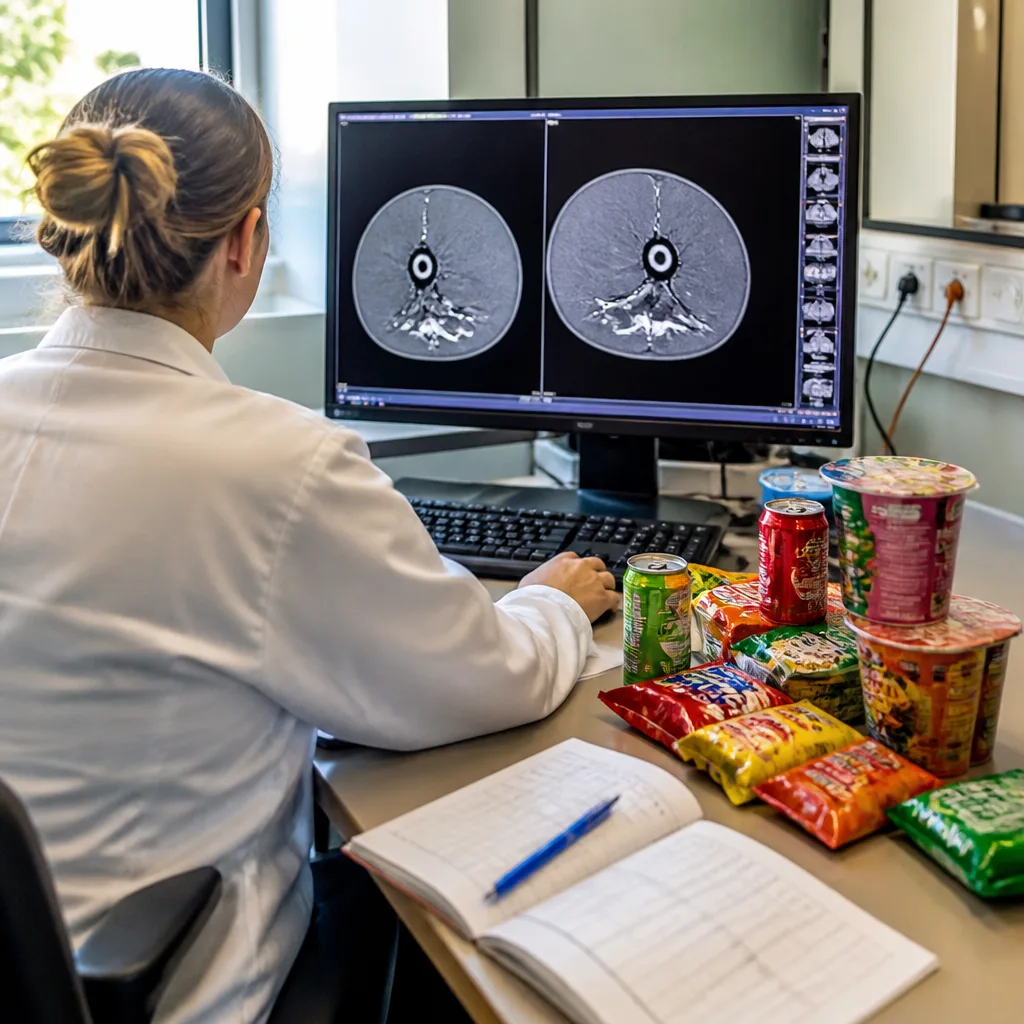
New imaging evidence suggests diets high in ultra‑processed foods are associated with visible fatty degeneration of skeletal muscle. Researchers at the University of California, San Francisco analysed thigh magnetic resonance imaging (MRI) alongside year‑long dietary records for 615 adults and found those whose diets contained a larger share of ultra‑processed products had more fat deposited within muscle tissue.
What the study measured
The investigators used standard MRI to assess muscle quality in the thigh and compared those images with detailed information about participants’ food intake over the previous 12 months. Participants had an average age of 60 years, and on average around 41% of the calories in their diets came from foods classed as ultra‑processed.
| Measure | Value |
|---|---|
| Number of participants | 615 |
| Mean age | 60 years |
| Average share of ultra‑processed foods | ~41% |
Key findings and interpretation
Higher consumption of ultra‑processed foods was associated with greater amounts of fat infiltrating the thigh muscles. On MRI this appears as streaks of adipose tissue interspersed with muscle fibres — changes the researchers describe as a form of fatty degeneration. Importantly, the imaging findings relate to the quality of muscle, not merely to overall body weight.
This matters because muscle composition influences mobility, metabolic health and resilience as people age. Intramuscular fat has been linked in other work to poorer strength and higher cardiometabolic risk, although the current analysis does not by itself establish that ultra‑processed foods cause these outcomes.
Context, limits and implications
There are several reasons to interpret the results with caution. The study is observational: it links dietary patterns and imaging at the same point rather than proving a direct causal pathway. Residual confounding is possible — for example, those who eat more ultra‑processed products may also have different physical activity levels, comorbidities or socioeconomic factors that influence muscle composition.
Nevertheless, the work adds an imaging perspective to a growing body of evidence that ultra‑processed foods — a category that stretches beyond obvious junk food to include many packaged breakfast cereals, sliced breads, ready meals and some products often marketed as ‘healthier’ — are associated with adverse health markers. Previous epidemiological studies have connected higher intake of these foods with obesity, cardiovascular disease and mortality; this study extends concerns to the microstructure of skeletal muscle.
- Practical takeaway: Replacing a portion of ultra‑processed items with minimally processed foods such as whole grains, vegetables, legumes, unprocessed meats and dairy may support better muscle health, although randomised trials are needed to test this directly.
- Research need: Longitudinal and interventional studies that track diet change and muscle imaging over time would help determine causality and quantify the effect of dietary improvements on muscle composition.
- Population relevance: With an average participant age of 60, findings are particularly pertinent to middle‑aged and older adults concerned about mobility and frailty, but they do not in themselves indicate effects in younger populations.
From a public health perspective, the imaging evidence provides a useful visual complement to biochemical and clinical measures: rather than only tracking weight or blood markers, MRI can reveal tissue‑level changes that reflect physiological ageing and disease processes. Policymakers and clinicians aiming to preserve muscle quality in ageing populations may need to consider not just caloric balance and protein intake but overall food processing patterns.
As with all observational research, the results should prompt further investigation rather than immediate clinical directives. They do, however, strengthen arguments for dietary guidance that prioritises unprocessed or minimally processed foods and for clearer labelling so consumers can judge not just calories and nutrients but the degree of industrial processing in the products they buy.