New York City health authorities have confirmed a cluster of five cases of Legionnaires’ disease in parts of the South Bronx, including ZIP codes 10451 and 10456, and said one person has died.
Testing under way after environmental sampling
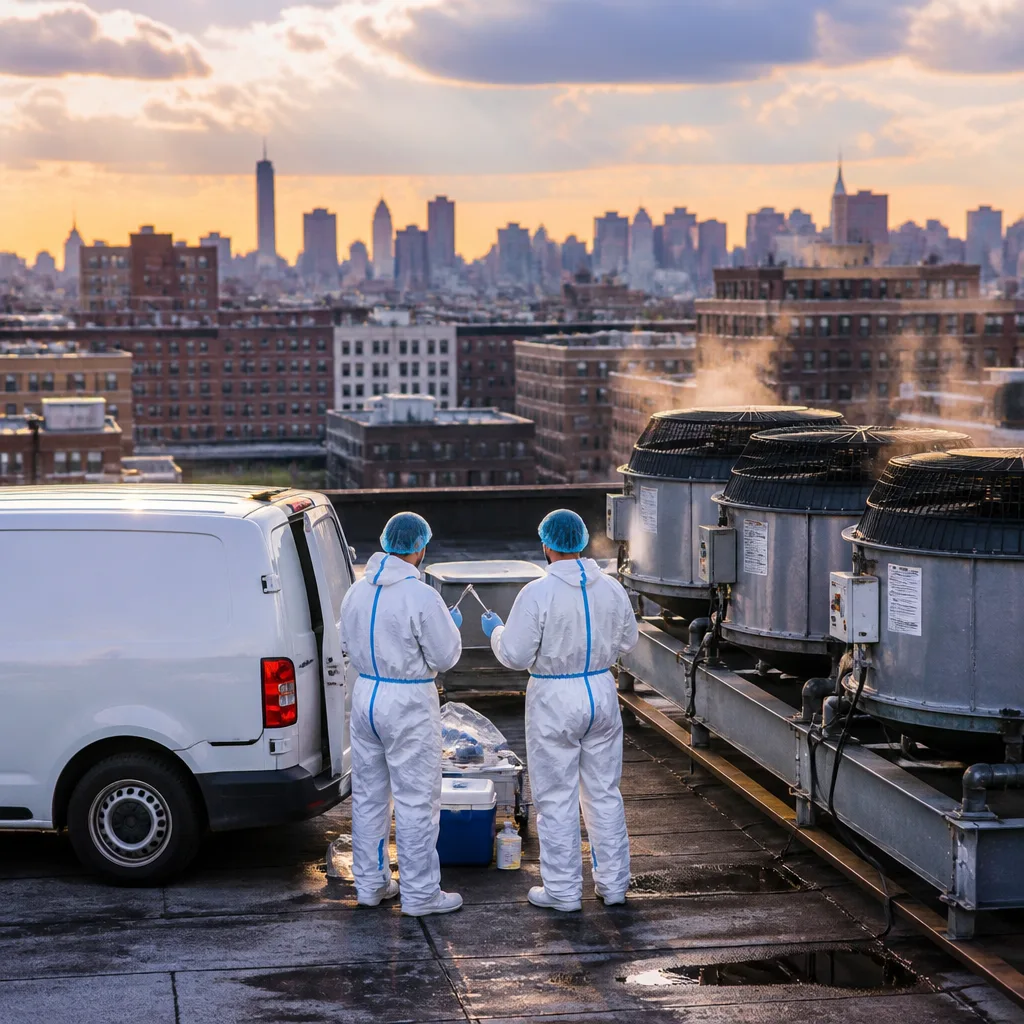
The city’s municipal health department said it has completed sampling of local cooling towers and that specimens are being analysed at the city public health laboratory. Previous community clusters in the city have been linked to Legionella dispersal via the mist produced by cooling towers, and the department instructs owners whose towers test positive to drain, clean and disinfect them.
“Our disease investigators have confirmed five cases of Legionnaires’ disease and are working quickly to identify and confirm any additional cases in the area. Sadly, one person has died, and our deepest condolences are with their loved ones,”
said a statement attributed to the city’s health commissioner, Alister F Martin. The statement added: “I understand that New Yorkers may have heightened concerns following the recent Upper East Side cluster. We are taking immediate action.”
Clinical alert and community outreach
Officials have issued a health alert to clinicians advising them to consider Legionnaires’ disease when evaluating patients with compatible symptoms. Community health workers are due to canvass the neighbourhood; anyone who lives, works or visited the affected area since late August and is experiencing flu‑like symptoms is being urged to seek medical advice.
Legionnaires’ disease is a form of pneumonia caused by Legionella bacteria, which can proliferate in warm water, particularly in man‑made building water systems such as hot tubs, showerheads, complex plumbing networks and cooling towers, according to the federal Centers for Disease Control and Prevention. The CDC notes these bacteria may also be present in other uncommon sources, including vehicle windshield wiper fluid tanks.
What is known and what remains uncertain
The city has confirmed the case count and the fatality; sampling and laboratory testing are ongoing. At present, investigators have not publicly identified a specific confirmed source that links all cases, and health officials continue active case finding.
Key facts released so far include:
- Confirmed cases: 5
- Deaths: 1
- Areas affected: Melrose and Morrisania, South Bronx (ZIP codes 10451 and 10456)
- Public health actions: cooling‑tower sampling completed; testing at city laboratory; clinician alert; neighbourhood canvassing
| Measure | Value |
|---|---|
| Confirmed cases | 5 |
| Confirmed deaths | 1 |
| ZIP codes under investigation | 10451, 10456 |
The city also referenced a recent, separate cluster on the Upper East Side that had only recently been declared over, which may be increasing public concern. Investigators emphasised they are moving swiftly to identify and confirm any further cases.
Context and implications
Legionnaires’ disease is caused by environmental exposure rather than person‑to‑person transmission. Outbreak investigations therefore focus on identifying and remediating contaminated water systems and other shared sources of aerosolised water. Rapid environmental testing and remediation of cooling towers are established control measures used by public health agencies to curb community clusters.
Clinicians should consider Legionella in patients presenting with pneumonia‑like symptoms and relevant exposure history; timely diagnosis can guide appropriate antibiotic treatment. Public alerts and targeted canvassing may increase case detection but also raise anxiety among residents. Authorities must balance prompt public health action with clear communication about who is at risk and what steps are being taken.
As laboratory testing completes, health officials will need to disclose whether a common source has been identified and whether any building owners’ systems tested positive, along with details of remedial steps taken. For now, the key immediate measures are continued sampling, clinician vigilance, and environmental remediation where required.
Public information remains limited to the details released by the health department; further updates are expected as testing concludes and investigators complete their epidemiological work.