The health system RWJBarnabas Health and Monmouth Medical Center have opened a new Food Farmacy at the Alexander Pavilion in Long Branch, New Jersey, designed to give patients direct access to nutritious food alongside tailored dietary support.
What the Food Farmacy offers
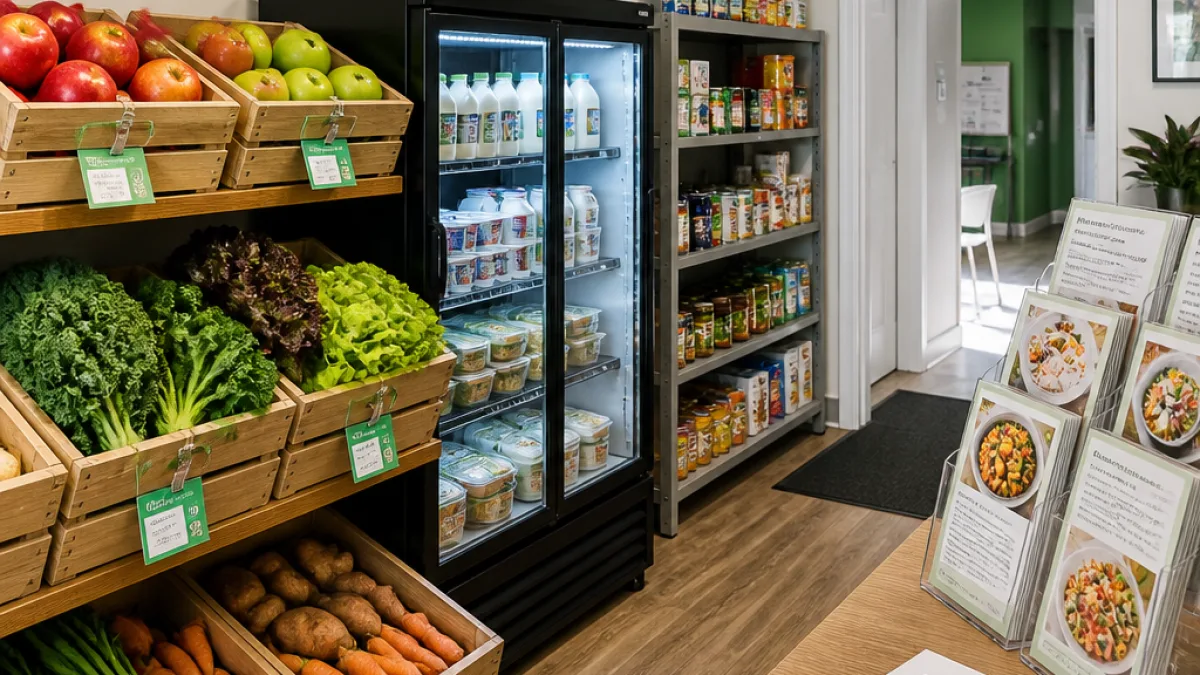
The Farmacy, the sixth established by RWJBarnabas Health, supplies a mix of fresh New Jersey-grown produce, refrigerated items and shelf-stable foods. It also stocks culturally relevant foods and recipes, and provides education aimed at preventing and managing chronic conditions such as diabetes, heart disease and hypertension.
- Fresh produce from New Jersey growers
- Refrigerated and shelf-stable foods
- Culturally relevant foods and recipe guidance
- Individualised counselling from registered dietitians
The initiative is part of the health system’s Our Healthy Communities programme and sits alongside five other Food Farmacies already operating across Middlesex, Mercer, Hudson and Essex counties.
Partnership with hunger-relief charity Fulfill
The Monmouth site was developed through a partnership with Fulfill, a longstanding hunger-relief organisation serving Monmouth and Ocean Counties. Fulfill supports a broad network of nearly 300 food pantries, soup kitchens, shelters and other resource centres, and brings operational expertise to the project.
“No one should have to choose between purchasing nutritious food and meeting other essential needs, including medical care,”
Those words come from Triada Stampas, President and Chief Executive Officer of Fulfill, who emphasised the combined value of Fulfill’s hunger-relief work and Monmouth Medical Center’s clinical and nutrition resources in creating a “direct and dignified path to healthy food for neighbours who need it.”
Mark E. Manigan, President and Chief Executive Officer of RWJBarnabas Health, framed the Farmacy as an extension of healthcare:
“RWJBarnabas Health’s Food Farmacy at Monmouth Medical Center is built upon the simple yet profound belief that access to healthy food goes hand-in-hand with access to world-class healthcare.”
Why this matters
Evidence linking food insecurity and poor health outcomes has been mounting for years. By placing food resources and dietetic advice inside a clinical setting, the Farmacy model aims to reduce immediate hunger while giving patients tools to manage long-term conditions. For patients with diet-sensitive illnesses, the combination of medically informed nutrition counselling and free or low-cost supplies can help reduce emergency admissions and improve day-to-day wellbeing.
| Feature | Monmouth Food Farmacy |
|---|---|
| Location | Alexander Pavilion, Monmouth Medical Center, Long Branch, NJ |
| Operated by | RWJBarnabas Health, in partnership with Fulfill |
| Offerings | Fresh produce, refrigerated items, shelf-stable foods, culturally relevant recipes, dietitian counselling |
Although the scheme currently operates in New Jersey, the underlying concept has resonance for healthcare systems worldwide: tackling social determinants of health, such as food access, within clinical pathways. For communities of all sizes, the approach points to how hospitals and charities can work together to address the root causes of ill health rather than simply treating symptoms.
For patients at Monmouth Medical Center, the Farmacy aims to be more than a foodbank-style outlet. It seeks to integrate dietary advice into routine care so that clinicians can refer patients to tailored food support and follow-up education. This model is particularly pertinent for people managing chronic conditions where diet is central to treatment and prevention.
The long-term impact will depend on how the service is used by clinicians, how well it is promoted among patients with greatest need, and the strength of the logistics linking medical prescriptions or referrals with available food supplies. Partners say the Farmacy is intended to address both immediate needs and long-term health outcomes, with an emphasis on dignity and cultural suitability.
As schemes like this expand, they raise questions for local services about how best to join up clinical care, public health and voluntary-sector provision — a conversation that will be of interest to health professionals, policy makers and communities in Monmouth and beyond.