Documentary prompts fresh scrutiny of Mendalgief Road and Glebelands
A BBC programme has returned attention to a long-running environmental worry for communities in Newport after highlighting the legacy of polychlorinated biphenyls (PCBs) linked to the former Monsanto chemical works on Mendalgief Road.
Residents and campaigners say the film, Buried with Michael Sheen, has reopened questions about whether past industrial activity has left a persistent contamination risk beneath parts of the city and what that means for local health and land use.
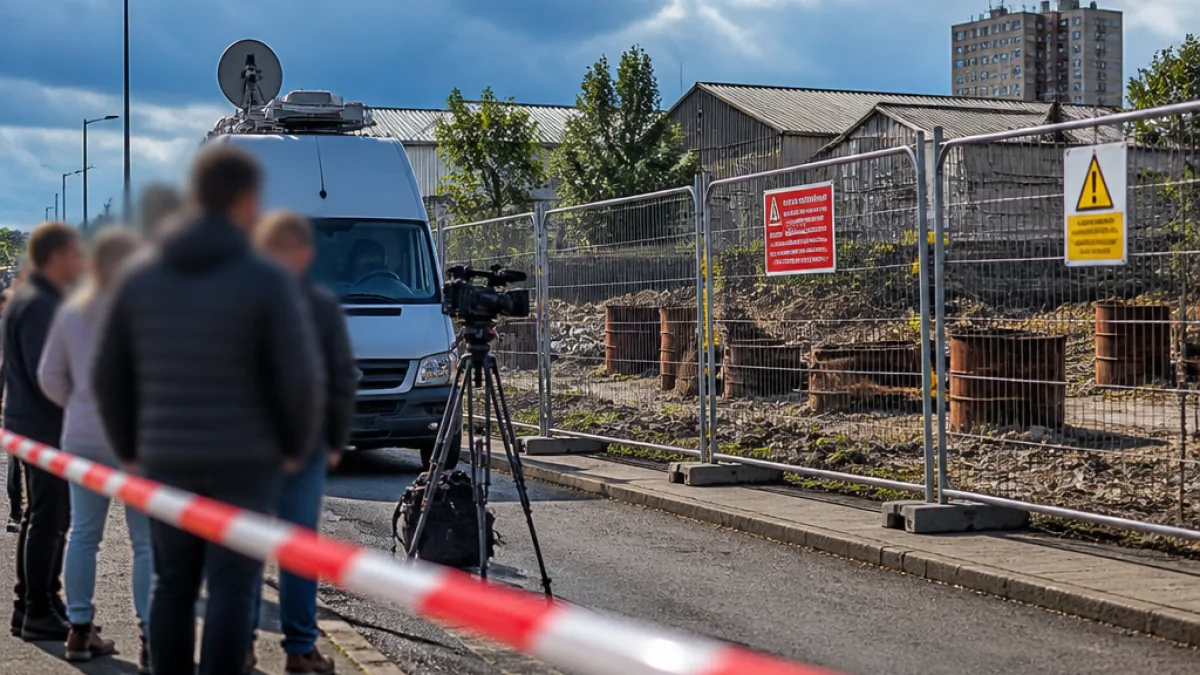
Monsanto’s Newport plant operated from 1949 and produced PCBs through the 1950s and 1960s. Waste from the factory was later found to have been dumped at multiple sites across South Wales, including Brofiscin Quarry near Groesfaen between 1965 and 1972. Concerns have long centred on the Glebelands area, adjacent to parts of Mendalgief Road.
History of local responses and removals
Local authorities and campaign groups have wrestled with how to manage land that was formerly used for industrial waste disposal. Media coverage in the early 1990s questioned whether parts of the Glebelands were suitable for development. In 1994 Newport council allowed up to 103 allotment plots to be established on former landfill there, prompting soil and crop testing amid fears about contamination; the allotments were later abandoned.
Controversy returned during the construction of Glan Usk Primary School in 2008, when campaigners asked for building work to be paused to allow further environmental assessment. A year later, PCB waste was discovered beneath part of Glebelands recreation ground. By June 2009, excavations had removed more than 2,200 tonnes of material, including 450 drums of PCB waste; later totals rose to 778 drums and over 2,500 tonnes of contaminated soil.
| Year | Event |
|---|---|
| 1949 | Monsanto plant begins operations in Newport |
| 1950s–1960s | Production of PCBs |
| 1965–1972 | PCB waste dumped at Brofiscin Quarry (and other sites) |
| 1994 | Council permits 103 allotment plots on former landfill |
| 2008–2009 | PCB waste found at Glebelands; thousands of tonnes removed |
What experts and lawyers say
John Browne, head of industrial disease for Wales and the South West at law firm Slater and Gordon, told the programme that these issues linger long after factories close. He said:
"Industrial disease or environmental exposure scandals, especially regarding PCBs, are not a problem that simply disappear with time. Contamination by dangerous toxic chemicals can persist in the environment for generations and families in exposed communities will live with questions about their health, their land and whether this could all have been prevented. This uncertainty in itself can take a significant toll."
His remarks underline the two-fold nature of the problem in Newport: the physical presence of hazardous material in soils and the unresolved worries among residents about potential health consequences.
Local consequences and unanswered questions
For people living near Mendalgief Road and Glebelands, the documentary has reignited debate over land management, future development and whether enough has been done historically to protect communities. Key concerns include:
- Whether current testing and monitoring are sufficient to detect remaining PCB contamination beneath playing fields, gardens and construction sites.
- How historical decision-making — such as permitting allotments on former landfill — will be reviewed in light of renewed attention.
- Support and information available to residents worried about long-term health impacts from environmental exposure.
Local agencies have previously undertaken removals and remediation where contamination was confirmed. But the film’s coverage has prompted calls for clarity about ongoing monitoring, public communication and any further investigations that might be necessary to reassure communities.
As scrutiny returns to these issues, Newport residents, local councillors and public health bodies will need to consider how best to balance redevelopment and community use of land with the precautionary handling of a toxic industrial past. The documentary has made clear that for many families the legacy of PCB production is not simply a matter of history but a continuing local concern.