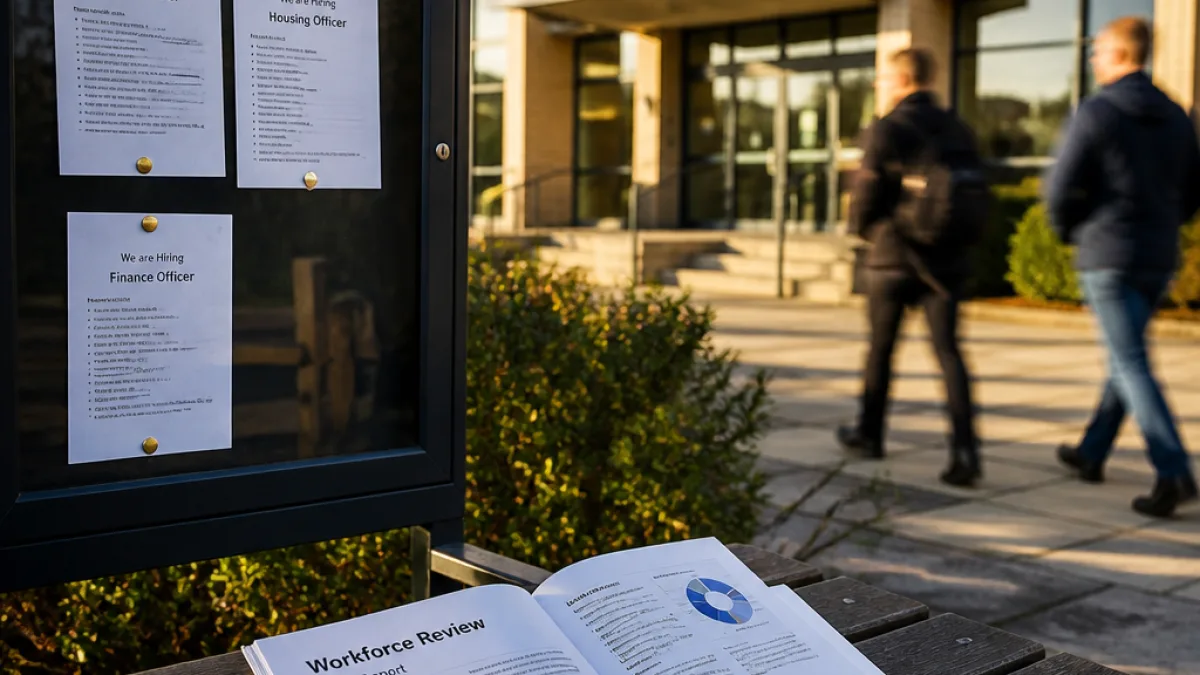
Audit finds council tackling staff shortages but without clear view of effectiveness
Merthyr Tydfil County Borough Council is making efforts to address recruitment and retention pressures across its services but lacks a sufficiently detailed picture of whether those efforts are working, according to a report published by Audit Wales.
The audit examined arrangements in the council’s finance, engineering, highways and children’s services departments during November 2025. Inspectors looked at how well the council understood its challenges, what actions were being taken and whether the authority reviewed the value for money of those approaches.
- Audit focus: recruitment and retention arrangements in four departments.
- Finding: council is taking steps but has a limited understanding of its workforce challenges.
- Recommendations: improve analysis of workforce data; review application and onboarding processes.
Audit Wales judged that while the council had started to respond to known staffing problems, it does not routinely analyse the information it holds. That gap makes it difficult for elected members and officers to assess whether spending on recruitment and retention represents good value for local taxpayers.
"Having the right workforce in place is essential for a council to deliver the services its communities need and to meet its legal duties."
The report adds that to meet its legal duties the council must employ the right number of staff, with suitable skills, at the right time. It also noted that the majority of the council’s day‑to‑day spending is used to pay for its workforce and that failure to recruit and retain staff risks service delivery.
| Department reviewed | When reviewed |
|---|---|
| Finance | November 2025 |
| Engineering | November 2025 |
| Highways | November 2025 |
| Children's services | November 2025 |
Audit Wales made two clear recommendations. The first asks the council to strengthen its understanding of recruitment and retention challenges and to test whether its responses offer value for money. The second calls for a review of the council’s application and on‑boarding processes so that lessons can be identified and applied in future recruitment work.
A council officer told auditors that the authority accepts the recommendations and is looking to take action to strengthen its approach. That acceptance is welcome, but the report emphasises the need for ongoing, systematic review rather than ad hoc activity.
Local consequences and next steps
For residents in Merthyr Tydfil the findings have practical implications. The council is responsible for services that matter to families and businesses — from maintaining roads and delivering waste collection to safeguarding children. If staffing gaps persist or local leaders cannot demonstrate the effectiveness of recruitment spending, there is a risk of service disruption or increased costs.
Improved workforce analytics would allow the council to target scarce resources more effectively. It could, for example, identify which roles are hardest to fill, where pay or conditions may be a barrier, or whether the council’s on‑boarding experience is contributing to early leavers. Those are the sorts of insights the auditors say are missing at present.
Local councillors will now be expected to scrutinise the council’s response and to press for a timetable for implementation. Community groups and staff representatives will also watch closely to see whether reviews of application and on‑boarding processes lead to practical improvements for new starters.
Ultimately, the report underlines a familiar challenge for smaller local authorities: balancing tight budgets while ensuring there are enough trained people to deliver essential services. The council’s next reports to Audit Wales should show whether its accepted actions deliver a clearer evidence base and better value for Merthyr Tydfil residents.