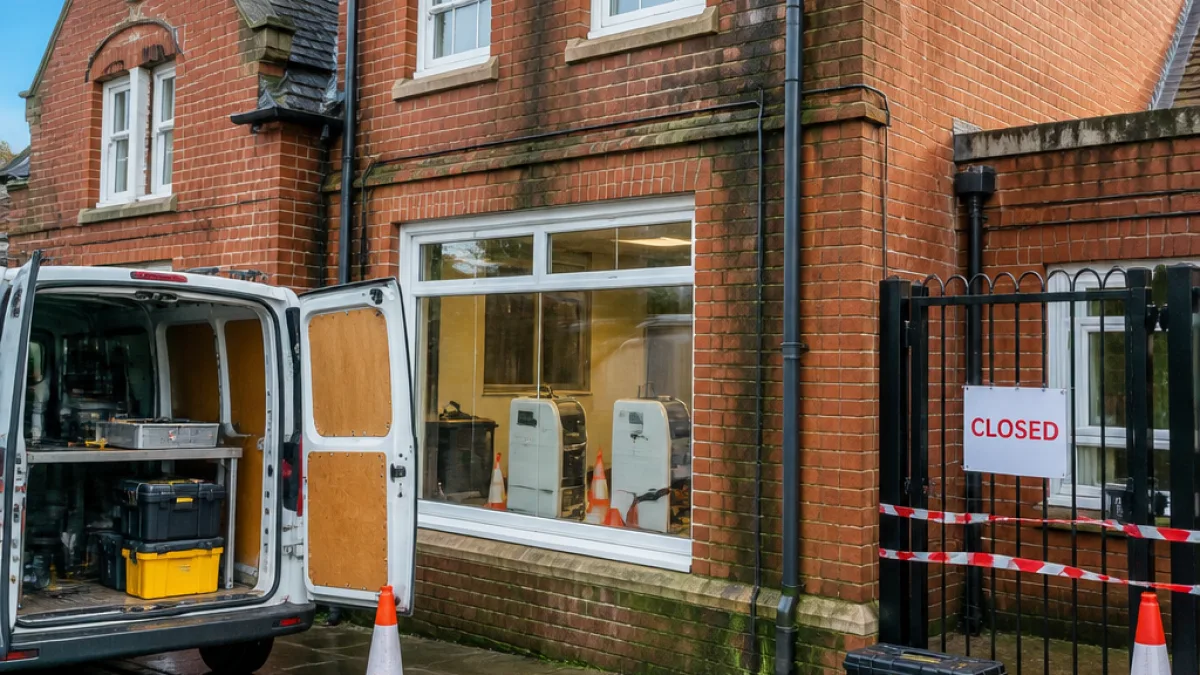
News that mould has closed schools across parts of southwestern Pennsylvania this term should be a wake-up call for communities with older school buildings, including Mold. In the United States, at least four districts delayed openings or cancelled in-person teaching because of mould discovered in school premises, while extreme heat forced 35 Pittsburgh Public School buildings into remote learning because they lacked adequate cooling.
What happened in Pennsylvania
Reports from western Pennsylvania describe a string of disruptive incidents tied to the fabric of school buildings. Mould has been blamed for delayed starts or cancelled classes in Monessen City School District, Laurel Highlands Middle School, Ligonier Valley School District and Homer-Center School District. Separately, Pittsburgh Public Schools moved dozens of schools to remote learning during a heatwave when buildings could not provide safe, cool spaces for pupils.
Those disruptions sit against a broader backdrop: a 2025 statewide study found widespread environmental hazards in Pennsylvania schools, including mould, lead and radon. The average age of a Pennsylvania school building is 70 years, about 20 years older than the national average. Pittsburgh’s school buildings average around 90 years old. Older buildings tend to harbour problems — from leaking roofs and damp to legacy materials such as asbestos — that can compromise both health and the learning environment.
Health and learning: the consequences of poor building condition
Mould is a form of fungus that flourishes in damp, poorly ventilated conditions. While not every exposure produces illness, mould and other environmental hazards inside schools can affect respiratory health and wellbeing, particularly in a population that spends more than 1,000 hours a year on the premises. The link between a healthy indoor environment and educational outcomes is well established: pupils tend to do better where classrooms are dry, clean and thermally comfortable.
Alongside mould, asbestos remains a present challenge in some older buildings. Central Valley School District in Beaver County is undergoing asbestos abatement in middle- and high-school buildings dating from the 1960s; work is continuing while pupils remain in the buildings. Asbestos is hazardous when damaged or disturbed and releases fibres into the air.
- Mould closures: at least four districts delayed or cancelled in-person classes.
- Heat-related closures: 35 Pittsburgh Public School buildings moved to remote learning during a heatwave.
- Age of buildings: Pennsylvania average 70 years; Pittsburgh average 90 years.
“The age and upkeep of these school buildings affect students’ health and their ability to learn.”
For parents and governors, the immediate questions are practical: are classrooms ventilated and free from damp? Is there sufficient cooling to cope with heatwaves? Are legacy hazards such as asbestos being actively managed? Those are the same questions that face councils and school trusts across the United Kingdom, including here in Wales.
Lessons for Mold and other communities
It would be inappropriate to suggest the same problems exist in any one local school without inspection. But the Pennsylvania incidents are a reminder that the condition of school buildings is not a purely administrative issue — it is a public-health and educational concern. Local authorities and school governing bodies must balance budgets, but deferred maintenance can carry higher costs: lost school days, remedial works, replacement of materials and, crucially, potential harm to pupils and staff.
For communities in and around Mold, the story invites practical checks and public discussion. Governing bodies could consider publishing condition surveys and plans for ventilation, damp control and thermal comfort. Parent-teacher associations and councillors have a legitimate role in scrutinising plans and pressing for timely action where risks are identified.
| Issue | Consequence |
|---|---|
| Mould and damp | Illness, lost school days, remediation costs |
| Extreme heat | Remote learning, disruption, need for cooling systems |
| Legacy materials (asbestos, lead) | Specialist abatement while maintaining safety for pupils |
Local media, unions and councils should keep pressure on to ensure inspections are thorough and transparent. The pupils who attend our schools deserve environments that support health and learning. The Pennsylvania example shows how quickly that balance can be upset when buildings are old or systems fail.
In the weeks ahead, parents and school staff in Mold may reasonably ask for clarity about air quality, ventilation checks and plans for preventing damp — and for assurances that contingency plans are in place should conditions deteriorate. That kind of scrutiny is practical, not alarmist: it is how communities keep children safe and schools open.