Homelessness emerges as a leading local issue ahead of Windsor elections
Windsor residents responding to a recent CBC Windsor survey placed homelessness and encampments among their top three concerns for the upcoming municipal election, underlining pressure on candidates to set out clear plans for shelters, support services and local enforcement.
The online, non-scientific survey collected 461 responses. Of those, 174 respondents — more than one third — ranked homelessness or encampments as one of their three most important issues.
| Measure | Figure |
|---|---|
| Total survey responses | 461 |
| Respondents naming homelessness in top three issues | 174 |
What the survey represents — and its limits
Organisers said the survey was distributed through libraries and community groups, on CBC Windsor's website and via social channels. Because it was not a random or scientifically weighted poll, the results cannot be taken as a precise measure of city-wide opinion. Nevertheless, the findings reflect a visible concern among a sizeable group of residents and community stakeholders about how local authorities manage homelessness, encampments and associated services.
Local service providers and people with lived experience say the issues raised by the survey are not abstract — they affect where people sleep, how they access help and how neighbourhoods respond.
Voices from the street
The survey piece included testimony from a local resident who has lived through homelessness. Jeremiah Dinculescu, who said he has struggled with substance abuse and the justice system, described recovery as a process that depended on other people and organisations as well as personal effort.
"When you're homeless, you're really down and out, right? People, they pass you by and they frown upon you because you're basically the bottom feed of society and nobody gives you a chance,"
Speaking about his own recovery, Dinculescu added: "These people can't do it on their own. Only with the help of God and from other people that they can get back on their feet." His testimony highlights the role of community-based support in helping people transition out of homelessness.
Local services and the public conversation
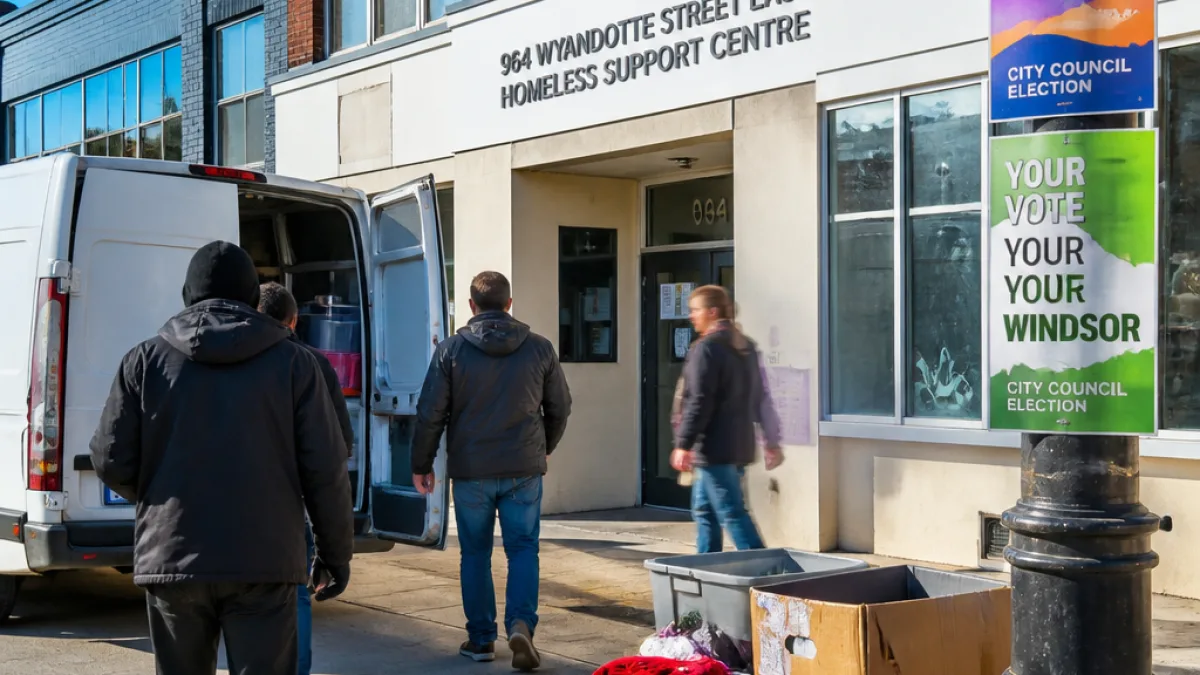
The survey story also referenced local services, including Street Help Homeless Centre, which is located at 964 Wyandotte Street East. Organisations like this provide immediate help and are often central to debates about funding, capacity and the best mix of prevention and crisis response.
- Public concern: More than a third of survey respondents ranked homelessness among their top three issues.
- Service pressure: Local centres and outreach teams are central to short-term responses and long-term recovery.
- Policy questions: Voters and candidates will need to address shelter capacity, support services and community engagement.
What this means for candidates and voters
With the municipal election approaching, the survey results will increase expectations on candidates to present concrete proposals. Residents who answered the survey want answers on how the city will support people sleeping rough, manage encampments and coordinate with provincial and charitable partners to prevent homelessness. Local charities and people with lived experience are likely to press for stronger investment in wraparound services that combine housing help with mental health and addiction support.
For voters in Windsor, the debate is not just about policy in the abstract but about how services will be delivered in their neighbourhoods and how the city will balance compassion with public safety and local amenity concerns.
The CBC report does not attempt to forecast how the emphasis on homelessness will influence individual contests for mayor or council seats. But it does provide a snapshot of the issue’s prominence among a portion of local respondents and underscores the need for candidates to address the practical consequences of homelessness in Windsor communities.
As the campaign continues, residents and advocacy groups will be watching party platforms and council statements, looking for specific commitments on shelter places, support services and co-ordinated action between the city, charities and provincial agencies.