Local councillors say shift will remove a layer of democratic scrutiny
District councillors in Chichester have criticised impending national changes to planning decision-making that they say will remove a key local safeguard and make it harder for communities to secure committee scrutiny of important applications.
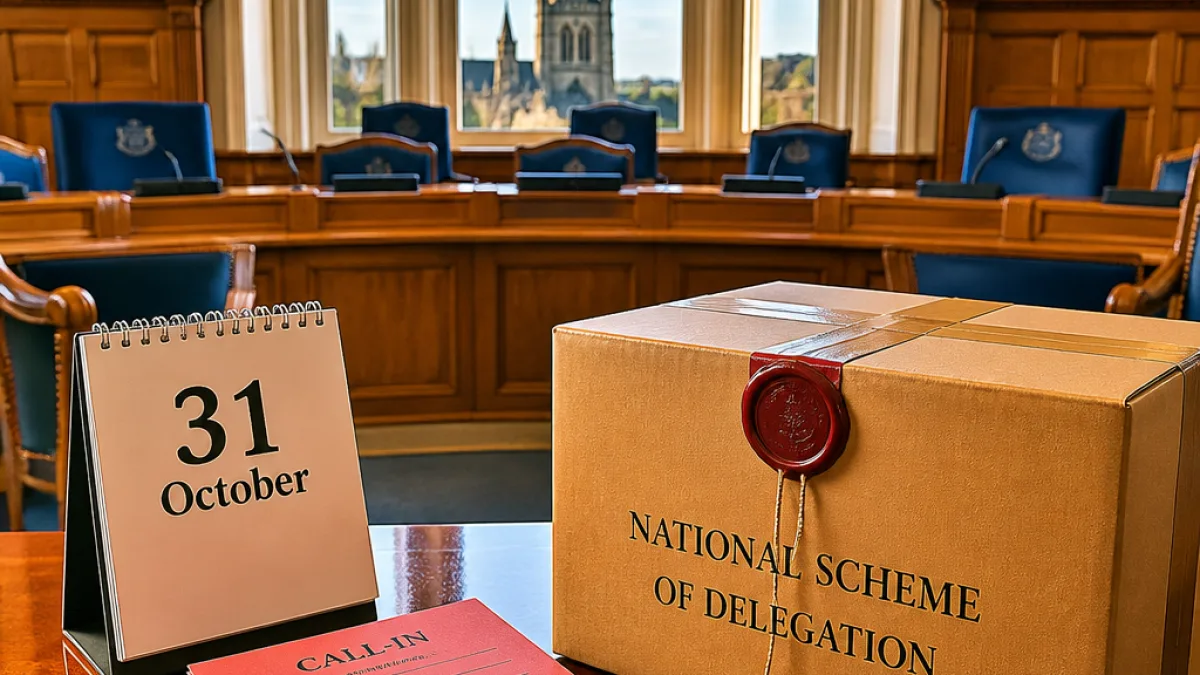
The government’s National Scheme of Delegation, due to take effect on 31 October, will alter how it is decided whether planning applications are handled by planning committees or by planning officers. Under the new arrangement Chichester’s local Red Card system — which currently enables district, city, town and parish councillors to call for an application to be put before committee — will be withdrawn.
- Change implemented: National Scheme of Delegation, effective 31 October.
- Local loss: Removal of Chichester’s Red Card route for calling-in applications.
- Council response: Leaders say they will comply while urging early review of applications and closer officer-councillor working.
At a meeting on Wednesday 23 September, councillors from across the political spectrum voiced alarm. Roy Briscoe (Con, Westbourne) described the reform as “an assault on democracy”, while Liberal Democrat Dominic Merritt (Midhurst) warned it would reduce the ability of town and parish councils to ensure matters of local importance receive democratic consideration.
“It will affect the decision-making process, which ever way we look at it. It really isn’t a win for democracy. It stifles democracy and takes decision-making away from elected councillors.”
Council leader Adrian Moss characterised the change as “the removal of democracy”, though he stressed the authority must follow the new legal framework. He told colleagues the council was doing all it could within the constraints of the law to protect local input, and urged councillors and residents to review applications early and to work closely with planning officers to raise concerns.
Andrew Frost, Chichester District Council’s director of planning & environment, sought to reassure members by saying that lower-tier councils would not be excluded from the process and that the most significant applications would still be referred to committee. But several councillors remained unconvinced that the changes would not diminish democratic oversight.
| Item | Before 31 Oct | After 31 Oct |
|---|---|---|
| Red Card system | Allowed call-in by individual councillors | Withdrawn under national scheme |
| Committee referral | Local councillor can request committee consideration | Decision on referral set by national delegation rules; significant cases still referred |
Members noted the council has little option but to implement the new rules, warning that failure to comply could lead to legal action. That constraint has shaped the tone of the council’s response: clear frustration at the loss of a local mechanism, coupled with a pragmatic focus on how to protect the interests of residents within the new framework.
The debate points to wider questions about how national policy changes are felt at a local level. For Chichester’s town and parish councils, and for residents keen to see planning proposals considered by elected representatives, the removal of a direct call-in route will mean adapting to new procedures and building tighter working relationships with planning officers.
How effectively that adaptation happens will determine whether communities feel their voices continue to be heard on planning decisions that affect neighbourhoods, heritage and environment across the district.