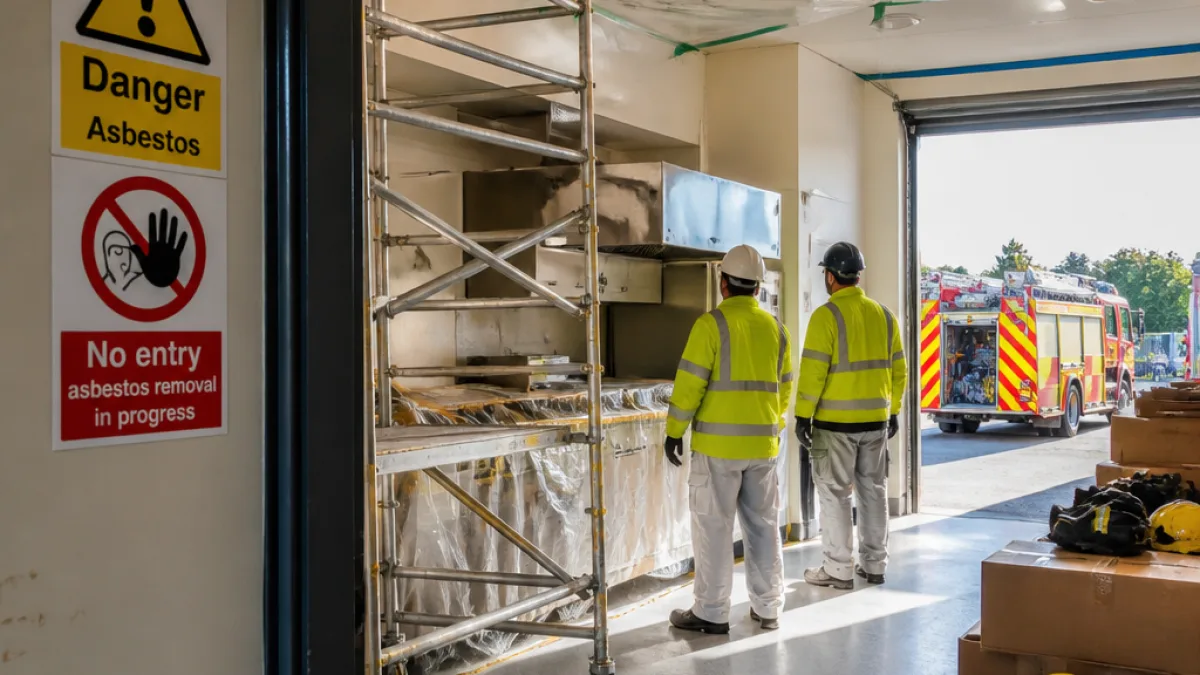
Two fire stations in Flint, Michigan, have been temporarily closed while contractors remove asbestos and address mould discovered in station kitchens, according to a city statement. The closures have required firefighters to relocate to neighbouring stations, but officials say emergency response times have so far been maintained.
What has happened in Flint
The city approved $163,964 in May to carry out overdue kitchen renovations at Stations 6 and 8. Work by Siwek Construction Company was scheduled to start at the beginning of the 2026–27 fiscal year, and the programme involves ceiling and drywall repairs, painting and new countertops. Fire Chief Theron Wiggins said the work was “long overdue” and the kitchens had both mould and asbestos issues.
While the two stations are closed, crews have been temporarily reassigned to Station 1, downtown, and Station 5 on Western Road. The chief said the reassignments have not impacted response times. Since January, Flint has recorded 2,458 fire calls with an average response time of approximately four minutes. Ambulance crews have completed more than 3,500 runs so far this year.
“The Flint Fire Department is stronger today, and we are continuing to build for the future,”
Wiggins added that staffing at the department has increased from 68 firefighters in 2022 to 92, and that a further twenty recruits will enter the fire academy in January.
Local relevance for Mold
Although this account concerns a city across the Atlantic, the issues it raises are familiar to many towns here in Wales. Public buildings age, budgets are stretched and hidden hazards such as asbestos and mould can threaten the welfare of staff and the continuity of essential services. For residents of Mold, the Flint example offers a reminder of why routine building surveys and timely investment matter.
Temporary station closures can be managed without noticeable disruption if there is spare capacity and careful redeployment of crews. But not every authority enjoys the room to shuffle resources; smaller services may have fewer reserve appliances and fewer staff to call upon. The Flint case shows that, with planning and investment, services can sustain standards of protection while remediation occurs — but it depends on local circumstances.
- Hidden hazards: asbestos and mould remain common problems in older municipal buildings.
- Investment matters: Flint approved nearly $164,000 for remedial work to bring kitchens up to standard.
- Resilience depends on capacity: Flint maintained a c.4‑minute response time through temporary redeployment.
| Item | Figure |
|---|---|
| Approved renovation funding | $163,964 |
| Fire calls since January | 2,458 |
| Average response time | ~4 minutes |
| Firefighter numbers (2022 → now) | 68 → 92 |
| Ambulance runs this year | 3,500+ |
Questions for local councils and residents
Mold readers may wish to raise a few practical points with their local council and fire and rescue service: when were public buildings last inspected for asbestos and mould; is there a forward maintenance plan and funding in place; and how would the service cope if a local station needed to close at short notice?
Public-safety officials locally and across Wales will be watching whether Flint’s renovation schedule stays on track and what lessons emerge as contractors begin work. For communities, the episode is a prompt to ensure that ageing facilities are not left until problems force disruption. In Flint, officials point to rising staffing numbers and a commitment to build capacity; elsewhere, finding the money and the space to maintain uninterrupted cover may be harder.
For now, Flint’s fire department says crews continue to serve the city while kitchens are repaired — a practical, if unwelcome, reminder that the safety of first responders depends as much on the condition of their stations as on their training and courage.