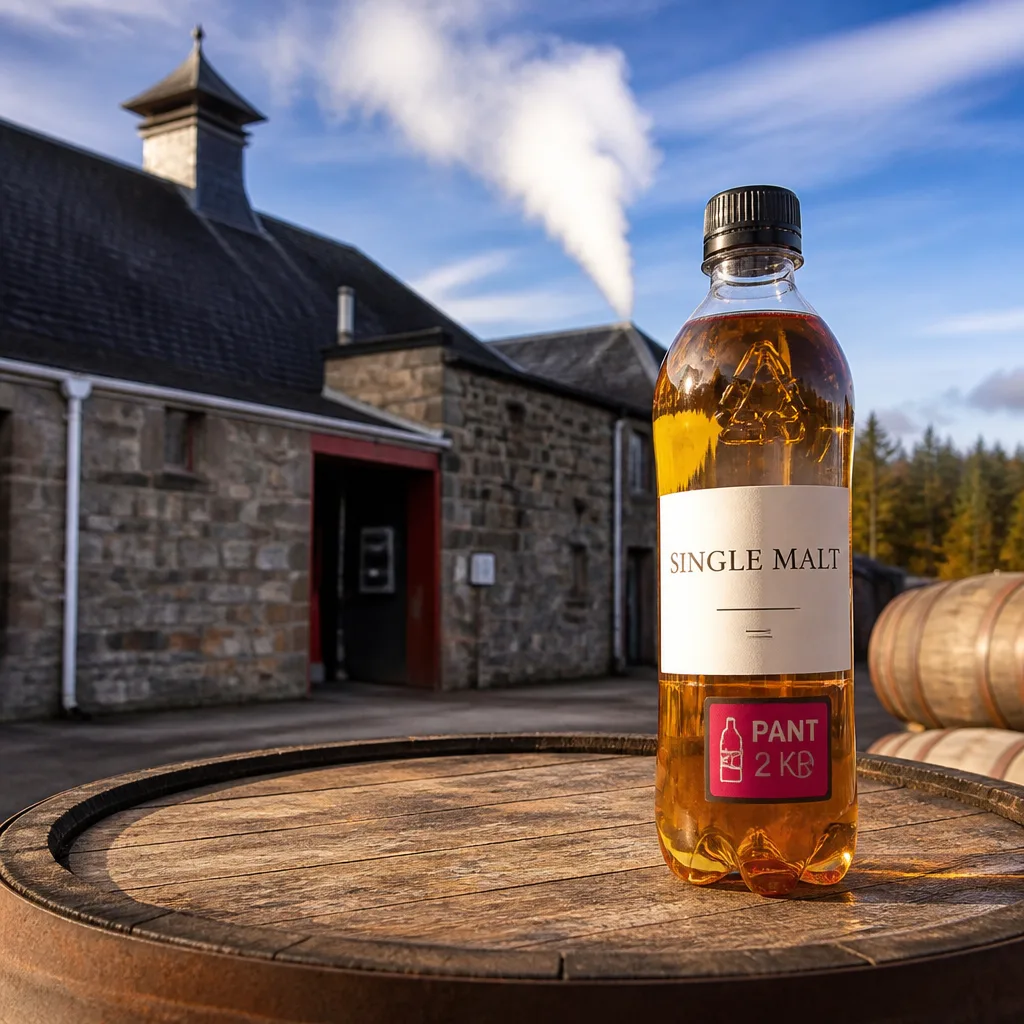
The Ardnamurchan distillery in the Scottish Highlands has begun offering its flagship AD/ single malt in a 50cl PET plastic bottle for the Norwegian market, a packaging change the company and Norway’s state alcohol retailer say may be a global first for single malt Scotch.
Details of the launch
The AD/ single malt is available from Vinmonopolet, Norway’s state alcohol monopoly, priced at Kr399 (US$43) for the 500ml PET bottle. The liquid inside is unchanged from the glass-bottled product sold elsewhere: a combination of peated and unpeated Highland single malts matured in Bourbon and Sherry casks.
Packaging and environmental rationale
Ardnamurchan framed the packaging decision within a sustainability context. The distillery said it is powered entirely by biomass fuel sourced from local forestry and uses a range of measures to reduce environmental impact on the West Highlands. In an interview with The Spirits Business, international sales manager Graeme Mackay said the choice matched Norway’s unusually high recycling rates.
“In Norway, recycling rates are incredibly high, around 90-98%,” Graeme Mackay told The Spirits Business.
Vinmonopolet confirmed the release forms part of its broader sustainability strategy. The retailer said it has for several years encouraged suppliers to adopt lower-carbon packaging options such as lightweight glass, PET, aluminium and pouches, and highlighted that the Ardnamurchan bottling is the first single malt Scotch whisky launched by the monopoly in a PET bottle with deposit.
“Ardnamurchan AD/ 500ml PET bottling is part of Vinmonopolet’s ongoing sustainability strategy,” a Vinmonopolet spokesperson said.
Claims and practical advantages
Both Ardnamurchan and Vinmonopolet emphasised the practical benefits of PET: the material is lighter than glass, needs less energy to produce and is less likely to break in transit. Vinmonopolet noted that, while PET is established in other beverage categories, combining a single malt Scotch with a national deposit-return system is novel.
The distillery described the opportunity to market the package as one that aligned with its credentials, saying it believed the PET offering represented strong value for consumers.
What is clear — and what is not
The announcement makes two specific claims backed by the parties involved:
- Ardnamurchan and Vinmonopolet say this is the first single malt Scotch launched in a deposit-return PET bottle, to their knowledge.
- Vinmonopolet and Ardnamurchan point to Norway’s high recycling rates — quoted as around 90–98% — as justifying the format in that market.
What the statements do not address is whether this packaging will be adopted in other markets, or what impact the shift might have on perceptions of premium whisky packaging globally. The Scotch Whisky Association’s rules were referenced in the source material but the sentence was incomplete; the source did not provide a full statement from the association on this specific bottling.
Context and potential consequences
The move touches on a number of broader trends: consumer and retailer pressure to reduce the carbon footprint of packaged goods; the use of deposit-return schemes to improve recycling rates; and tensions between traditional premium presentation and lifecycle emissions. For Scottish producers, the announcement could open new conversations about weight, transport emissions and breakage risk versus longstanding norms that associate single malt Scotch with glass bottles.
For Norway, a country with an established deposit-return culture and a centralised alcohol retail system, the launch demonstrates how procurement requirements and high domestic recycling rates can influence supplier packaging choices. Whether other national retailers or producers follow suit will depend on logistics, regulatory interpretations and consumer acceptance.
| Item | Detail |
|---|---|
| Product | Ardnamurchan AD/ single malt (peated + unpeated) |
| Format | 50cl PET bottle with deposit |
| Price in Norway | Kr399 (US$43) |
| Recycling rates cited | 90–98% (Norway, per Ardnamurchan) |
The launch is small in scale — a single product variant in one market — but it will be watched by other distillers, retailers and industry bodies assessing how environmental targets and deposit-return systems intersect with traditional spirits marketing.