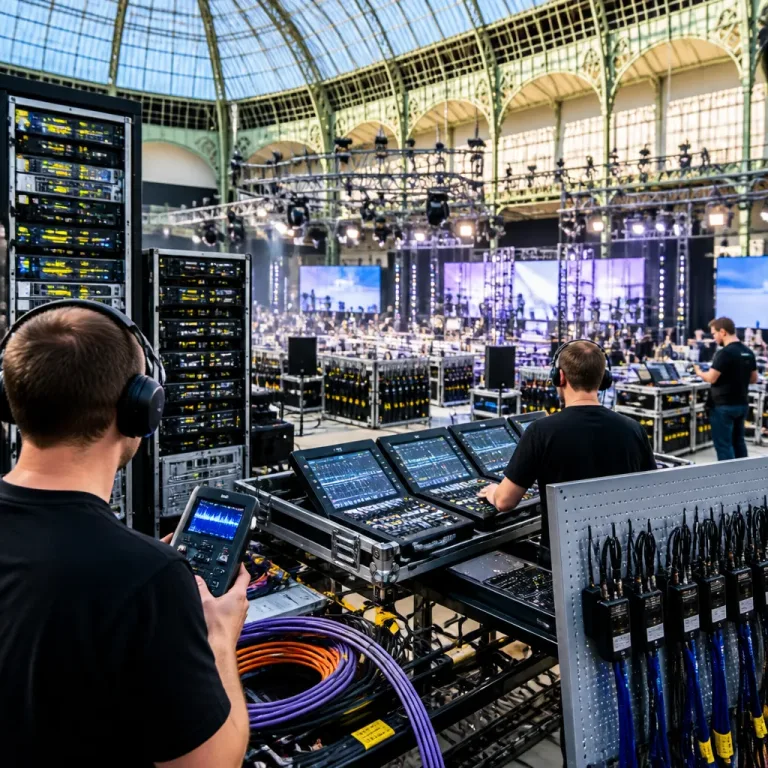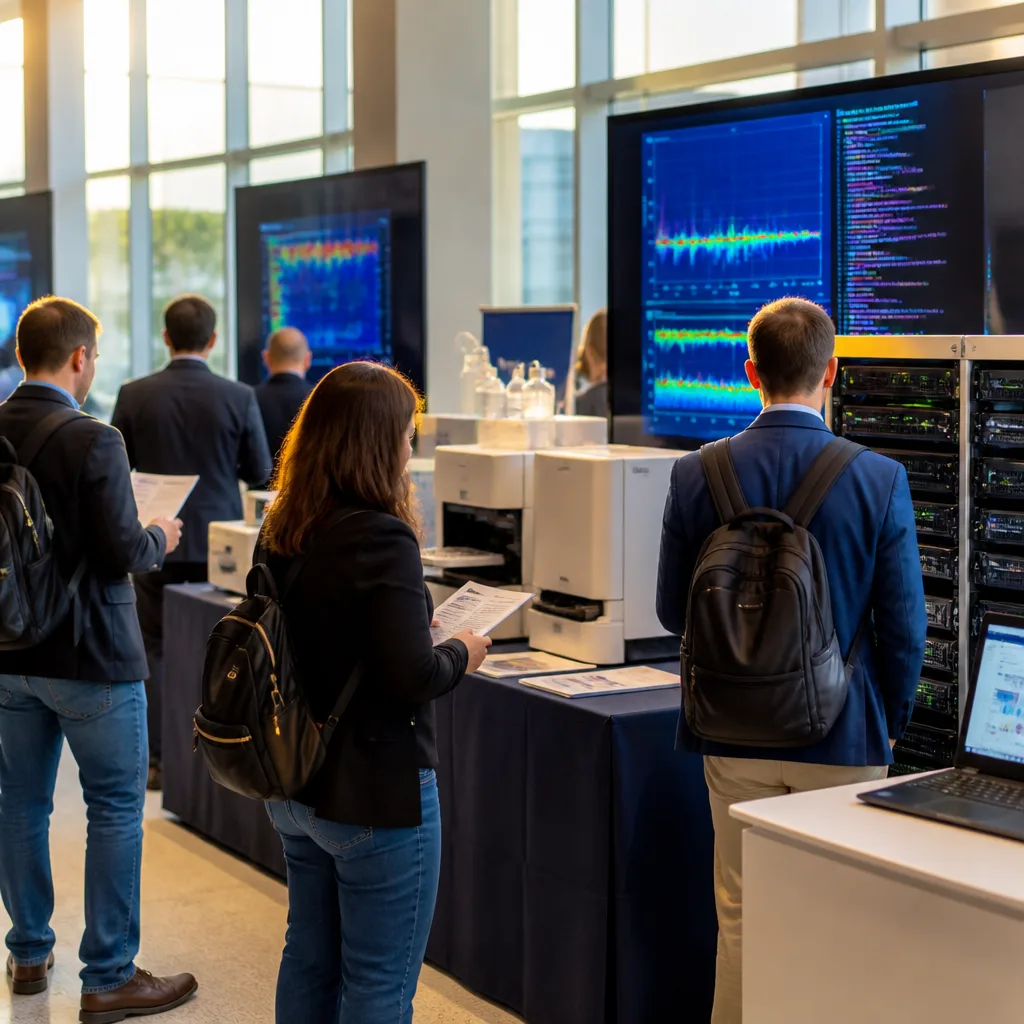
Mass spectrometry — historically driven by innovations in ionisers, analysers and hybrid hardware — is undergoing a quieter but profound change: software is moving from a support role to being central in how instruments are used and what they deliver. Attendees and vendors at the 74th ASMS Conference on Mass Spectrometry and Allied Topics described an ecosystem where hardware and software must co‑exist, with software increasingly responsible for extracting value from very large, complex datasets.
From enabling data to interpreting it
Modern high‑resolution mass spectrometers produce vast volumes of often multi‑dimensional data. Without specialised software, these raw signals are difficult to interpret, reducing performance gains made possible by advances in instrument design. Software tools now clean noisy data, run statistical analyses, search databases and help reconstruct structures of interest — tasks that were impractical or impossible at scale a decade ago.
That point was underlined by industry figures at the conference. Ansgar Korf, chief executive of mzio, said the field has long depended on software to make sense of measurements. He argued that software and hardware operate in a "symbiosis" and that data is "almost nothing without software" when experiments scale to hundreds or thousands of samples.
“Both software and hardware need to co‑exist in a type of symbiosis, and having this balance is very important.”
James Hallam, vice‑president and general manager for LC‑MS at Waters Corporation, echoed the view that software is becoming critical as datasets grow in size and complexity. While he acknowledged that there remains work to be done in hardware development, he emphasised that the ability to interpret large, complex datasets increasingly depends on software capability.
Consequences for labs, vendors and instrument design
The shift has several practical consequences. Laboratories face rising demands on data storage, compute and specialist expertise to run advanced software workflows. Vendors will need to invest more in software development, user interfaces and integration with laboratory information systems as well as in the traditional physics and engineering that drive sensitivity and resolving power.
There are also implications for accessibility and sustainability. Software that automates routine tasks, reduces failed analyses and optimises instrument maintenance can make instruments easier to use and more cost‑effective. Likewise, analysis tools that extract more information from less material or shorter runs could support efforts to reduce energy and consumable use.
- Data volume: High‑resolution instruments create large, multi‑dimensional datasets that require advanced processing.
- Software functions: Noise reduction, statistical analysis, database searching and structure reconstruction are now core capabilities.
- Vendor strategy: Companies must balance investment between hardware performance and software platforms to remain competitive.
| Area | Traditional focus | Emerging focus |
|---|---|---|
| Instrument makers | Ioniser and analyser design | Integrated software, data workflows |
| Laboratories | Hardware maintenance | Data management and informatics skills |
| Users | Method development | Automated analysis and reproducibility |
Speakers at the ASMS conference described this evolution not as a replacement of hardware innovation but as a rebalancing. Hardware remains critical — particularly for sensitivity and resolving power — but software is now central to unlocking the analytical value of modern instruments.
That rebalancing raises policy and procurement questions. Research funders and laboratory managers must weigh investment in computational infrastructure and training alongside capital spend on instruments. Similarly, reproducibility and data‑sharing standards will become more important as software pipelines grow more complex and influential in determining results.
In short, mass spectrometry is entering a phase where the best outcomes will come from pairing improved instruments with robust, transparent software. The debates at the 74th ASMS conference suggest that the community is aware of the shift and is beginning to adapt — but the practical work of building scalable, user‑friendly and trustworthy software systems is only just beginning.