A horse in southern Texas has been confirmed as the first equine infection of the New World screwworm in the United States, officials said, deepening concerns over an outbreak of the parasitic fly larva that can cause severe tissue damage to animals.
Detection and local response
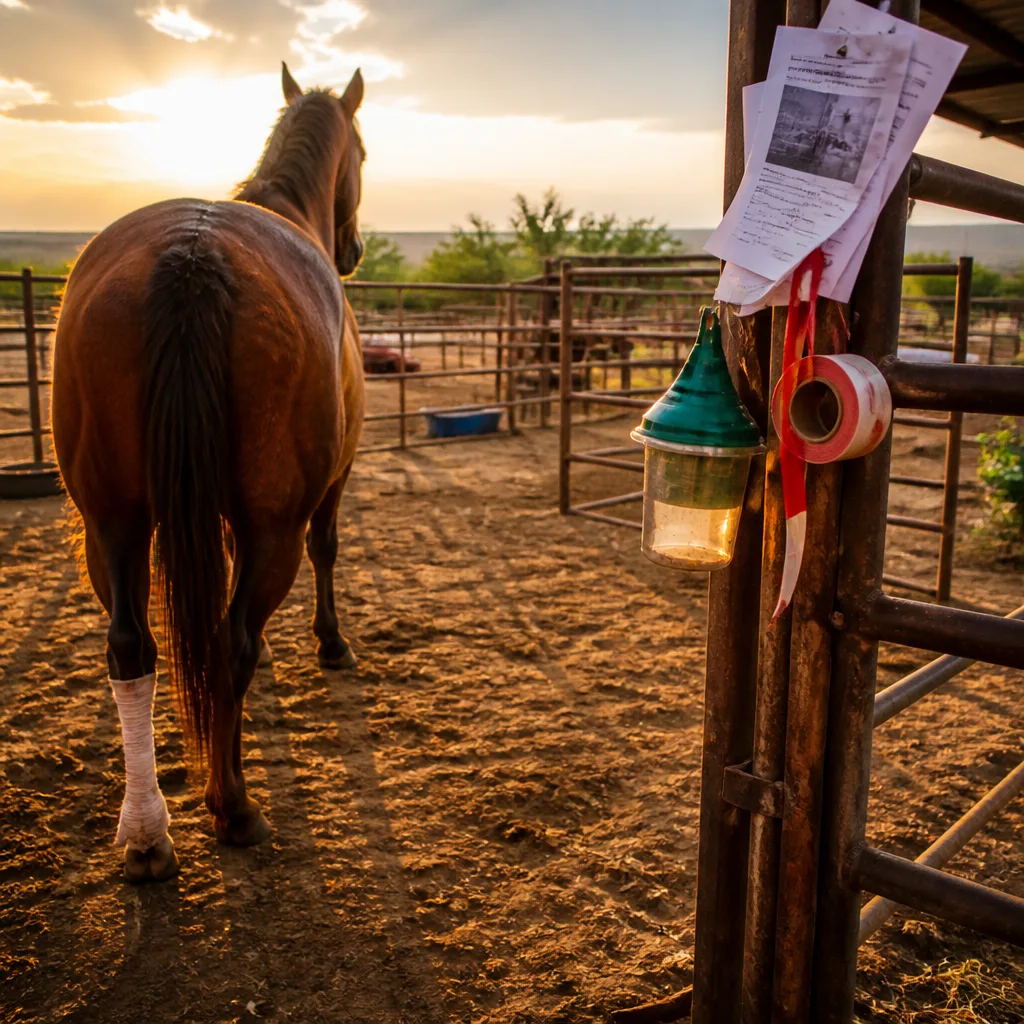
The parasite was identified on the hind limb of a working ranch horse in Presidio County, according to a statement issued on Thursday by the US Equestrian Foundation. The discovery follows earlier detections this year, when the screwworm was first reported in June on a calf in Zavala County, near the US–Mexico border.
“Check horses daily, keep wounds clean and covered as directed by your veterinarian, use veterinarian‑recommended fly control products and limit fly access with physical barriers such as fly masks, sheets and clean stabling practices when appropriate,”
The foundation urged owners to inspect animals every day for signs of infestation, such as wounds, foul odour or visible maggots, and to follow veterinary advice on wound care and fly control.
Movement controls and containment efforts
State animal health authorities have imposed restrictions on the movement of warm‑blooded animals out of areas already identified as infested. The Texas Animal Health Commission has limited movement in parts of Presidio and Jeff Davis counties, among other zones, as part of efforts to curb new infestations and protect neighbouring herds.
Federal agencies report that the majority of US cases recorded this year have been in Texas; of the 49 cases documented nationally to date, all but one were in Texas, with the exception detected on a dog in New Mexico, the US Department of Agriculture said.
Wider context and mitigation
The New World screwworm (Cochliomyia hominivorax) burrows into open wounds and feeds on living tissue, which can lead to serious injury or death in livestock and companion animals. The insect had been eradicated from the United States decades ago, making the current resurgence particularly troubling for ranchers and veterinary authorities.
State officials earlier this year declared the situation a disaster. The Governor of Texas issued a proclamation in June to unlock state resources for response operations after the parasite began to reappear in border regions. Parallel to state measures, federal programmes have sought technical and operational solutions.
Before the parasite was confirmed on US soil this year, federal authorities announced the relocation of a sterile‑fly production facility to Edinburg, Texas. The approach uses mass‑released sterile male flies: when sterile males mate with wild females, the resulting eggs are non‑viable, reducing population growth. Authorities are relying on this technique, alongside movement controls and on‑the‑ground surveillance, to bring the outbreak under control.
- Location of latest equine case: Presidio County, Texas
- First US detection this year: Zavala County (calf), June
- Number of US cases reported so far this year: 49 (almost all in Texas; one in New Mexico)
| Jurisdiction | Reported cases (this year) |
|---|---|
| Texas | 48 |
| New Mexico | 1 |
Veterinary and agricultural officials warn of the potential financial consequences for ranchers if infestations spread. The screwworm can inflict severe losses when animals require intensive treatment or are lost to infection. The combination of animal movement restrictions, on‑farm biosecurity measures and the sterile‑male programme form the backbone of the response.
Uncertainties and next steps
At this stage, the precise trajectory of the outbreak remains uncertain. Surveillance will determine whether the parasite is becoming established in new zones or remains confined to a set of affected counties. Ranchers and animal owners are being advised to maintain heightened vigilance, prioritise wound management and consult veterinarians promptly if they detect any suspicious signs.
Authorities continue to monitor the situation closely and to coordinate state and federal actions. For now, the equine case underscores how quickly a pest once thought eradicated can reappear and disrupt agricultural communities if not rapidly contained.