
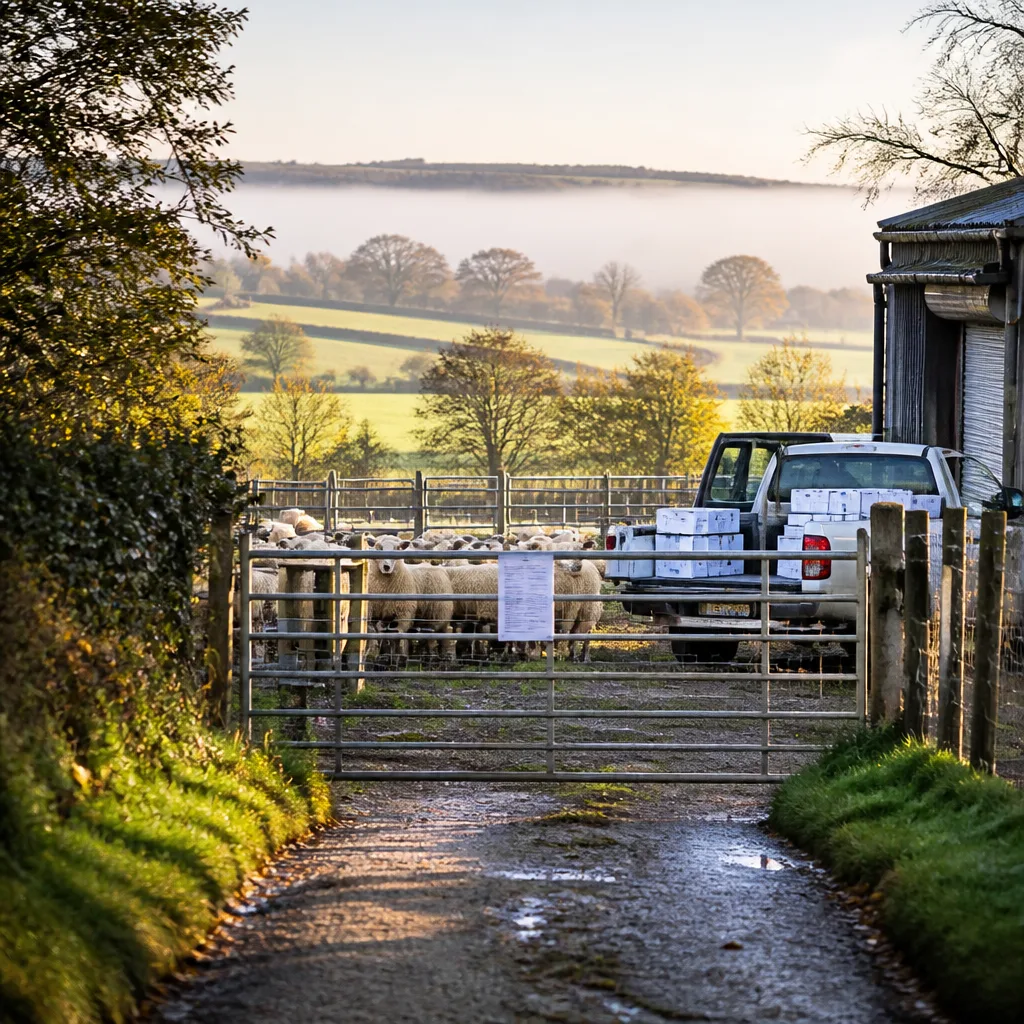
Four properties in Shropshire have been confirmed as infected with bluetongue virus, part of a new update from the Department for Environment, Food and Rural Affairs (Defra) that takes the total number of cases in the UK for 2026-27 to 618.
Defra has not revealed the precise locations of the affected premises in Shropshire, nor confirmed whether the animals involved were sheep or cattle. The department said the latest national bulletin recorded 25 fresh detections across the country; of those, 18 were in sheep, six in cattle and one at a mixed farm affecting both species.
Immediate response and vaccine concerns
The department said it is working with industry bodies to manage the situation and to secure additional vaccine supplies for at‑risk herds. In a statement, Defra set out its engagement with the livestock sector:
"[We are] working closely with the industry and is putting processes in for additional vaccine supplies"
Farmers and veterinary groups have warned of pressure on vaccine stocks amid an unusually warm summer that encourages the biting midges which transmit bluetongue. Earlier this month a Shropshire farmer publicly expressed anxiety about access to the necessary vaccines to protect stock.
How the infection is spreading
Bluetongue is an insect‑borne viral disease principally transmitted by Culicoides midges. Warmer, settled weather increases midge activity and can hasten spread between holdings. The disease affects sheep and cattle, and while many infected animals show only mild signs, it can be fatal in some cases and results in movement restrictions that disrupt farming operations.
Government monitoring and movement controls are the primary tools used to limit onward transmission. The affected properties in Shropshire are subject to statutory controls; Defra has so far withheld the premises’ identities for biosecurity reasons.
Industry briefings and advice
The Agriculture and Horticulture Development Board (AHDB) has scheduled a meeting in Shrewsbury as part of a national series of updates for farmers. The session at the Shrewsbury Auction Centre will include industry experts delivering practical advice on recognising signs of bluetongue and the latest position on vaccinations.
- National tally: 618 cases in 2026-27.
- Recent additions: 25 new detections; 18 sheep, 6 cattle, 1 mixed farm.
- Local impact: four affected premises in Shropshire (locations not disclosed).
| Metric | Figure |
|---|---|
| Total UK cases 2026-27 | 618 |
| New cases in latest update | 25 |
| Breakdown (new cases) | Sheep 18, Cattle 6, Mixed 1 |
| Cases in Shropshire | 4 |
The AHDB meeting aims to give farmers practical guidance on recognising early symptoms — such as fever, facial swelling, nasal discharge and lameness in sheep — and on biosecurity measures to reduce vector exposure. Veterinary surveillance teams continue to test suspect animals and to enforce movement restrictions where disease is confirmed.
Wider consequences and next steps
Beyond the immediate animal health consequences, bluetongue outbreaks can lead to significant economic disruption. Movement restrictions can delay sales, impact show and market schedules, and complicate breeding programmes. Trade implications may also follow depending on the scale and duration of the outbreak.
Defra said it is coordinating with industry to accelerate vaccine availability and to keep farmers informed. The AHDB’s Shrewsbury briefing will allow local producers to question experts directly; national surveillance, meanwhile, will continue to track case numbers and species affected.
Farmers with concerns about symptoms in their stock are being urged to contact their veterinary surgeon promptly and to follow statutory instructions if an outbreak is confirmed on their premises.