Veteran MP describes the question as ‘impossible’
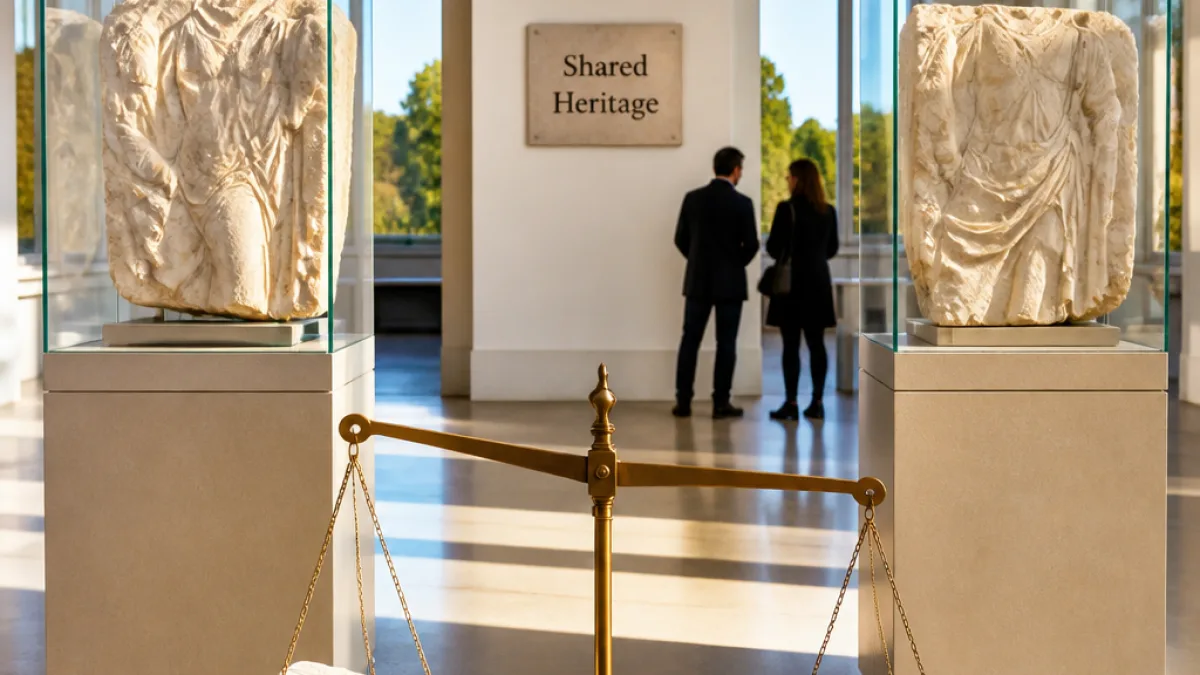
Margaret Hodge has described the future of the Elgin Marbles as an “impossible question”, saying she feels conflicted between arguments for repatriation and the case for keeping world-class objects together for public benefit.
In an interview published this week, Hodge — the former Labour minister and long-standing voice in cultural and political debates — acknowledged the strong case that the marbles are “a beautiful part of Greece’s rich heritage and belong to them and should be returned.” At the same time, she warned against what she described as the wholesale denuding of national museums if every contested object were returned to its place of origin.
“Denuding our museums of these objects would mean that people—not just Brits but also international visitors—would lose the opportunity to see some of the world’s greatest objects.”
Hodge argued that seeing significant objects gathered in one institution can enhance public understanding of global history. Her comments revive long-standing tensions in Britain about colonial-era artefacts and where they should reside — whether in national collections such as the British Museum or returned to their countries of origin.
Seeking a compromise: a ‘third way’
Rather than endorsing an absolute position, Hodge urged exploration of a “third way” that would enable countries to share objects. She compared the Elgin Marbles situation to other contested collections, pointing to the Benin Bronzes and the Maqdala material from Ethiopia as examples where claims have been made for return.
- Hodge accepted the moral force of Greece’s claim to the marbles.
- She warned that returning every contested item could diminish public access to world heritage.
- She suggested negotiated arrangements that permit sharing, loans or partnerships as alternatives.
The remarks do not set out detailed proposals, but they frame the issue as a balancing act between restitution and the educational value of central public collections. For communities in Scotland and across the UK, the debate has implications for museum policy, cultural diplomacy and how history is presented to local and international visitors.
Wider cultural context
Hodge’s comments come amid a broader re-examination of museum collections and provenance across Europe. Institutions have faced increasing pressure to address the colonial contexts in which many objects entered their holdings, and to explore restitution or collaborative approaches with source nations.
Her interview also touched on other personal cultural interests — naming modern historical works she admires and highlighting the power of books such as The Diary of Anne Frank for young readers — but it is her stance on the marbles that will resonate in public debates about the future of national collections and how to reconcile competing claims.
| Books Hodge mentioned | Type |
|---|---|
| Wolf Hall (Hilary Mantel) | Historical novel |
| The Hare with Amber Eyes (Edmund de Waal) | Non-fiction |
| East West Street (Philippe Sands) | Non-fiction |
For residents of Elgin and elsewhere in Scotland, the debate over the marbles is part of a wider conversation about cultural stewardship and how national museums should respond to claims from countries seeking the return of treasured artefacts. Hodge’s call for a negotiated, sharing-based approach offers a middle path that may become central to policy discussions in coming months.
Whatever the next steps, the conversation she restates underlines a persistent reality: decisions about historic objects are not merely technical or curatorial, but touch on questions of identity, memory and the international relationships that shape how nations present the past.