Hamilton's practice session draws rebuke after multiple on-track impediments
Lewis Hamilton was criticised by fellow drivers following a hectic first practice session at the brand-new Madring circuit, after incidents in which he impeded rivals while preparing hot laps.
The most notable disturbance came when Hamilton appeared to delay Nico Hülkenberg at the final corner as the German prepared to start a flying lap. That, however, was overshadowed by a sharper complaint from Carlos Sainz, who was racing on home soil in Madrid and confronted Hamilton over his positioning on the banked Turn 12.
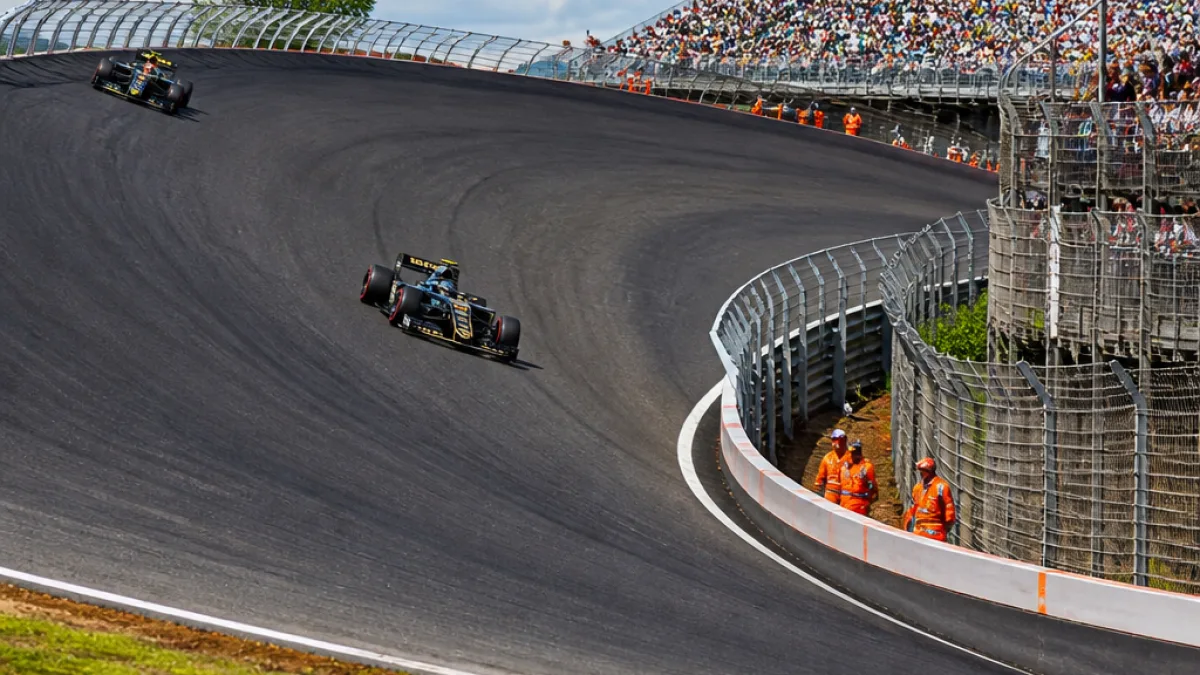
Onlookers and commentators said FP1 was disordered, with a number of drivers finding their hot-lap attempts disrupted. Hamilton, who briefly topped the times during the session, ended FP1 in fourth, but it was his placement on the racing line at La Monumental — the 550m banked right-hander known as Turn 12 — that provoked the strongest reaction.
"Lewis letting by in the middle of turn 12, it's always the same. It's so dangerous. Like, it takes zero effort to be two meters more left. Zero effort."
The radio message from Sainz underlined the frustration among drivers who felt Hamilton remained in a position that made passing difficult. Television commentary suggested the Briton may have been reluctant to move higher up the banking because of the presence of marbles — small pieces of tyre rubber that collect off the racing line and can reduce grip — which could affect the grip available for a subsequent fast lap.
Incidents during FP1: what happened
- Hamilton impeded Nico Hülkenberg at the final corner as the latter prepared to start a hot lap.
- Carlos Sainz said Hamilton remained in the middle of Turn 12, arguing the positioning was dangerous and easily avoidable.
- Practice was generally disrupted for drivers attempting low-fuel, qualifying-style runs — a concern ahead of Saturday's session.
Sky Sports commentators speculated the reasoning behind Hamilton's line choice, signalling that the build-up of debris on the outer portion of the banking was a factor. Such track conditions can make the outside line treacherous, particularly at a circuit making its debut on the F1 calendar, where rubbering-in and track evolution are still underway.
Competitive picture and consequences
Beyond the on-track spat, the session itself suggested a tight early-running order. Hamilton was competitive in both runs and briefly led the timing screens, posting a 1:36.0 early before improving to a 1:34.8. Nevertheless, his lap times were ultimately beaten as the field moved onto softer rubber later in the session.
As teams gather data on the unfamiliar layout, incidents that disrupt qualifying simulations are a concern. Impeded runs in FP1 can have knock-on effects: less information on tyre behaviour, compromised set-up work and reduced confidence for drivers building their strategy ahead of qualifying and the race.
| Practice session detail | Note |
|---|---|
| Hamilton early best | 1:36.0 after 10 minutes |
| Improved best | 1:34.8 later in the session |
| FP1 finishing position | Fourth |
For Hamilton fans and local observers, the episode reignites familiar debate about the seven-time world champion's racecraft and situational awareness. The accusation that he repeatedly occupies sub-optimal lines in traffic is not new, but airing such discontent in front of a home crowd for one of his rivals adds a sharper tone to the criticism.
Teams and drivers will reconvene before qualifying, with attention now partly fixed on whether the field can manage cleaner runs at Madring and whether Hamilton must alter his approach to avoid further complaints. For the circuit itself, the arrival of F1 brings scrutiny not only for its layout and spectacle but also for how rapidly evolving track surfaces influence driver behaviour and safety considerations.
With Saturday's qualifying session looming, the situation creates an added subplot: resolving on-track etiquette and maintaining competitive fairness as the newcomers to this weekend's calendar seek to put a clear mark on proceedings.