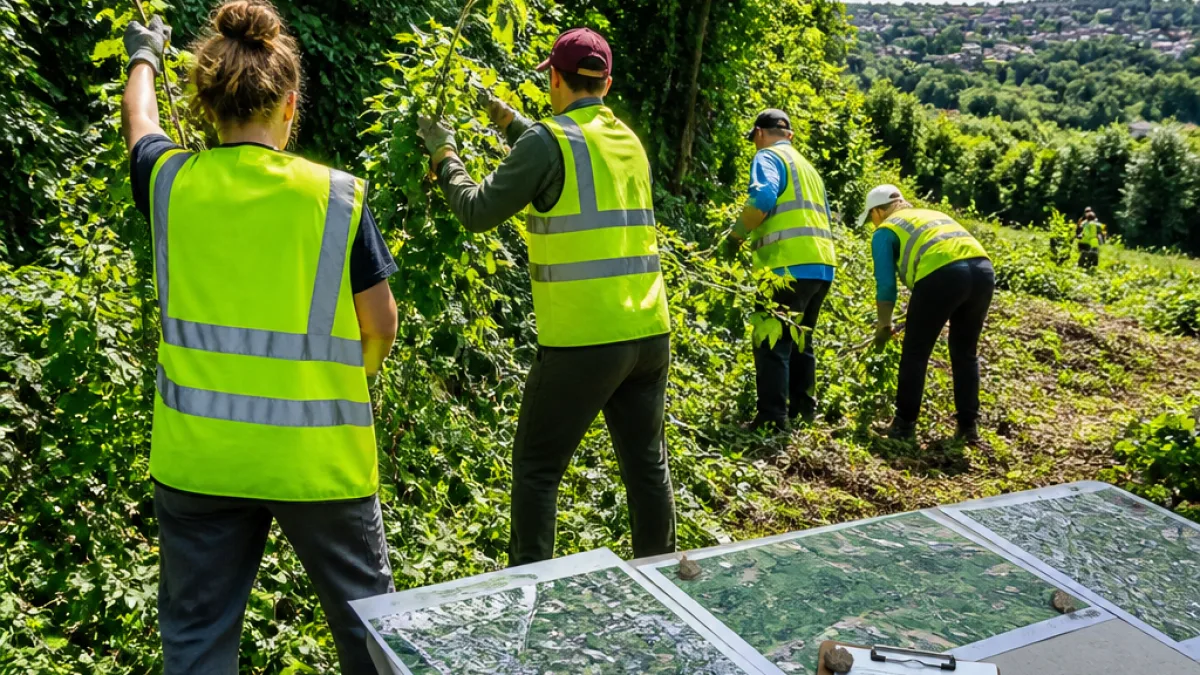
Canopy assessment shows net loss; removal work falls to volunteers
Winchester has lost a noticeable portion of its tree cover in recent years and faces practical limits on formally tackling invasive species, according to town officials and a recent study. A Tree Canopy Assessment completed in September 2024 mapped changes in tree cover using aerial imagery and found Winchester gained ground between 2012 and 2018 but then experienced a larger decline in the following five years.
The assessment, paid for with £10,000 in combined funds — £5,000 from the Peter Van Aken Tree Fund and £5,000 in American Rescue Plan Act money — compared aerial imagery from 2013, 2018 and 2023. It reported a gain of 53 acres of canopy between 2012 and 2018 and a loss of 143 acres between 2018 and 2023, leaving a net reduction of 90 acres, equivalent to roughly 68 football fields.
| Period | Change in canopy (acres) |
|---|---|
| 2012–2018 | +53 |
| 2018–2023 | -143 |
| Net change (2012–2023) | -90 |
Despite the headline numbers, the assessment cannot identify individual invasive trees from aerial imagery. Winchester’s public works and sustainability officers say the town does not currently hold a dedicated budget line for invasive species identification or removal.
"No, we do not have a specific line item in the budget to remove invasive plants," said Robert LaBossiere, director of the Department of Public Works. "The Conservation Commission has a volunteer program that removes some invasive plants and the DPW will assist with disposal."
Community action has filled much of the practical gap. More than 45 people turned out with clippers and shovels for a fall invasive plant clean-up on 26 October 2024 at Judkins Pond and Borggaard Beach, spending a morning cutting bittersweet vines, knotweed, bamboo and "tree of heaven." The Conservation Commission runs events to clear invasive growth along the Aberjona River and other local sites.
How the town plans next steps
Ken Pruitt, Winchester’s sustainability director, signalled that a fuller picture of town trees would be needed before recommending money for removal work. He told reporters via email that there is currently "no budget for invasives ID and removal," and that a one-off grant might be required to address the issue on the ground.
Pruitt has called for a comprehensive inventory of trees across Winchester as a precursor to any sustained removal programme. That inventory would help determine where invasive species are concentrated and what resources would be necessary to tackle them without harming desirable native canopy.
- Volunteer groups and the Conservation Commission currently lead physical removal work.
- The Department of Public Works assists with disposal but has not recorded removal requests this year, according to the director.
- Town bylaws protect street trees but do not cover all invasive species or trees on private land.
There are practical consequences for residents. Loss of canopy can affect shading, local temperatures, biodiversity and the character of neighbourhood streets and parks. Invasive species such as the tree of heaven and knotweed can outcompete native trees and complicate restoration efforts if not removed comprehensively and at scale.
While the canopy assessment gives Winchester an overview of trends, it leaves unanswered questions that will shape local policy and volunteer needs. The town must decide whether to invest in a detailed, ground-based inventory and a funded removal programme, or continue to rely on volunteer effort and occasional grants to address invasive plants.
For now, volunteers remain at the centre of on-the-ground work: the Conservation Commission organises clean-ups and the Department of Public Works provides logistical support for disposal — a reliance that community groups say has been essential in preserving local green spaces despite limited council funding.