
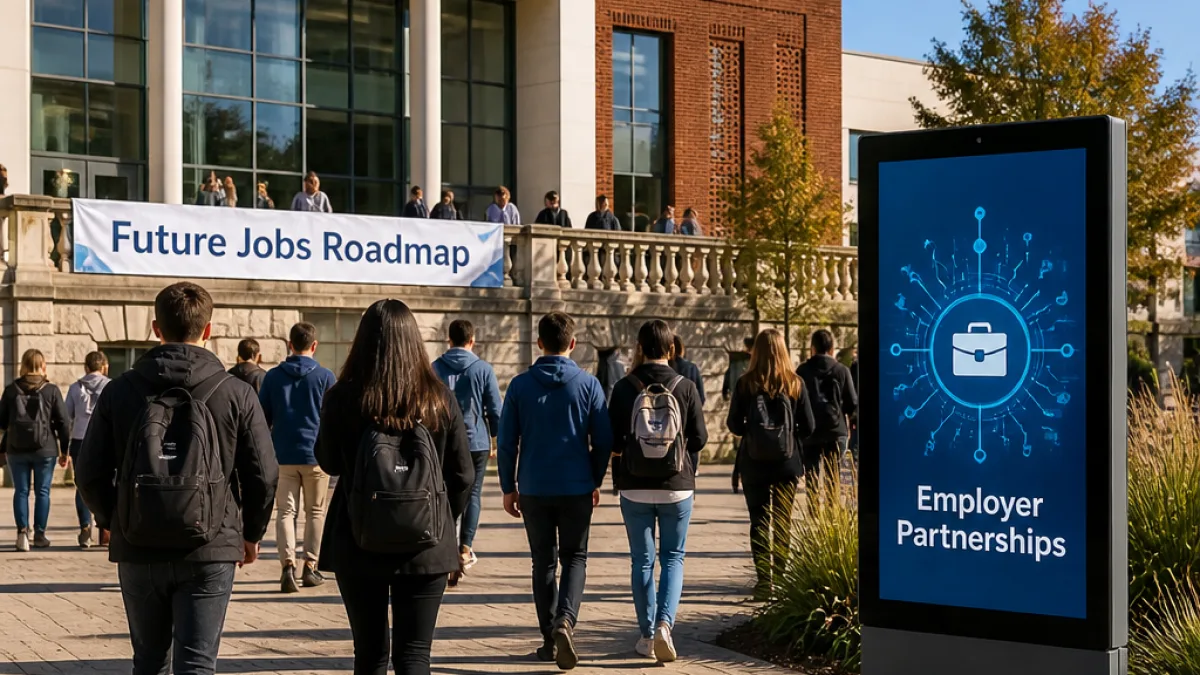
The University of Chichester has signalled its support for a national plan aimed at helping more graduates secure good jobs by equipping them with the skills employers want now and in future. The move follows the publication of the Future Jobs Roadmap, produced by Universities UK with backing from Pearson and the British Chambers of Commerce.
Practical learning and AI training put centre stage
The Roadmap sets out a series of recommendations designed to strengthen links between higher education and the labour market. Among the key proposals are providing meaningful work-based experiences, ensuring graduates possess AI skills, and co-designing learning with employers so courses better reflect workforce needs.
The University of Chichester has already taken steps in those directions, integrating AI modules into several degree programmes and deepening employer partnerships across the region. AI-related content is now embedded in Law, Business and Psychology courses, while the University’s School of Nursing and Allied Health maintains close ties with local NHS trusts. The Business School also reports strong relationships with employers in the South East.
Local consequences for students and employers
Leaders at the university say the Roadmap complements existing activity to prepare students for work. For students, the emphasis on practical placements and employer-shaped learning could mean more opportunities to gain hands-on experience before graduating. Employers, meanwhile, will be invited to play a greater role in shaping curricula so that training better matches local skills needs.
“We are always keen to work with employers to co-design opportunities that help students develop the skills, confidence and experience needed for the workplace,”
Federica Bocciarelli, Careers & Employability Manager at the University, said the institution looks forward to integrating the Roadmap into its programmes and services to complement work already under way.
- AI modules added to Law, Business and Psychology courses.
- Employer partnerships in nursing and business to expand work-based learning.
- Co-design of learning with local businesses to align graduate skills with vacancies.
How the Roadmap and the university align
The Roadmap was informed by conversations with around 200 employers, business groups and universities. Its recommendations are aimed at addressing the challenge of ensuring young people leave higher education ready for the labour market, particularly as technological change — including AI — reshapes job requirements.
| Roadmap recommendation | What the University of Chichester is doing |
|---|---|
| Meaningful work-based experiences | Partnerships with local NHS trusts and regional employers to support placements |
| AI skills for graduates | AI modules embedded in Law, Business and Psychology programmes |
| Co-design learning with employers | Careers & Employability team works with employers to shape opportunities |
For Chichester and the wider South East, stronger links between the university and local employers could help address skill shortages and make it easier for businesses to recruit newly qualified staff who require less on-the-job training. It also offers students clearer pathways from study to work in sectors that matter to the local economy, such as health and professional services.
Universities UK developed the Future Jobs Roadmap with support from Pearson and the British Chambers of Commerce, using input from employers, business groups and higher education providers. The University of Chichester’s statement makes clear it intends to adopt Roadmap recommendations where they reinforce current programmes and partnerships, especially where that benefits students seeking practical, employer-informed routes into work.
Local employers and students will watch closely to see how these commitments translate into new placements, course content and recruitment links over the coming academic terms.