
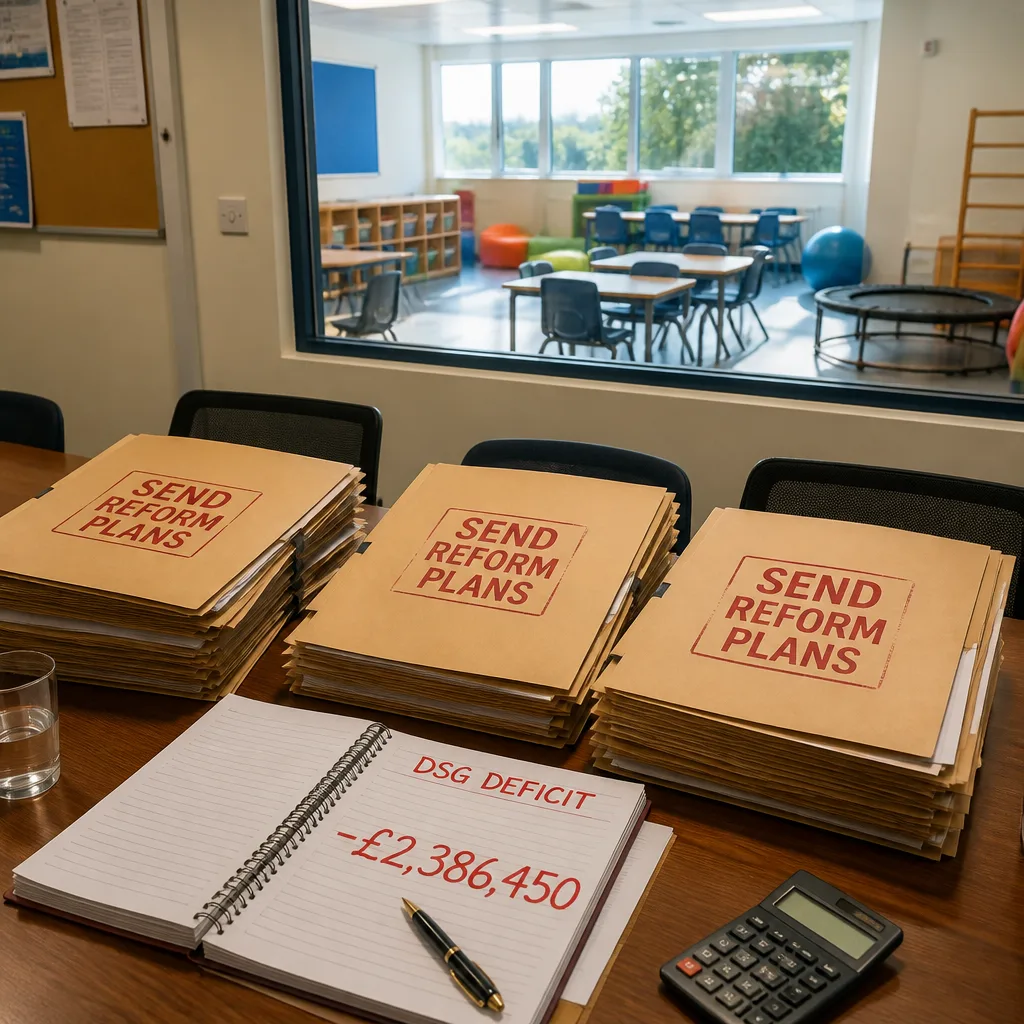
Local authorities are being incentivised to submit three-year special educational needs and disabilities (SEND) reform plans by the prospect of having the vast majority of their dedicated schools grant (DSG) deficit cleared, but a transparency review by FE Week suggests many councils have not set out firm proposals for post-16 specialist places.
What the incentive offers
The Department for Education is assessing three-year SEND plans intended to replace the previous safety valve scheme. Under the new arrangements, councils that put forward an acceptable plan can expect a substantial reduction in the size of their DSG deficits.
This measure is intended to ease pressure on local authority budgets while driving reform of SEND systems, but the FE Week review raises immediate concerns about how well prepared authorities are to secure appropriate post-16 provision for young people with SEND.
Transparency exercise reveals patchy planning
FE Week published an interactive map which collates 40 SEND reform plans after searching local authority websites and asking officials for draft documents. The analysis found that a number of councils have not included clear, detailed proposals setting out how they will provide or expand post-16 specialist places.
That omission has implications for young people leaving school who need further education or specialist support: without concrete plans, there is a risk places will be insufficient or reliant on cost-cutting measures.
Pressure to curb costs
As local authorities seek to manage growing SEND expenditure, the combination of a financial incentive and budgetary pressure appears to be prompting attempts to reduce the cost of specialist provision. FE Week’s reporting highlights concerns that some councils are prioritising deficit reduction over secure, long-term place planning for post-16 learners with additional needs.
- Length of plans: Three-year SEND reform plans submitted in June are being assessed by the Department for Education.
- Financial incentive: Successful plans can lead to the majority of a council’s DSG deficit being written off.
- Transparency work: FE Week has published 40 reform plans on an interactive map to increase public scrutiny.
| Item | Detail |
|---|---|
| Plans submitted | Three-year SEND reform plans (submitted in June) |
| Published plans reviewed | 40 plans collated by FE Week |
| Incentive | Majority of DSG deficit to be written off for successful plans |
Implications for pupils and providers
The situation presents a difficult balancing act. On the one hand, removing historic DSG deficits would relieve acute financial strain on councils and could free up resources for immediate needs. On the other, without clear commitments to expanding and securing post-16 specialist places, there is a risk that young people with SEND will face limited options when they leave statutory schooling.
Providers, parents and schools will be watching the assessment process closely. The success of reform depends not only on short-term fiscal fixes but on credible, deliverable plans that guarantee appropriate provision for young people across all phases, including further education and training after 16.
FE Week’s transparency project aims to allow stakeholders to scrutinise local proposals and hold councils to account for the detail — particularly where plans are thin on specifics for post-16 placements.
The Department for Education is currently reviewing the submitted plans. How it balances the objective of reducing local authority debt with safeguarding long-term provision for learners with SEND will be a key test of the reform approach.