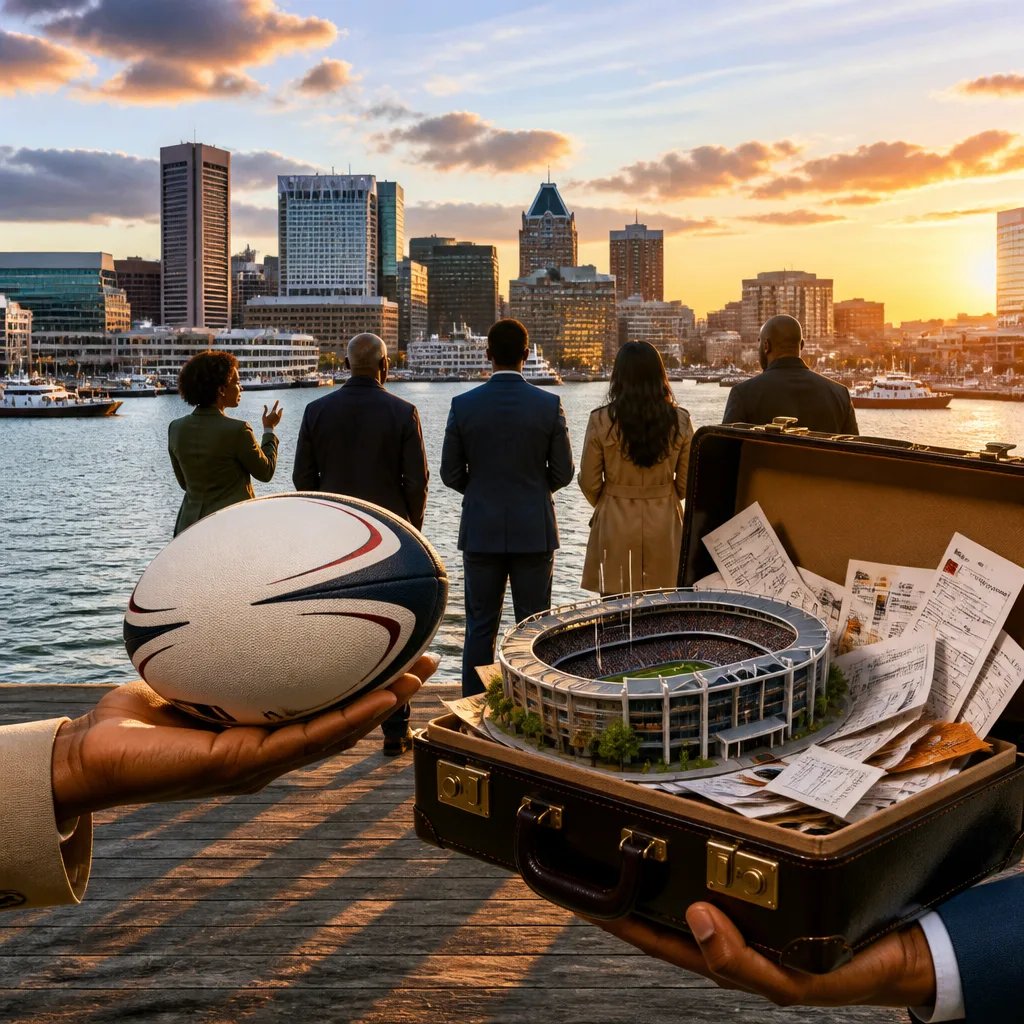
When some of the sport’s leading teams touched down in Baltimore this year, organisers said the experience highlighted a fundamental difference in how the two global codes operate. Local hosts described World Rugby as conciliatory and willing to work in partnership, a contrast they say was thrown into relief by the experience many US cities had with FIFA during the summer’s football World Cup.
Hosts praise partnership, warn on assumptions
Ashley Harper Cottrell, a project manager with the Maryland Sports Commission, told reporters the organisations are not the same:
“The key thing you’ve got to keep in mind is they are two different organisations… World Rugby is not FIFA. They (World Rugby) have always been friendly, gregarious, willing to work and listen. Partnership is the key thing they talk about.”
The remark captures local officialdom’s relief at a governing body that appears to treat cities as collaborators rather than contractors. Organisers in Baltimore said World Rugby’s approach facilitated smoother negotiations over logistics, sponsorship and event delivery, although they also signalled that being congenial does not remove the practical burdens that hosting major sport imposes.
FIFA’s approach left some cities picking up large bills
By contrast, the recent FIFA World Cup exposed tensions between host cities and the global football authority over costs, revenue and operational demands. The tournament’s commercial success — amounting to roughly $15 billion in revenues for FIFA across the cycle — did not translate into control over spending for host municipalities, which shouldered substantial bills for transport, security and festival programming.
- Host cities funded policing, special-access traffic lanes and security details for VIPs.
- Some municipalities paid for temporary infrastructure and venue adjustments, including cosmetic changes to remove or alter sponsor signage.
- A notable instance of public investment was New Jersey’s reported $13 million spent to upgrade the MetLife Stadium playing surface ahead of the final.
Those costs fed public frustration. Former Chicago mayor Rahm Emanuel declined to stage matches in his city after standoffs over FIFA contract conditions, and New Jersey’s governor publicly criticised FIFA for not contributing more funding for regional needs. In one reported consequence, transit pricing was altered to cope with event demand: a round-trip rail fare to MetLife from New York was raised to $98, more than seven times a normal fare, a step Governor Mikie Sherrill defended after accusing FIFA of leaving taxpayers with too great a burden.
Economic benefit remains uncertain
While host cities generally reported increased economic activity linked to match-day spending, the true net benefit to taxpayers is still unclear. The source material notes that independently commissioned studies to quantify costs and benefits had not yet been completed, leaving public officials and the electorate without a definitive assessment of whether hosting represented a net gain or loss.
| Item | Detail (from source) |
|---|---|
| FIFA revenues | $15 billion across the tournament cycle |
| New Jersey investment | $13 million to enhance MetLife Stadium pitch |
| Transit fare increase | Round-trip to MetLife raised to $98 |
For cities considering future bids, the contrasting experiences offer clear lessons. A governing body that promotes partnership can reduce friction and help with local planning; yet even co-operative organisers will still require infrastructure, security and transport arrangements that fall to municipal authorities to deliver and, often, to fund.
Officials in Baltimore and other US host cities are therefore left with practical questions about risk-sharing, transparency in contractual obligations and the timing of independent evaluations of costs and returns. With major events increasingly pitched as catalysts for regeneration, the allocation of both risk and reward between international federations and local taxpayers will remain a live political issue.
What remains evident is that hosting a global sporting spectacle is not merely an exercise in logistics. It forces cities to weigh reputational gain against financial exposure, and to insist on clearer, enforceable commitments from sport’s governing bodies — whether they come bearing partnership rhetoric or a far more transactional agenda.