Petrobras has contracted Strohm to supply thermoplastic composite pipe (TCP) for use in its Brazilian offshore post‑salt cluster fields, in a programme that will include qualification testing, engineering, field services and support for offshore trials and installation.
What Petrobras will do and why it matters
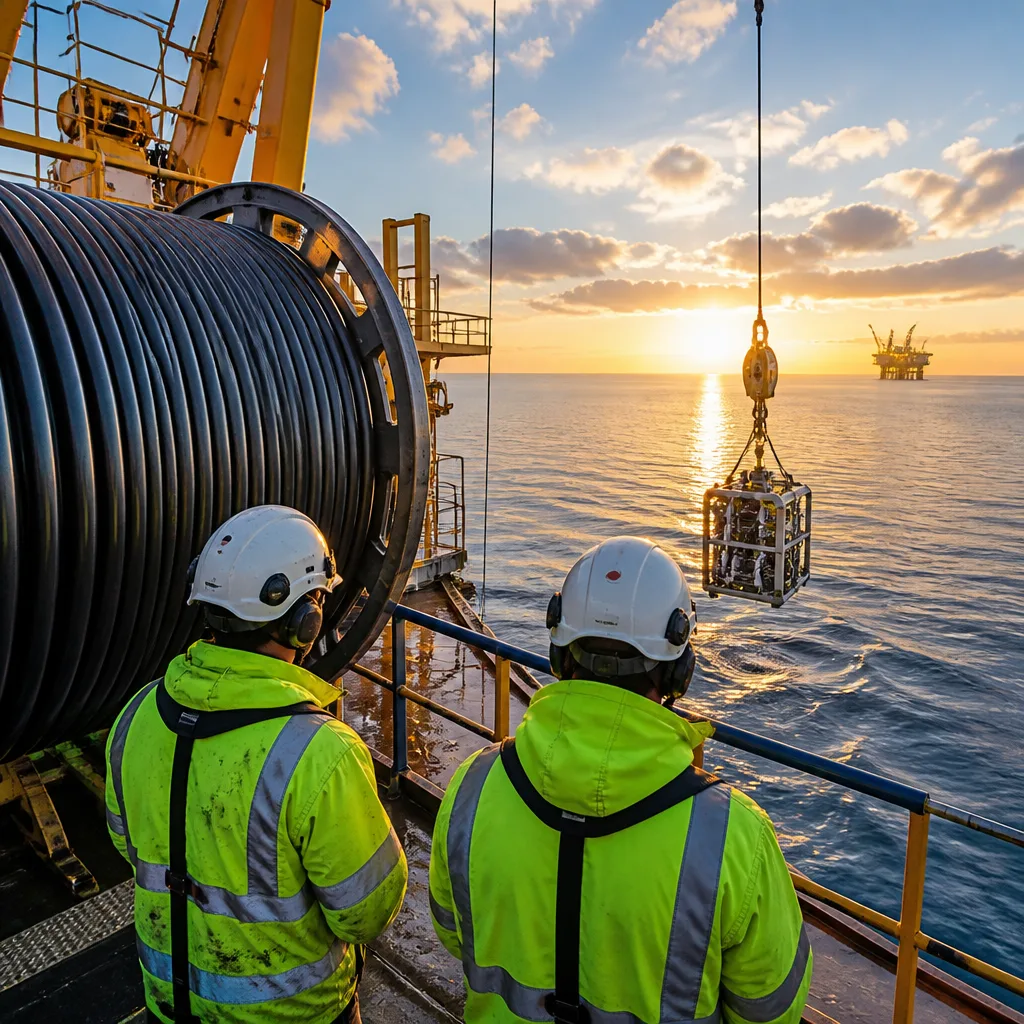
The components are earmarked for water injection and gas‑lift duties in water depths up to 1,500 m. Petrobras will monitor the TCP under operating conditions, including handling and installation from pipelay vessels within its own fleet. The company has been assessing technologies that could reduce installation complexity and life‑cycle costs across its expanding offshore portfolio in Brazil.
Strohm describes its spoolable TCP products as being manufactured from a combination of fibre — either carbon or glass — and a polymer matrix such as polyethylene or polyamide. The supplier says the result is a pipe that is lighter and simpler to handle than traditional flexible or rigid pipe solutions.
What the trial will test
The contract covers a full package of activities designed to qualify and demonstrate the technology for deepwater applications:
- qualification testing to verify material and system performance;
- project engineering and field services to plan and execute installation;
- support for offshore trials and monitoring of the TCP during handling and operation from pipelay vessels.
If the deployment proves successful, it could strengthen the case for using TCP in deepwater production systems where spoolability, lower weight and simplified handling translate into operational advantages.
Claims and implications
Strohm positions TCP as a lower‑maintenance alternative to existing options, stating the spoolable pipelines are designed to carry no associated maintenance costs while still accommodating ongoing integrity inspection. Petrobras’s willingness to test the product in post‑salt fields is notable because such assets present challenging geotechnical and operational conditions.
| Feature | Detail |
|---|---|
| Primary use | Water injection and gas‑lift |
| Maximum depth stated | 1,500 m |
| Pipe construction | Fibre (carbon or glass) + polymer (polyethylene or polyamide) |
| Installation support | Field services and pipelay vessel handling trials |
The move follows growing interest across the offshore sector in composite materials as a way to reduce vessel time, simplify logistics and limit certain corrosion and fatigue risks that affect metal pipes. Composite options have been used in shallower or niche applications for some years; demonstrating reliable performance at deeper depths would expand potential use cases.
However, several questions remain that only real‑world trials can answer: long‑term behaviour under pressure and temperature cycles, resistance to abrasion and third‑party damage, reparability in situ, and how integrity inspection regimes will be adapted. Petrobras’s monitoring during installation and subsequent operation should provide data to address these points.
Industry context
Validating TCP for deepwater service would be significant for operators seeking lower‑weight, spoolable systems, and could influence procurement and engineering choices for new developments and tiebacks. For suppliers, successful trials would open commercial opportunities in a segment traditionally dominated by steel and flexible metal‑reinforced solutions.
For the UK technology and engineering community, advances in subsea composite pipework are relevant to design, testing, fabrication and inspection services, as well as to the supply chain that supports offshore construction and vessel operations.
Petrobras’s test will therefore be watched closely by operators, contractors and regulators. If the TCP performs as hoped, it would mark another step in the gradual diversification of materials and methods used to connect subsea systems at scale.