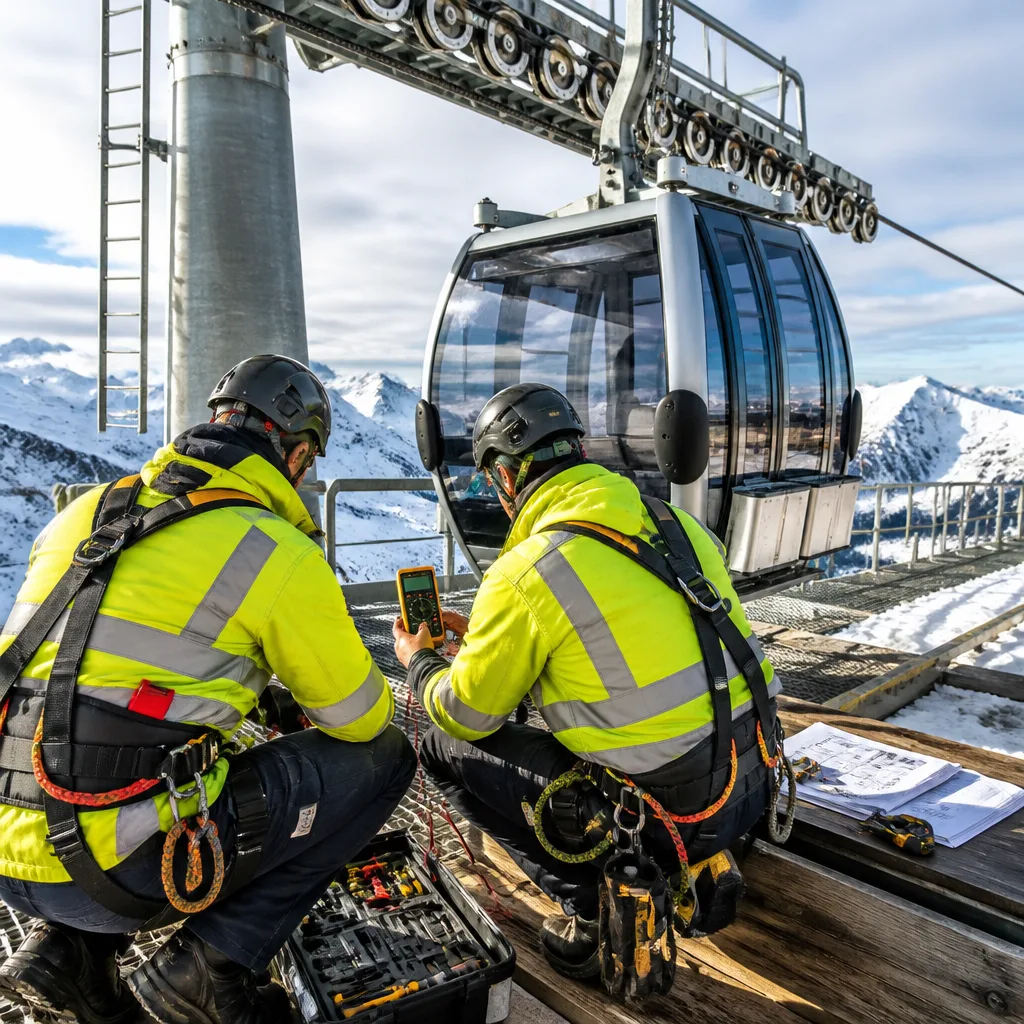
The Arlberg cable car company has put a spotlight on apprenticeship training after two trainees completed their second year of technician training, illustrating the technical demands of modern mountain transport systems and the firm's focus on cultivating skilled workers.
Practical training and technical breadth
Apprentices Maximilian Mauerer and Moritz Goldammer have finished the second year of their apprenticeship as cable car technicians, the company said, with both students emphasising the practical and varied nature of the work. The training alternates between vocational school and hands-on duties on the mountain, allowing apprentices to apply classroom learning directly to real systems.
The firm described the role as combining a broad range of technical competences — from electrical work to customer-facing tasks — and said that the apprentices’ enthusiasm demonstrates how diverse an apprenticeship in this sector can be.
- Hands-on maintenance: apprentices undertake inspections and maintenance tasks on cable car systems.
- Technical learning: vocational schooling complements daily practical assignments.
- Career progression: the firm highlights opportunities to advance into supervisory or technical management roles.
Voices from the apprenticeship
The apprentices emphasised what they find engaging about the work: close inspection during maintenance and the chance to work outdoors in mountain settings. One said that the detailed nature of inspections reveals how much technology underpins the systems.
“I find maintenance and inspections particularly exciting because you have to look very closely. It’s interesting to see how much technology is actually behind our cable car systems,” the apprentice said.
Another explained the appeal of variety and outdoor work, and set a clear objective for the remainder of the programme: to finish the apprenticeship successfully and to learn as much as possible in the process.
Employer perspective and workforce development
For the firm’s apprenticeship officer, training young skilled workers is an important commitment. He said it is gratifying to see apprentices develop into valuable employees and added that the company hopes they will remain with the organisation.
The head of human resources framed apprenticeships as a route for upward mobility within the company, arguing that a strong apprenticeship can lead to roles such as operations manager or technical manager. The technical director reiterated the company’s investment in training and the need to motivate young people in a tight labour market.
All three company voices stressed the particular range of learning available in cable car work: electrical engineering, mechanical maintenance, and guest services combine to form a broader vocational experience than many single-discipline apprenticeships.
| Apprentice | Year completed | Focus |
|---|---|---|
| Maximilian Mauerer | Second year | Inspections and maintenance |
| Moritz Goldammer | Second year | Outdoor operations and varied technical tasks |
Wider implications
The company’s account touches on issues that resonate beyond the Arlberg region: how to attract and retain technically trained workers in specialised transport and infrastructure, and how to frame apprenticeships as credible routes into well-paid, skilled careers. The firm explicitly links its training efforts to the broader challenge of skilled labour shortages, arguing that motivating young people to take technical pathways is increasingly important.
By emphasising hands-on education, pathways to management and a broad curriculum that spans electrics, mechanics and customer service, the Arlberg cable car company is making a case for vocational routes as strategic investments in future operational resilience.
For readers tracking technology and workforce trends, the story underlines a simple, practical point: high-availability transport systems rely on trained technicians, and those technicians are more likely to be available where firms make sustained commitments to apprenticeships and career development.