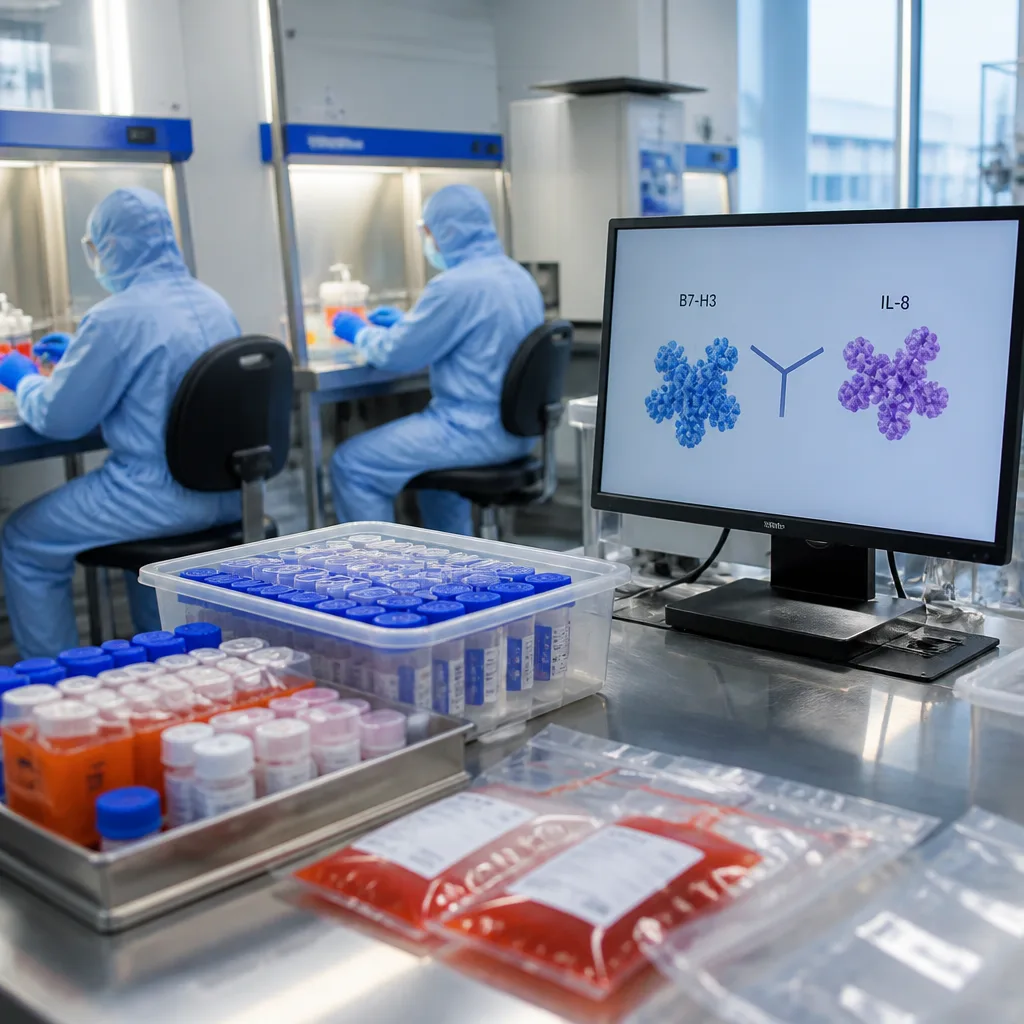
The US Food and Drug Administration has authorised a first-in-human clinical trial of an engineered CAR T-cell therapy aimed at adults with advanced colorectal cancer and paediatric patients with solid tumours who have exhausted standard treatments.
Two targets, one therapy
The experimental treatment, developed at the University of Colorado Anschutz, uses patient T cells genetically modified to recognise and attack two cancer-associated proteins: B7-H3 and IL-8. The modified cells will be manufactured on site at the campus’ Gates Biomanufacturing Facility.
CAR T-cell therapies collect a patient’s T cells, reprogramme them to seek out cancer, expand them in the laboratory and reinfuse them into the patient. These therapies have produced striking results in some blood cancers, such as leukaemia and lymphoma, but success against solid tumours has been limited.
“This is a very different way of thinking about how we treat cancer,” said Michael Verneris, MD, professor of paediatric oncology at CU Anschutz and programme co-leader of Tumor-Host Interactions at the CU Anschutz Cancer Center.
The lead investigator for the trial is Christopher Lieu, MD, professor of medical oncology at CU Anschutz and associate director of clinical research at the CU Anschutz Cancer Center.
Why B7-H3 and IL-8?
B7-H3 has attracted attention because it is expressed on a substantial proportion of colorectal tumours and therefore represents a potentially useful marker for targeting. IL-8 is a signalling protein that contributes to tumour growth, inflammation and the spread of cancer. The dual-target design aims to broaden the therapy’s reach and to counteract the immunosuppressive features of the tumour microenvironment.
Researchers say the approach is intended to identify targets that appear across many cancers rather than producing a treatment that applies to a small subset of patients. If the trial shows safety and early signs of efficacy, the same strategy could be evaluated against other cancers where the pathways are relevant, including certain breast, lung and ovarian tumours.
- Sponsor and site: University of Colorado Anschutz, Gates Biomanufacturing Facility.
- Patient groups: Adults with advanced colorectal cancer and paediatric patients with solid tumours who have no remaining standard options.
- Targets: B7-H3 (tumour-associated protein) and IL-8 (pro‑tumour signalling molecule).
| Feature | Role |
|---|---|
| B7-H3 | Protein found on many colorectal tumours; target for tumour recognition |
| IL-8 | Cytokine that promotes tumour growth, inflammation and spread |
Context and challenges
CAR T cells have rewritten outcomes for some blood cancers but translating that success to solid tumours has been difficult for several reasons. Chief among them are the scarcity of tumour-specific targets that spare healthy tissue, and the immunosuppressive tumour microenvironment that prevents engineered T cells from reaching or persisting at the disease site.
The dual-target strategy seeks to mitigate those problems by pairing a tumour-associated surface marker with a mechanism to blunt pro‑tumour signalling. The University of Colorado team emphasises a platform approach: selecting targets expressed across multiple cancers to increase the potential patient population for the therapy.
At this stage the FDA permission allows the investigators to open the trial and begin enrolling eligible patients. As with all first-in-human studies, the primary objectives will centre on safety and tolerability, with careful monitoring for known CAR T toxicities as well as any novel adverse effects related to the dual-target design.
Should the trial show acceptable safety and early efficacy signals, the researchers plan to explore the therapy in other tumour types where B7-H3 and IL-8 are implicated. The pathway from first-in-human testing to routine clinical use is lengthy and depends on demonstration of meaningful clinical benefit in larger, controlled studies.
The FDA authorisation marks a cautious but significant step for CAR T research into solid tumours: an acknowledgement that innovative designs may be required to overcome the biological hurdles that have so far limited broader application.