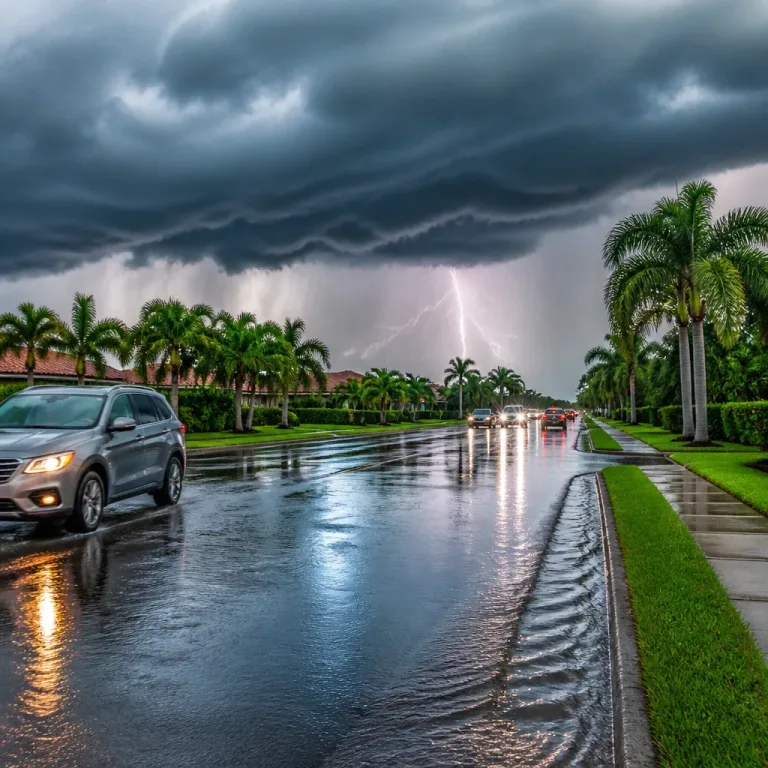
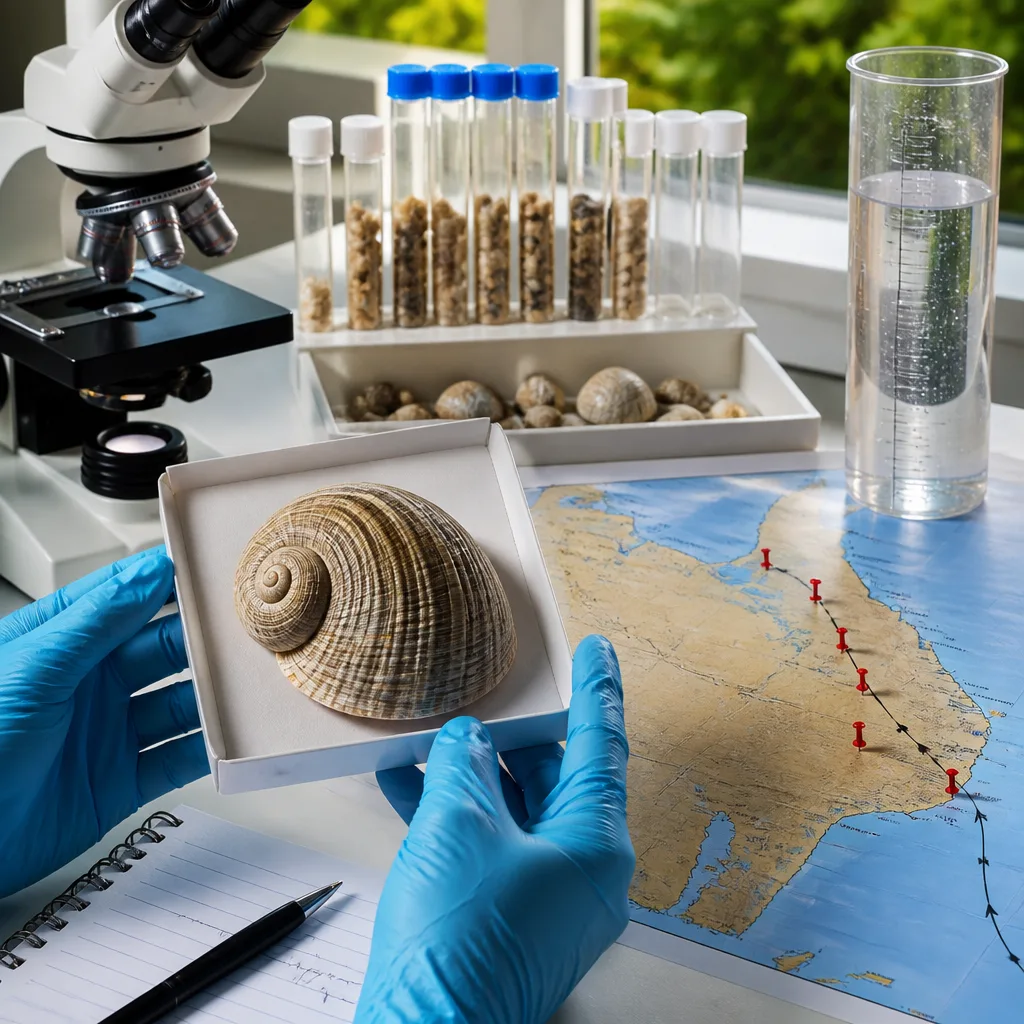
Researchers have found that the growth bands in the shell of a native Australian snail contain a measurable record of intense rainfall, and can be linked to specific cyclonic events. The work, led by the University of Queensland's School of the Environment, examined a Biggenden Banded Snail (Figuladra bayensis) from Coalstoun Lakes National Park and used chemical and radiocarbon techniques to date and interpret the shell’s layers.
What the shells tell us
High-resolution sampling at millimetre intervals across the shell allowed the team to determine when each band formed and to analyse the oxygen and carbon stable isotopes preserved in those bands. Radiocarbon measurements identified elevated levels associated with nuclear testing in the 1960s, enabling the researchers to fix the snail’s age at about 4.5 years. Rather than steady, continuous growth, the shell showed alternating phases of rapid growth and little or no formation.
That pattern did not match expectations for ordinary wet seasons. Instead, the spurts of shell accretion coincided with short periods of exceptional rainfall, which the team were able to associate with two recent cyclones.
“Because we knew when the snail lived, the growth spurts could be linked to periods immediately following cyclones in 2015 and 2017,”
The cyclones identified were Severe Tropical Cyclone Marcia and Tropical Cyclone Debbie, both of which produced extreme rainfall in the Coalstoun Lakes area. The authors interpret the fast growth phases as the snail responding to sudden increases in moisture and food availability after those intense rainfall events.
Why this matters for weather records
Modern meteorological measurements cover only a little more than a century in many parts of the world. Proxy records, such as tree rings, coral bands and ice cores, extend our view further back in time, but each proxy has strengths and limitations. The University of Queensland team argues that snail shells could provide a new, previously underused archive for extreme rainfall and cyclone history, potentially extending reconstruction of storm paths and intensities into periods before instruments were available.
The study’s method combines physical growth pattern analysis with isotopic chemistry and radiocarbon dating to both date the organism and infer environmental conditions during its life. The authors say the approach could allow researchers to locate and map extreme weather events in regions where snail shells are preserved.
Next steps and limitations
- The researchers plan to test the technique further by seeking additional shells preserved in sediments and other archives.
- Confidence in linking growth bands to specific storms depends on having independent age control and clear signals from isotopes; not every snail or location will preserve an unambiguous record.
- Shells record local conditions: while they may indicate where an extreme rainfall occurred, reconstructing wider cyclone tracks will require many samples from across a region.
Honorary Professor Jamie Shulmeister described the finding as unexpected and promising, noting that the humble snail could become a tool for reconstructing the paths of past cyclones, including those before written records.
There are practical considerations. The preservational environment must allow shells to remain intact and accessible, and the sampling and chemical analyses require careful laboratory work. Nonetheless, the combination of growth-band chronology and isotopic signals offers a promising complementary archive for extreme weather, particularly where other proxies are sparse.
| Feature | Details |
|---|---|
| Species analysed | Biggenden Banded Snail (Figuladra bayensis) |
| Location | Coalstoun Lakes National Park, South East Queensland |
| Age determined | About 4.5 years (radiocarbon marker from 1960s tests) |
| Linked events | Severe Tropical Cyclone Marcia (2015) and Tropical Cyclone Debbie (2017) |
For forecasters and climate scientists, the chief value of this technique would be improving the long-term picture of extreme rainfall occurrence and cyclone behaviour in regions with preserved shells. That, in turn, can inform risk assessments and planning for communities vulnerable to flooding and storm damage.
While further validation is needed, the study highlights how relatively small, overlooked natural archives can carry robust environmental information. The next phase of research will be crucial to establish how widespread and reliable snail-shell records are as indicators of past extreme weather.