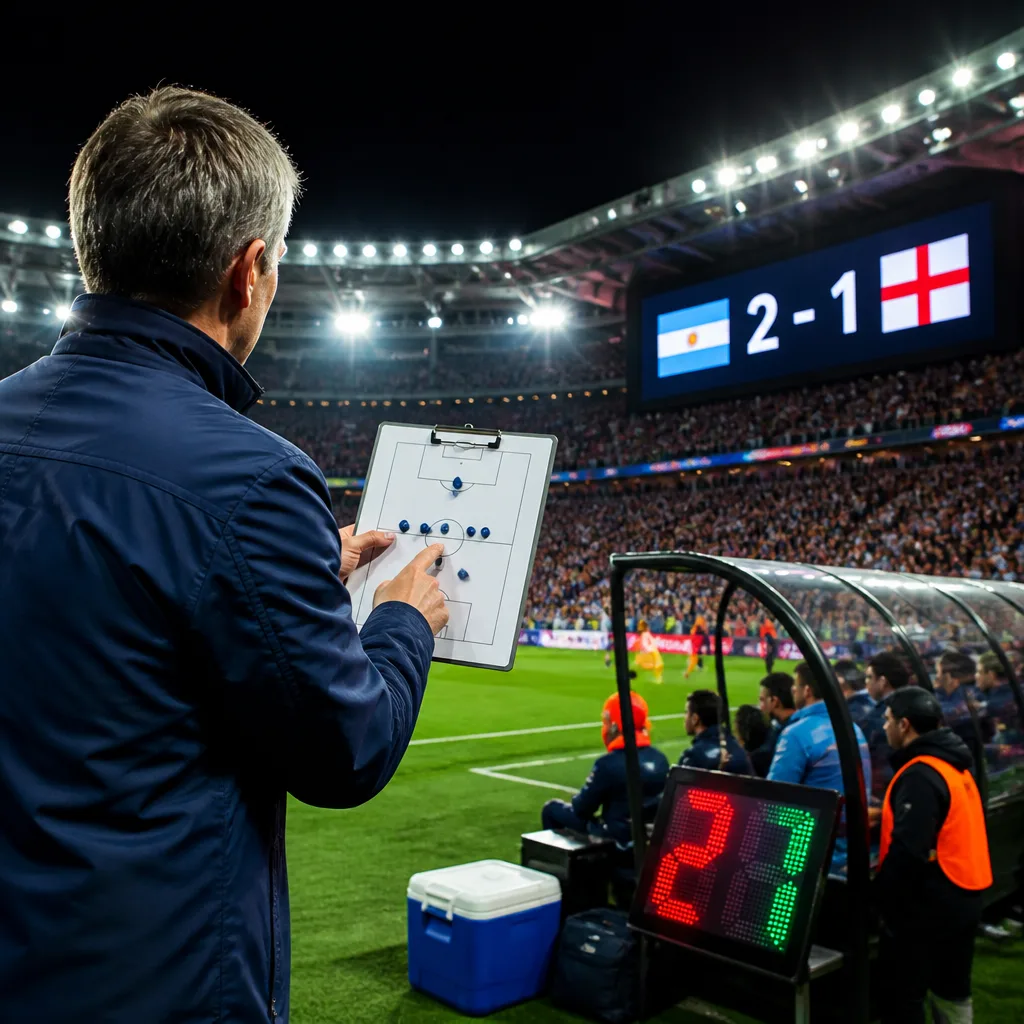
England manager Thomas Tuchel has defended his decision to introduce defensive substitutions as his side attempted to protect a one‑goal lead in the World Cup semi‑final against Argentina, but conceded the moves were made earlier than they should have been.
Coach says he acted to halt relentless Argentine pressure
In remarks made in a documentary for the England app, Tuchel explained that a combination of fatigue, previous success using a back five in knockout matches and the intensity of Argentina’s attacking changes shaped his approach. England had gone ahead after an hour when Anthony Gordon scored, but late goals from Enzo Fernández and Lautaro Martínez saw Argentina overturn the deficit and book a place in the final.
Tuchel said he was trying to respond to what he described as continual offensive alterations from Lionel Scaloni’s side and that his substitutions were intended to stabilise the team rather than serve any personal agenda.
“No one is more hurt than me, no one wanted it more,”
He acknowledged the criticism that followed the decision to replace goalscorer Gordon with defender Ezri Konsa, a move that coincided with a period in which England were under sustained pressure, including a last‑ditch tackle from Djed Spence and a key save by Jordan Pickford around the hydration break.
Timing and context: Tuchel weighs options in hindsight
Tuchel told viewers that while an attacking substitution was an option, it was impossible to know for certain whether different choices would have produced a better result. He said that critics could endlessly speculate about what might have happened but stressed the limits of hindsight in football management.
He also cited the team’s earlier success in using a five‑man defence against Mexico and Norway as part of the rationale for selecting a similar approach in the semi‑final. Nevertheless, he accepted that the substitutions may have come too early.
- Goal: Anthony Gordon (England) — around the 60‑minute mark
- Substitution that attracted criticism: Gordon replaced by Ezri Konsa (defender)
- Opposition goals: Enzo Fernández and Lautaro Martínez in the final stages
Tuchel’s remarks reflect the enduring debate in elite football about when to protect a lead and when to seek a second goal to extend it. The match narrative — a late shift in momentum leading to Argentina’s comeback — has amplified scrutiny of the tactical call.
Consequences for England and Tuchel
The defeat ended England’s bid to reach a first World Cup final since 1966 and raised fresh questions about selection and in‑game management. Public reaction has been sharp; pundits and supporters have focused on the substitution pattern and whether the team should have pressed more rather than adopting a defensive posture.
Tuchel rejected suggestions his choices were ego‑driven, framing them instead as interventions intended to help the side amid chaotic circumstances. He asked for some humility in retrospective judgements, pointing out the unpredictability inherent in a match of such significance.
| Aspect | Detail |
|---|---|
| Match | World Cup semi‑final: England v Argentina |
| Decisive moments | Gordon goal; defensive substitutions; late Argentina goals |
| Manager’s stance | Defends tactical intent; accepts timing was too early |
For the FA and supporters, the immediate challenge is assessing the lessons from a high‑profile defeat and preparing for future tournaments. For Tuchel, the episode will be part of his managerial record — a moment that exemplifies the fine margins between vindication and criticism in international football.
He urged perspective: while supporters and commentators may second‑guess substitutions, managers operate with incomplete information, and outcomes are never certain. The debate over the semi‑final will continue, but Tuchel’s position is now public and unambiguous: the choices were made with the aim of protecting England’s advantage, even if their timing proved costly.