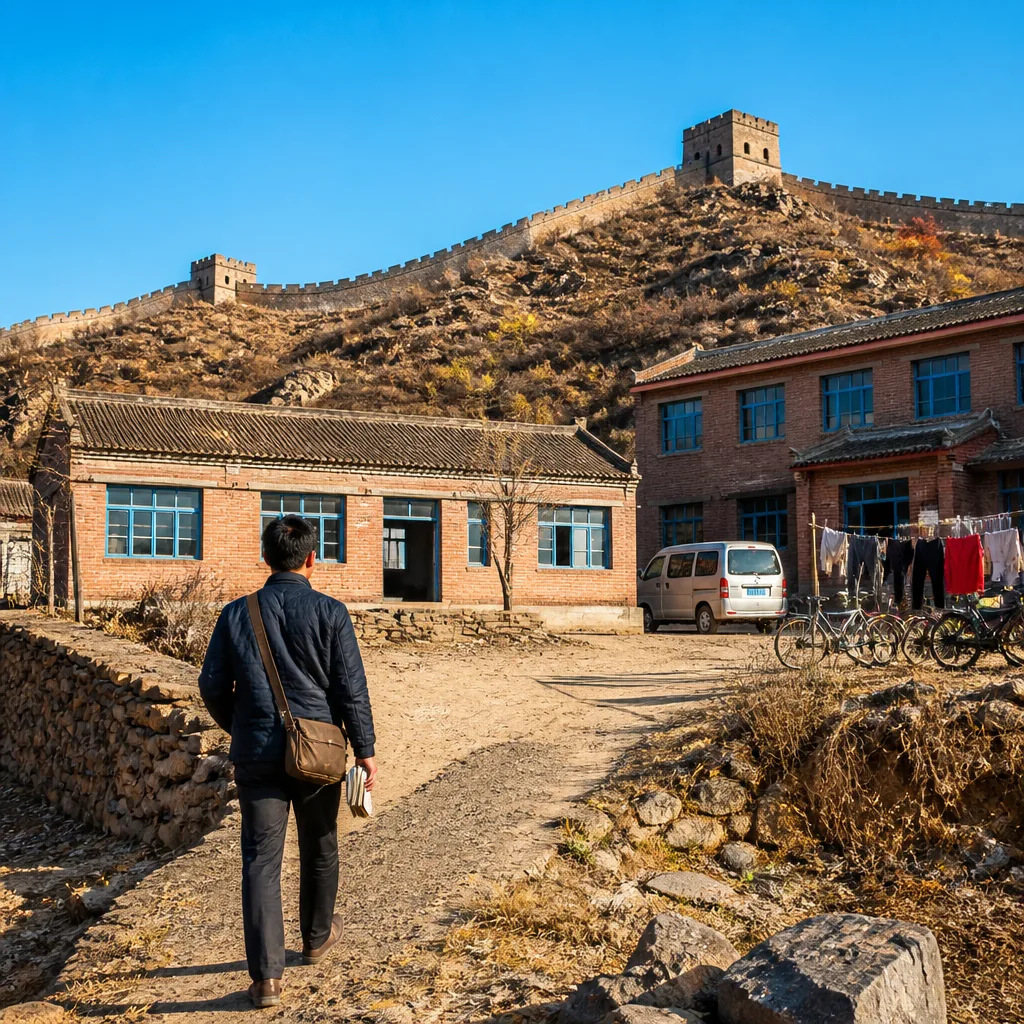
At the foot of a Ming-dynasty stretch of the Great Wall in northern Shanxi Province, a single primary school continues to serve children from scattered villages thanks to the dedication of one teacher who has worked there for 28 years. The modest Sandun Primary School, on the border between Shanxi and Inner Mongolia, has just six pupils and seven teaching staff, and relies on a small, committed team to keep classes running in a remote, hard-to-reach location.
One teacher, many duties
The 52-year-old educator, who returned to his home area after teacher training in 1998, was assigned to Sandun Primary School two years later. He now combines classroom teaching with a range of practical responsibilities beyond the curriculum. Over the years he has served not only as a classroom teacher but also as the school's principal and undertaken tasks such as cooking, procuring supplies and driving pupils who live at a distance.
When the school became a boarding institution in 2012, he continued to collect and deliver children in all weathers, ensuring that the most isolated pupils could attend. His wife, who moved to the school in 2002 to support him and care for students, subsequently joined the teaching staff.
"Being a teacher is a lifelong undertaking that cannot be taken lightly in the slightest,"
Those words, attributed to the teacher in reports, underline the sense of vocation that has kept the school operational despite its small roll and the logistical challenges posed by its location.
Practical teaching in a fragile setting
In recent years the school has received assistance from local government and outside organisations. Authorities have supplied teaching equipment, and welfare groups and businesses have donated educational and daily necessities, providing material support to supplement the human effort that runs the school.
The teacher has developed a method that links theory with practical experience, tailoring lessons to the needs of a very small cohort while sustaining an educational offer across multiple grades. That approach aims to give pupils a path to learning that would otherwise be difficult to access in this remote border area.
Facts at a glance
| Detail | Information |
|---|---|
| School | Sandun Primary School |
| Location | Sandun Village, Huayuantun Town, Datong, Shanxi Province |
| Staff | Seven teaching staff |
| Pupils | Six students |
| Teacher's service | Returned in 1998; assigned to school in 2000; principal from 2004; boarding from 2012 |
Local commitment, wider implications
The story of Sandun Primary highlights a recurring policy issue for education systems worldwide: how to sustain learning opportunities in sparsely populated rural areas. The combination of multi-grade teaching, staff taking on non-teaching duties and community or charitable support is familiar in settings where formal provision is thin.
For families in Sandun and neighbouring villages, the school is a vital lifeline. The teacher expresses a determination to remain on the front line of rural education, invoking the image of the Great Wall as a symbol of steadfastness and protection for children's educational aspirations.
"I want to be like the Great Wall, continuing to stand firm on the front line of rural education and safeguard the children's dreams of education,"
Such statements reinforce the human reality behind statistics on rural provision: even where pupil numbers are extremely low, local schools can have an outsized impact on opportunity and community cohesion.
- Sandun Primary serves a very small pupil population in a remote, border location.
- One teacher and his wife have assumed multiple roles to maintain the school’s operation.
- Local government and external organisations have provided material support to supplement staff efforts.
This account underscores the complex mix of personal dedication and institutional support required to keep rural schools open, and it raises questions about how education systems plan for and resource provision in isolated communities.