More than 720,000 Palestinian students in the Gaza Strip have been denied access to basic education as a result of ongoing hostilities, the Palestinian Education Minister told a conference in Tunis, according to reports.
Scale of damage to education infrastructure
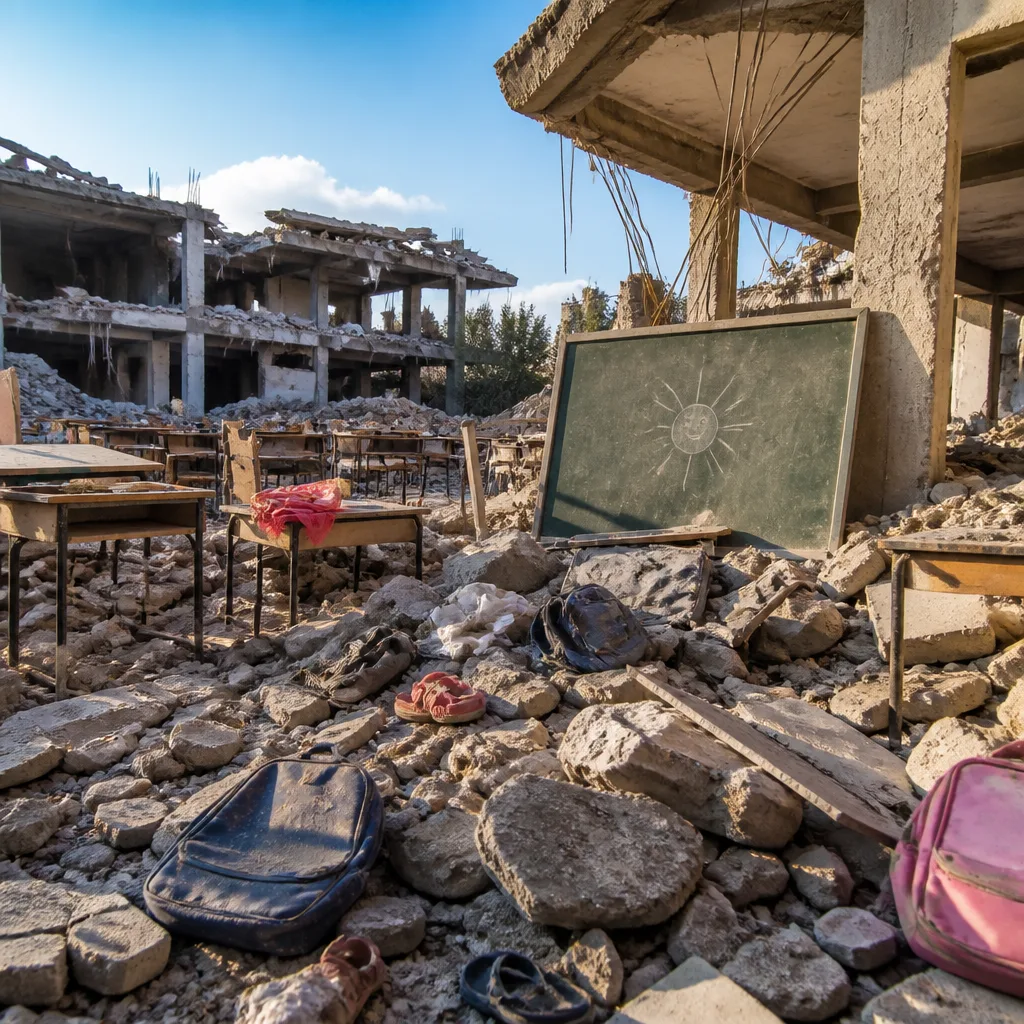
At an event focused on Palestinian childhood organised by the Arab League Educational, Cultural and Scientific Organization (ALECSO), the minister set out a stark picture of the educational emergency facing Gaza. He reported that in excess of 90% of school buildings have been destroyed and that approximately 82% of universities in the territory have also been rendered unusable by the bombardments.
The remarks were delivered in Tunis at a conference that brought together regional agencies and ministers to consider the protection and future of children affected by the fighting. ALECSO’s director-general said the organisation would work with Arab states to develop a coordinated response, including emergency protection measures and a joint action plan.
Impact on pupils, teachers and access
The minister highlighted not only the destruction of physical buildings but also the wider obstacles that prevent children from learning. He drew attention to restrictions on movement imposed by thousands of military checkpoints that continue to limit students’ ability to travel to school, compounding the effects of damaged infrastructure.
These combined barriers mean that hundreds of thousands of children are without regular schooling or the prospect of safe, consistent learning environments. The disruption will also affect teachers, administration staff and the longer-term functioning of higher education institutions in the territory.
Regional response and next steps
ALECSO said it would establish a joint Arab action plan with emergency protection mechanisms aimed at addressing the immediate needs of affected children and supporting the reconstruction of education services. The conference in Tunis provided a forum for ministers and agency representatives to discuss regional cooperation, protection of educational facilities and humanitarian measures.
- Students affected: more than 720,000 deprived of basic education
- School buildings: over 90% reported destroyed
- Universities: around 82% reportedly damaged or destroyed
Those figures underline the scale of the crisis facing educators and aid agencies attempting to maintain continuity of learning amid active conflict and displacement.
| Category | Reported figure |
|---|---|
| Students without access to basic education | 720,000+ |
| School buildings destroyed | >90% |
| Universities damaged/destroyed | 82% |
International agencies and local authorities have long recognised that education is a vital protective service in emergencies: it provides routine, psychosocial support and a pathway to recovery. The destruction of so much of Gaza’s educational estate therefore risks not only immediate learning loss but also longer-term harm to a generation’s prospects.
The Tunis conference, which brought the minister’s numbers to public attention through reporting by the Tunisian daily, also sought to mobilise co-ordinated regional support. ALECSO’s announced plan is intended to combine rapid protection measures with longer-term reconstruction planning, but delivery will depend on access, security and funding.
For pupils, parents and teachers in Gaza, the immediate priorities remain safe access to learning spaces, temporary alternatives where schools are unusable, and the removal of obstacles to movement so children can attend any functioning educational provision.
At a moment when education systems worldwide are already under strain from crises, the scale of damage described in Tunis represents an urgent call for concerted diplomatic, humanitarian and educational responses to prevent irreversible losses in children’s learning and wellbeing.