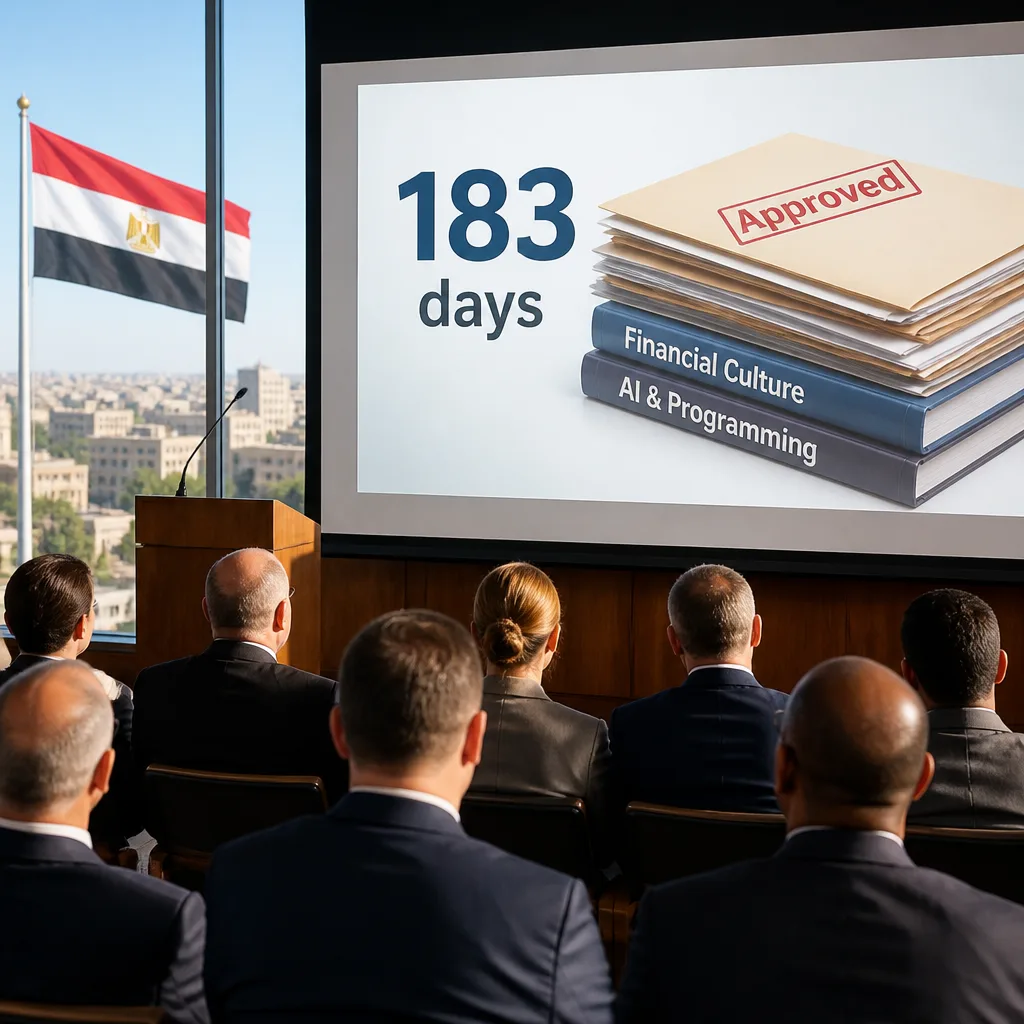
The Egyptian Ministry of Education and Technical Education has confirmed International Baccalaureate Organisation (IBO) approval for the second-year curricula of the new Egyptian Baccalaureate and announced operational changes for the 2026/27 school year, including a rise to 183 school days.
Curriculum changes and new subject content
Minister Mohamed Abdellatif told a nationwide gathering of school leaders and regional directors that the approved second-year programme will be published on the ministry’s official website within days. Authorities say the new Baccalaureate will introduce a compulsory activity in financial culture for second-year students, covering areas such as stock markets, shares and start-up businesses. Programming and elements of artificial intelligence will also be woven into the syllabus, with the aim of strengthening pupils’ problem-solving skills.
Longer academic year and staggered starts
In a notable operational shift, the ministry has set the upcoming academic year length at 183 days, rising from the roughly 116 days reported in previous cycles. The minister gave precise school opening dates for different sectors: international schools will begin on 6 September, while official, official languages and distinguished official languages schools will start on 12 September.
| School type | Start date | Academic days (2026/27) |
|---|---|---|
| International schools | 6 September | 183 |
| Official / official languages | 12 September | 183 |
Classroom management and literacy targets
Addressing classroom density, the minister said schools must not exceed 50 pupils per classroom, and that all institutions had pledged to respect this limit. He also highlighted progress in basic reading and writing, citing United Nations assessments which he said showed the proportion of pupils with poor literacy had fallen from 45% at an initial stage to 13% by a later assessment phase.
“It is unacceptable to have more than 50 students per classroom,”
Abdellatif added that primary pupils lacking fundamental literacy were a particular concern and underlined that basic reading and writing are essential prerequisites for learning at later stages.
Guidance for school leaders and teaching staff
The announcement came during a large meeting attended by around 4,500 school principals along with directorate and education administration heads from 21 governorates. The minister framed school leaders and teachers as key partners in implementing the changes and issued a series of operational directives, including a timetable change that places religious education in the first four periods of each school day. He also instructed that all textbooks must be distributed in line with ministry requirements ahead of the new term.
- IBO approval of the second-year Egyptian Baccalaureate curricula is complete; official publication imminent.
- The 2026/27 school year will run for 183 days, with staggered starts for different school types.
- New curricular content will include financial culture and programming/AI elements; class sizes capped at 50.
These reforms are substantial in scope: they alter the length of the school year, change daily scheduling, and introduce new subject matter intended to align education with contemporary economic and technological demands. The success of such changes will depend on timely distribution of resources, teacher training and the capacity of schools across Egypt’s governorates to absorb a longer academic calendar alongside new curricular content.
Publishing the full approved curricula and accompanying implementation guidance will be pivotal in the coming days for headteachers and teachers preparing for term. The ministry’s commitment to limiting class sizes and boosting core literacy also signals a continued focus on both quality and access as authorities roll out the revamped Baccalaureate.