
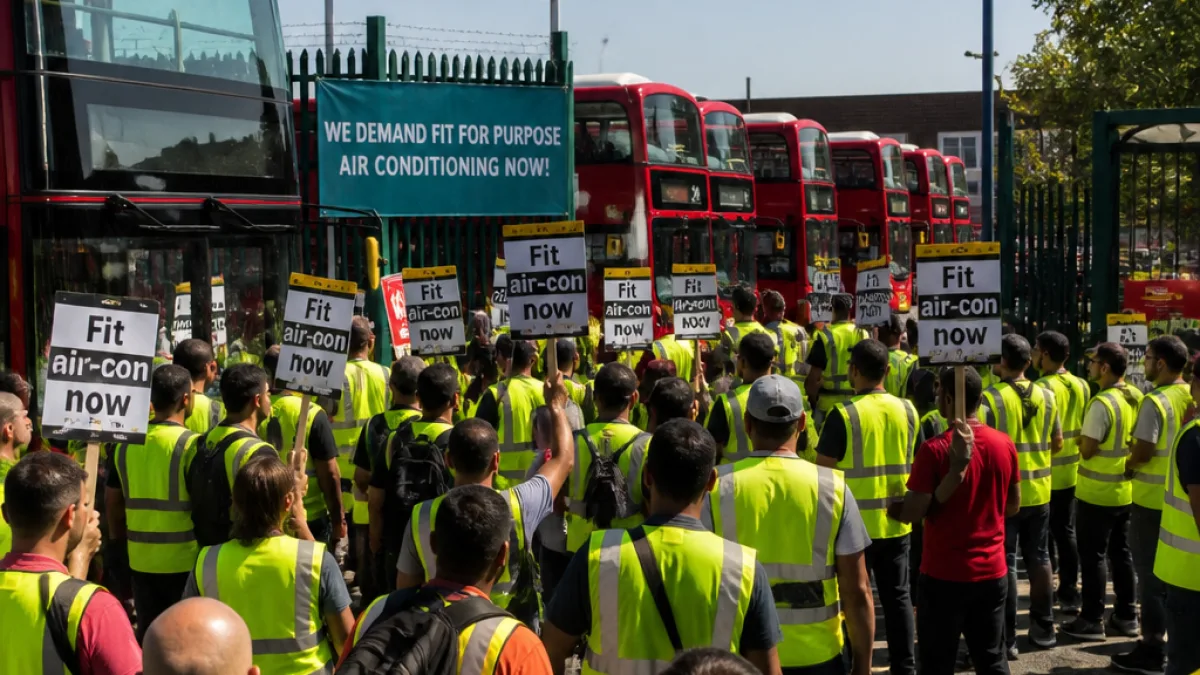
Around 50 bus drivers staged a strike outside Arriva’s Wood Green garage in north London after reporting cabin temperatures as high as 44°C during the recent heatwave and demanding the company fit full air conditioning instead of the existing air‑cooling systems.
Drivers say heat is making them drowsy and unsafe
Drivers at the protest said prolonged exposure to extreme heat was affecting concentration and could create dangerous situations on busy London roads. Staff have been told their shifts can run for up to 10 hours with a break in the middle, and many said the current cooling arrangements were inadequate.
“We’re so fed up, we get into the bus, and it’s absolutely boiling… It makes you drowsy. It makes you feel a bit uncomfortable. You’re sweating, you’re sticky. It’s like being in a greenhouse. That’s my life.”
The remark came from Peter Crane, 62, who has driven for Arriva for 22 years and showed a photograph of a temperature reading in his cab of 44°C. Protesters held placards reading “Too hot to work. Act now!” and handed out leaflets with slogans such as “No to heatstroke. Yes to heat strikes.” Cars and buses honked in solidarity as the demonstration took place.
Union demands and company position
The strike is the first in a series of walkouts planned between now and mid‑October. Drivers, backed by union organisers, are pressing Arriva to replace what they describe as an ineffective air‑cooling system with proper air conditioning across its fleet.
Drivers said some colleagues felt unable to follow advice from the Mayor of London, Sir Sadiq Khan, and Transport for London (TfL) to refuse to drive if conditions were unsafe because they feared disciplinary action or docked pay from their employer.
One driver, Moe Manir, 38, described being threatened with pay deductions or disciplinary measures if he refused to work in severe heat. He warned that fatigue from overheating could make it harder to react to hazards such as scooters or cyclists emerging from side streets.
Public safety and legal context
Health and safety guidance requires employers to assess risks from hot working conditions and take reasonable steps to protect staff. Drivers’ complaints centre on whether the existing cooling systems meet those obligations during extreme and prolonged high temperatures.
Commuters and campaigners say the dispute raises questions about broader fleet standards across London, where many buses are older models and driver cabins are not uniformly air‑conditioned. The immediate concern is the safety of passengers and road users if drivers become fatigued or impaired by heat.
- Location: Wood Green bus garage, north London
- Number of striking drivers: around 50
- Cab temperature recorded: 44°C (photo shown by driver)
- Typical shift pattern: up to 10 hours with a break
- Action planned: further walkouts through mid‑October
Impact on services and passengers
Although this action was limited in scale, strikes affecting drivers at one garage can ripple into reduced services, delays and crowding — particularly during busy periods. Passengers in the area said they were sympathetic to drivers’ concerns but worried about disrupted journeys if industrial action escalates.
One commuter waiting nearby told a WE NEWS reporter: “It’s unbearable on some buses in this weather — I can imagine the drivers must be exhausted. But I still need to get to work.”
What next: negotiations and enforcement
Union representatives say they will continue to press Arriva for replacement of the cooling systems with full air conditioning and are prepared to escalate action if progress is not made. Drivers remain anxious about potential reprisals if they follow advice to refuse to drive in dangerous heat.
Passengers and staff looking for practical guidance should consult TfL announcements and union communications. Those concerned about immediate safety can report conditions to their employer and, where necessary, to health and safety authorities.
The dispute places pressure on Arriva, TfL and local authorities to show they are taking workers’ health seriously as extreme weather events become more frequent. For now, drivers have made clear they will press their case over the coming weeks while the capital remains under heatwave conditions.
Reporting from Wood Green.
















