
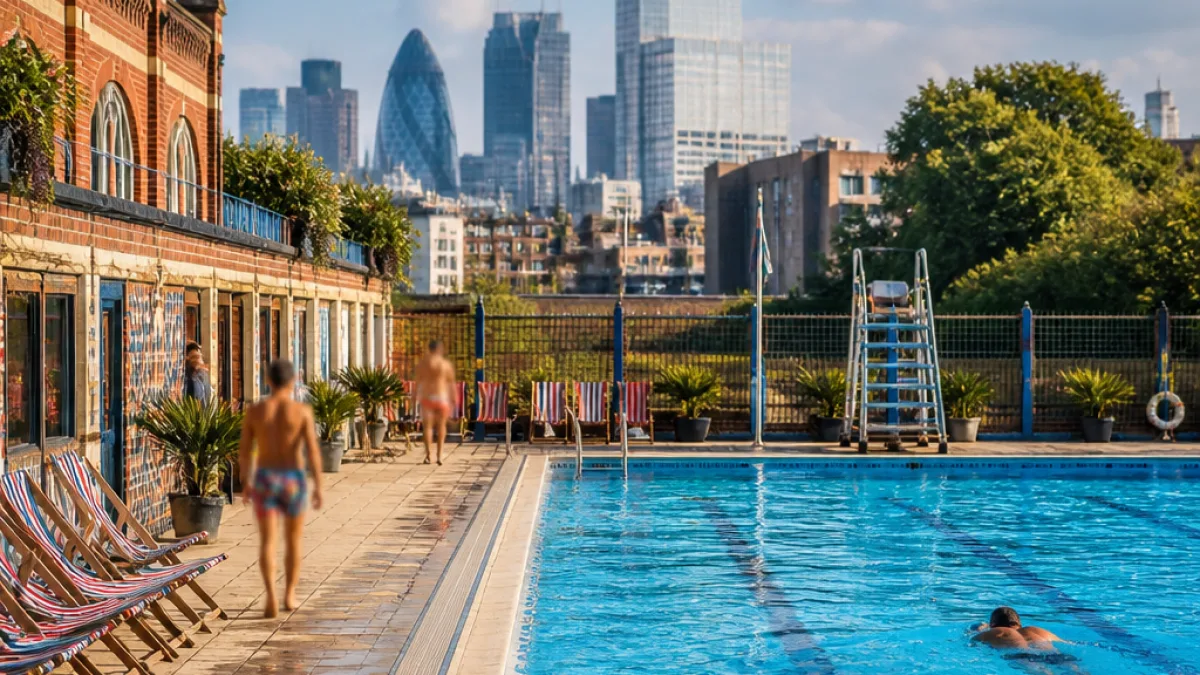
As London swelters through another spell of extreme heat, calls are growing for the city to look again at its heritage of public outdoor lidos as safe and affordable places to cool off. The debate has been revived after reports this summer highlighted how many towns across England — including Nottingham — lost their lidos in the decades after they were built, leaving a patchwork of provision today.
Memory and loss of a public amenity
In Nottingham, Highfields Lido is remembered as a social focal point from the interwar years. Built in 1924, the pool at its peak measured 330ft by 75ft and held 3,400,000 litres of water, fed originally from a nearby boating lake, according to the University of Nottingham. For those who grew up with it, the lido was more than a pool — it was where they learned to swim, met friends and spent long summer days.
One local recalls that as a teenager in 1967 he was "absolutely obsessed" with the lido and would visit it "night and day". Such personal memories underline the role these facilities played in community life across the country.
Heat, risk and the search for safe options
There have now been five heatwaves this summer, a factor linked by campaigners and residents to renewed interest in lidos. The loss of public outdoor pools has left many young people turning to rivers, reservoirs and other unsupervised waters to cool down — places that can be dangerous. That risk is prompting some local authorities and community groups to reconsider whether rebuilding or reopening outdoor pools should be part of heat-resilience planning.
In London, the city already retains several notable lidos and open-air pools that attract residents during hot weather. But advocates argue provision is uneven and that reopening lost sites or investing in new outdoor facilities could provide low-cost, accessible cooling spaces, reduce pressure on natural water bodies and offer public health benefits through swimming education.
- Highfields Lido (Nottingham) — built 1924; 330ft x 75ft; 3,400,000 litres capacity.
- Nationwide trend — many towns that once had several lidos now have none.
- Current summer — five heatwaves have driven renewed interest and raised safety concerns.
Practical and financial hurdles
Reinstating lidos is not straightforward. The original story of decline for many such sites involved rising maintenance costs, changing leisure habits and competing budget pressures on councils. While the nostalgia factor is strong, any proposal to reopen or build new outdoor pools must confront capital and running costs, site availability and the need for lifeguarding and water-quality management.
Local activists point to successful reopenings elsewhere as models, where community groups have worked with councils to secure heritage grants, fundraising and operational partnerships. In London, some lidos continue to thrive precisely because they combine municipal support with strong local stewardship and tourism appeal — but those examples are not evenly distributed across the capital.
"We went every day because we enjoyed it so much. [It was] a real valuable asset where people of all ages, particularly youngsters who were very fond of it, could go spend the whole day there," a former Highfields Lido regular said of the pool's heyday.
What this means for Londoners
For Londoners the conversation is twofold: how to provide safe, accessible cooling spaces during heat events, and whether reopening or investing in outdoor pools could be part of longer-term climate adaptation. Councils are under pressure to prioritise services, and while some argue that lidos offer public-health and community benefits that justify investment, others say precious budgets require hard choices.
At street level, residents express straightforward concerns. "When it's that hot, people choose the nearest water — sometimes it's the river or a reservoir, and that's scary for families," said one south London resident. Another pointed out that the social value of a communal outdoor pool is significant: "It's where kids learn to swim, where neighbours meet — you don't get that from a lifeless indoor complex."
Whether the capital will respond by expanding outdoor swimming options remains to be seen. The debate has been reawakened by a summer of extreme temperatures and the realisation that public outdoor pools once provided a widely accessible way to keep people safe and comfortable in heat. If recent memories and examples from elsewhere are any guide, a mix of council funding, community campaigning and targeted grants could be the path to reviving some of these spaces — but that will require political will and financial commitment at a time when local authorities face many competing demands.















