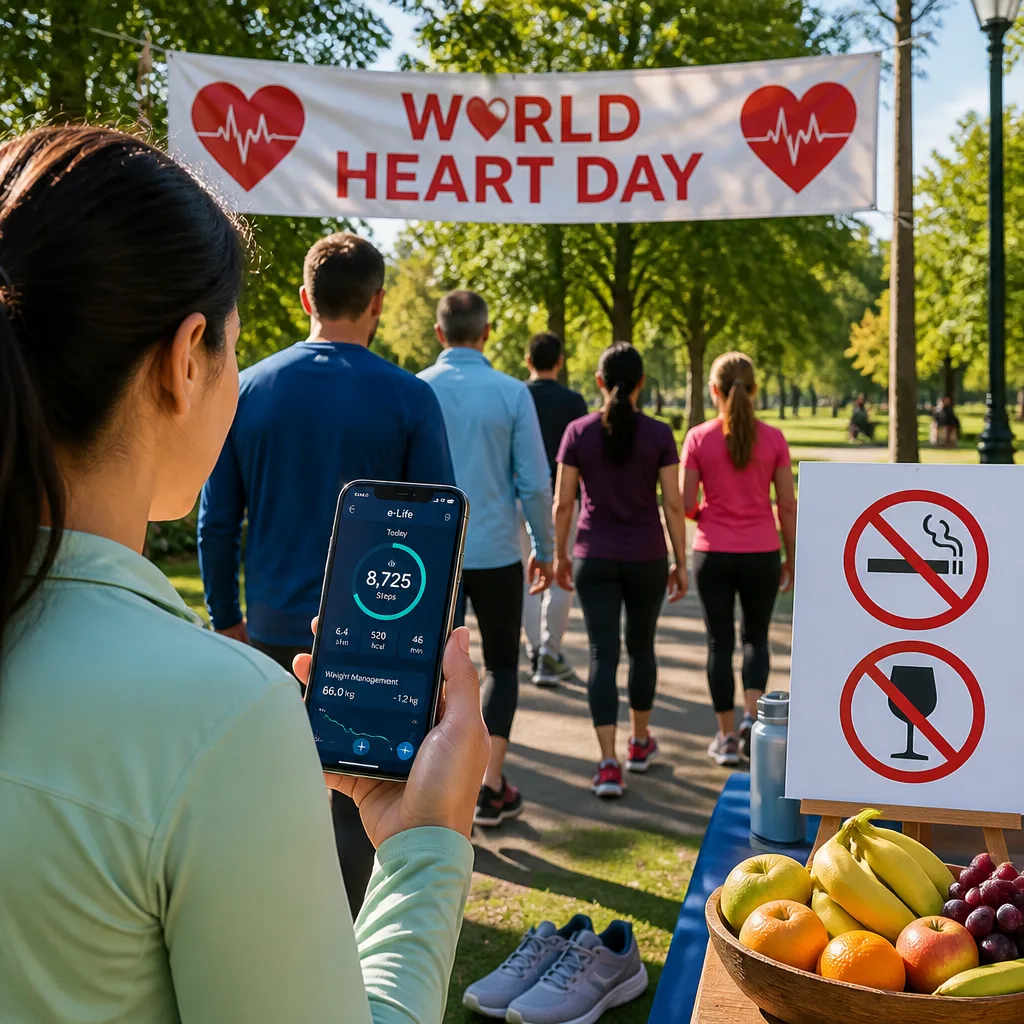
The Department of Health has called on the public to adopt healthier lifestyles to help prevent cardiovascular diseases (CVDs), marking World Heart Day on 29 September. Officials reiterated that diet, activity and avoiding tobacco and excessive alcohol remain central to reducing the burden of heart disease and stroke, which the World Health Organization says are the world's leading cause of death.
Prevention is the primary strategy
In its World Heart Day message, the health department urged people to maintain a balanced diet, stay physically active and refrain from smoking and drinking. It highlighted two recently launched Government programmes that it says will support a more holistic, community-based approach to preventing cardiovascular ill health: the Primary Healthcare Co-care Network (Co-care Network) and the Life Course Preventive Care Plan.
"Although 'an ounce of prevention is worth a pound of cure' is a cliché, it is absolutely the primary strategy for preventing non-communicable diseases, including CVDs."
According to the department, around 80% of CVDs are preventable through measures such as healthier eating, regular physical activity and avoiding smoking and alcohol. It said the Government has been educating the public through multiple channels while building supportive, multi-disciplinary and community-wide collaborations to encourage physical activity.
Local and global scale of the problem
The World Health Organization estimates that CVDs, including heart disease and stroke, account for about 17.9 million deaths globally each year. The department provided provisional local figures for 2025, reporting 10,119 registered deaths attributed to cardiovascular disease — roughly 19.6% of all deaths that year. It added that 65.2% of those CVD fatalities were associated with heart disease rather than stroke.
| Measure | Figure |
|---|---|
| Global annual CVD deaths (WHO) | 17.9 million |
| Local CVD deaths (2025, provisional) | 10,119 |
| Share of total deaths (local, 2025) | 19.6% |
| Proportion linked to heart disease | 65.2% |
Action plan and simple targets
As part of its recent work on weight and lifestyle, the department announced an Action Plan on Weight Management in March 2026. The plan aims to raise awareness about healthy weight and diet, and to encourage everyday physical activity — including promoting a simple daily target of 10,000 steps to help people build regular movement into their routines.
Those who have not yet joined official programmes are being invited to take part in a 10,000 Steps a Day Walking Challenge via the e+Life platform on the eHealth mobile application. The department suggested exploring thematic walking routes with family and friends as one way to make activity habitual and social.
Health officials emphasised that prevention requires both individual action and system-level support. The Co-care Network and Life Course Preventive Care Plan are presented as ways to make preventive services more accessible across communities and life stages, although the department did not provide further implementation details in its World Heart Day statement.
Practical steps for individuals
Public advice from the department aligns with long-established measures to reduce cardiovascular risk. Key recommendations include:
- Maintain a balanced, nutritious diet and manage body weight.
- Increase regular physical activity — setting and aiming for a step target such as 10,000 steps a day.
- Avoid tobacco use and limit alcohol consumption.
- Engage with primary-care prevention programmes and take advantage of community health services.
World Heart Day is increasingly used by health authorities to refocus attention on prevention. With CVD still accounting for a sizeable share of deaths locally and globally, officials say community-based initiatives and simple daily habits can have a substantial impact on long-term health.
If you have concerns about heart disease, seek medical advice — especially if you experience chest pain, breathlessness or other worrying symptoms. Early intervention and sustained lifestyle change remain the most effective tools for reducing risk.