
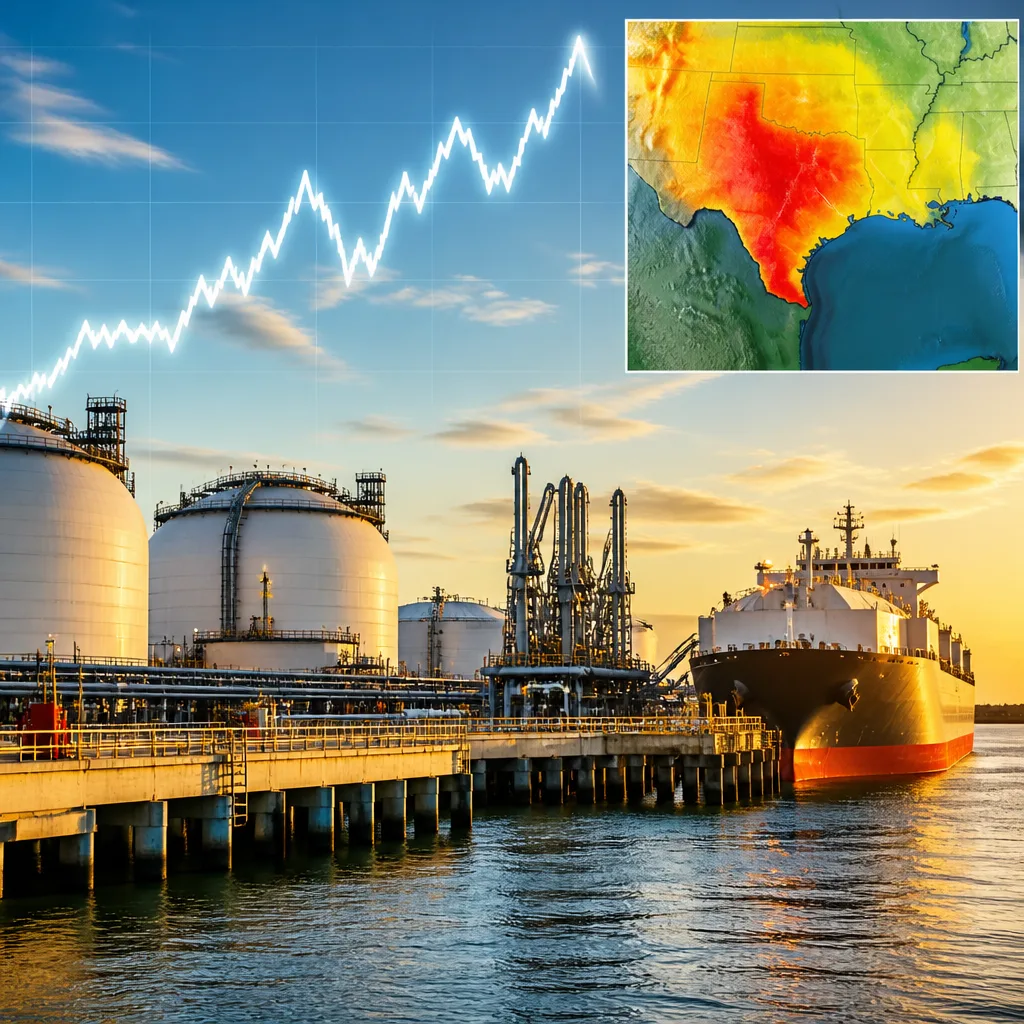
Natural gas futures in the United States rose on Friday after weather models trended warmer for late summer in the southern states and liquefied natural gas (LNG) export flows from the US Gulf Coast increased, reducing the volume available in the domestic market.
What to expect and why prices moved
Market participants now anticipate stronger demand for gas-fired power as households and businesses in the South run air-conditioning through the coming weeks. That upward demand signal, coupled with higher flows to LNG terminals, underpinned a modest gain in front-month futures.
On the New York Mercantile Exchange, September natural gas futures settled up 0.6 cents — a rise of 0.2% — at $2.733 per million British thermal units (mmbtu). For the week, front-month futures finished 2.7% higher, snapping a seven-week sequence of weekly declines.
Supply, exports and the limits on further gains
While export flows to LNG terminals rose — tightening the domestic balance — gains were checked by rising production across key producing regions. Analysts noted increases in output in Texas, the Northeast and the Rocky Mountains, which have helped to replenish supply even as exports climb.
"Gains were likely limited by rising production, with readings increasing across Texas, the Northeast and the Rocky Mountains,"
The most recent snapshot of flows and output shows the market is still finely balanced. The consultancy Commodity Weather Group highlighted the hotter-than-average signal across the southern United States through the end of August, supporting expectations of stronger power-sector demand.
| Measure | Latest figure | Change |
|---|---|---|
| Lower-48 dry gas production | ~114.4 bcf/day | +4.0% y/y |
| Lower-48 total gas demand | ~81.5 bcf/day | -1.4% y/y |
| Dry gas exports to Mexico | ~8.4 bcf/day | +4.6% w/w |
| Estimated gas flows to LNG export terminals | ~18.1 bcf/day | -1% w/w |
Implications and where confidence lies
The combination of hotter weather forecasts and elevated LNG flows points to a near-term upward pressure on prices, particularly if the heat persists across the South. However, the market’s reaction remains tempered because production is running at a higher level than a year ago, providing a counterweight to demand and export growth.
Traders and stakeholders should watch three elements closely:
- Weather outlooks: further shifts toward sustained, widespread heat would strengthen demand for cooling and gas-fired generation.
- LNG terminal flows: increases reduce domestic availability and can raise prices if production cannot match exports.
- Production trends: continued output gains across major basins will limit upside in prices even if demand rises.
Forecast confidence on the weather side is moderate: models have recently trended hotter but can change, especially beyond a one- to two-week horizon. On the supply side, current data show higher production, but any operational disruptions at major producing fields or export terminals could quickly tighten the market.
For consumers and managers of energy portfolios, the immediate practical takeaway is to expect somewhat firmer wholesale gas prices in the short term, with potential volatility if weather forecasts or export flow estimates change materially. Market participants should monitor official weather updates and weekly production and flow reports to reassess risk as new data arrive.
This report is compiled from publicly released market data and industry analysis; the late-summer outlook will evolve as weather models and flow figures are updated.









