The United States experienced a marked decline in violent crime in 2025, the Federal Bureau of Investigation’s annual estimates show, with a near‑uniform fall across several principal offence categories and the national murder rate reaching its lowest level in almost seven decades.
Key national shifts
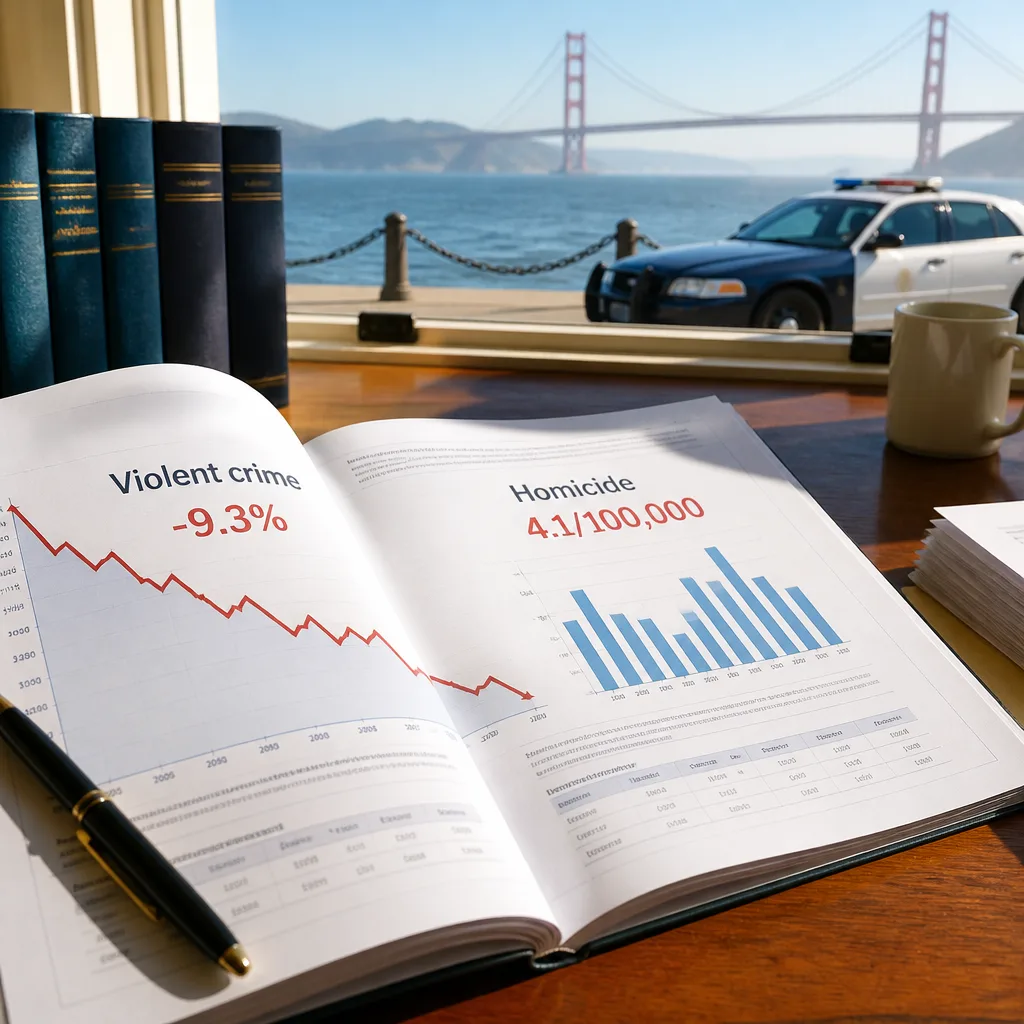
The FBI’s report estimates that violent crime fell by 9.3% in 2025 compared with the previous year. Major categories recorded double‑digit or substantial reductions: murder and non‑negligent manslaughter fell by 18.1%, robbery by 18.5%, while rape declined by 7.6% and aggravated assault by 7.2%.
The national homicide rate dropped to 4.1 killings per 100,000 people in 2025 — a rate the FBI says ties the figures for 1955 and 1956 and is the lowest since the agency began producing national estimates in 1936.
"We have the numbers down because of what the federal government's doing,"
The fall has already become part of political debate. President Donald Trump cited the FBI figures during remarks in New York, attributing the reduction to federal action. The FBI itself did not single out any single policy or enforcement strategy as the cause; in an introductory message accompanying the report the bureau’s director, Kash Patel, credited broad cooperation between federal, state, county, tribal and local law enforcement agencies.
Regional snapshots: Bay Area
Local police figures analysed in the Bay Area mirror the national trend. According to city police data reviewed alongside the FBI report, violent crime in 2025 fell roughly 17% in San Francisco, 25% in Oakland and about 13% in San Jose compared with 2024. Those local totals comprise murders, rapes, robberies and felony assaults.
Oakland, which had seen higher levels of serious crime in prior years, reported sustained reductions into 2026. Through 9 August, the city’s police department recorded an overall 17% decline in violent crime year‑to‑date, with homicides down 22%, aggravated assaults down 10%, robberies down 27%, and firearm robberies down 42% compared with the same period in 2025.
| Measure | 2025 change (national) |
|---|---|
| Violent crime (overall) | -9.3% |
| Murder and non‑negligent manslaughter | -18.1% |
| Robbery | -18.5% |
| Rape | -7.6% |
| Aggravated assault | -7.2% |
Context and caution
While the headline declines are sizeable, the FBI cautions against attributing the change to any single reform, policing model or political initiative. The bureau’s report notes the downward trend began before the current presidential term; the national murder rate that peaked during the pandemic era at 6.6 per 100,000 in both 2020 and 2022 had already fallen to 6.0 in 2023 and 5.1 in 2024 before the sharper drop recorded for 2025.
Analysts and law‑makers will scrutinise the figures for signals about what sustained reductions would require and whether short‑term fluctuations reflect operational changes in policing, reporting rates, demographic shifts or other social factors. The FBI’s message highlighted inter‑agency cooperation as a factor, but the agency did not present a formal causal analysis linking specific policies to the decline.
- National violent crime fell an estimated 9.3% in 2025.
- The murder rate reached 4.1 per 100,000, tying a mid‑1950s low.
- Local police data from the Bay Area show steeper falls in some cities, with Oakland reporting continued declines into 2026.
As the data are dissected by academics, police forces and politicians, careful analysis will be required to understand whether the 2025 fall represents the start of a sustained long‑term trend or a sharper but temporary reversal of the increases seen earlier in the decade.
For readers seeking verification, the FBI’s annual estimates and local policing reports provide the underlying tallies and methodology notes for further review.