Conservation teams carrying out the first dry‑dock preservation of the World War II submarine USS Silversides in more than half a century have uncovered an artefact that links directly to another wartime boat with a far grimmer fate.
Small part, large historical connection
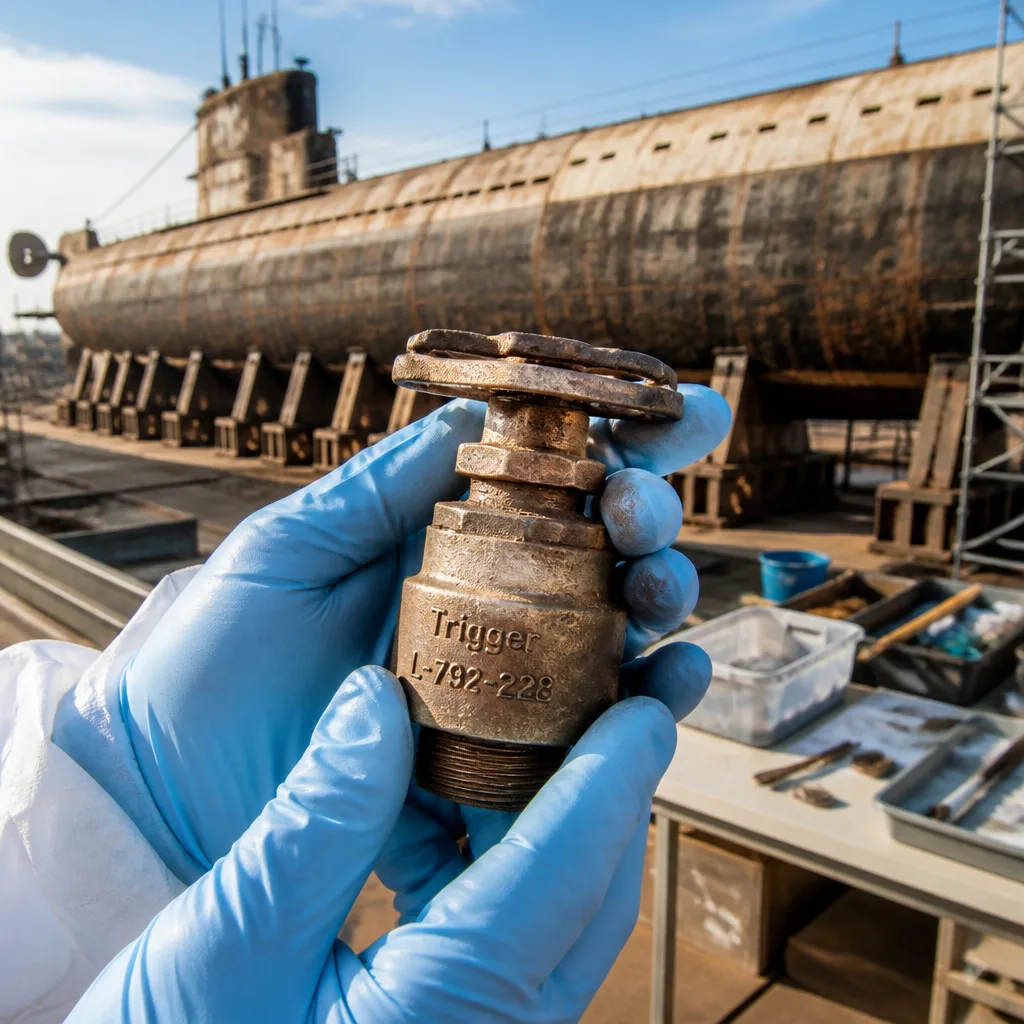
During a routine inspection, workers identified a mundane but telling component: a flood valve stamped with the word “Trigger” and bearing the serial number L‑792‑228. Although the component itself is unremarkable, historians say its provenance is remarkable because it appears to be the only surviving part known to be from the USS Trigger, a Gato‑class submarine lost late in the Pacific campaign.
The Trigger, named after the triggerfish, put to sea from Mare Island Navy Yard on 22 October 1941. It was to take part in operations that included the Battle of Midway, but ran aground northeast of the island and subsequently returned to Pearl Harbor on 9 June 1942. Over the course of the war the submarine completed 11 patrols.
The loss of USS Trigger
The Trigger embarked on its 12th patrol in 1945 and did not complete it. Evidence compiled after the war points to a sinking in the East China Sea on 28 March 1945. Contemporary reports from nearby US units describe a prolonged engagement that included depth‑charge attacks lasting approximately two hours; postwar Japanese records also note that an aircraft located and bombed a US submarine on that date, followed by eyewitness accounts of a large oil slick consistent with a successful sinking.
When the sub failed to arrive at Midway by 1 May 1945, the Trigger was declared presumed lost and its name was removed from the Naval Vessel Register on 11 July of that year.
How did a Trigger valve end up on Silversides?
The Silversides had deployed about two months before the Trigger, yet it now contains a valve clearly marked for the other vessel. Preservation teams and historians have noted components were often interchanged, cannibalised or stocked from common supplies during intense wartime operations and subsequent maintenance cycles. Exactly why this particular part was fitted to Silversides remains unclear.
- USS Silversides: undergoing first dry‑dock preservation in over 50 years
- Found item: flood valve stamped "Trigger", serial L‑792‑228
- USS Trigger: launched 22 October 1941; lost 28 March 1945 after 11 completed patrols
| Date | Event |
|---|---|
| 22 Oct 1941 | USS Trigger launched from Mare Island Navy Yard |
| 9 Jun 1942 | Trigger returns to Pearl Harbor after running aground |
| 28 Mar 1945 | Attack in East China Sea; Trigger likely sunk |
| 1 May 1945 | Trigger declared overdue and presumed lost |
| 11 Jul (1945) | Name stricken from Naval Vessel Register |
The discovery underlines the way small everyday objects can assume outsized historical importance. In museum and conservation practice, an apparently ordinary item such as a flood valve becomes evidence: a material trace that ties one vessel to another and offers a tangible link to events that otherwise exist only in records and testimony.
While the valve will not on its own resolve lingering questions about the Trigger’s final hours, it provides curators and naval historians with a rare physical connection to a submarine lost in the closing months of a global conflict. Further investigation of the Silversides’ fittings and maintenance records may help explain how components moved between sister ships during wartime and peacetime upkeep.
For now, the valve stands as a reminder that preservation work is not merely cosmetic. It is an investigative process, one in which craftsmanship, conservation science and archival research meet to reconstruct, as precisely as surviving evidence allows, the material story of naval history.