
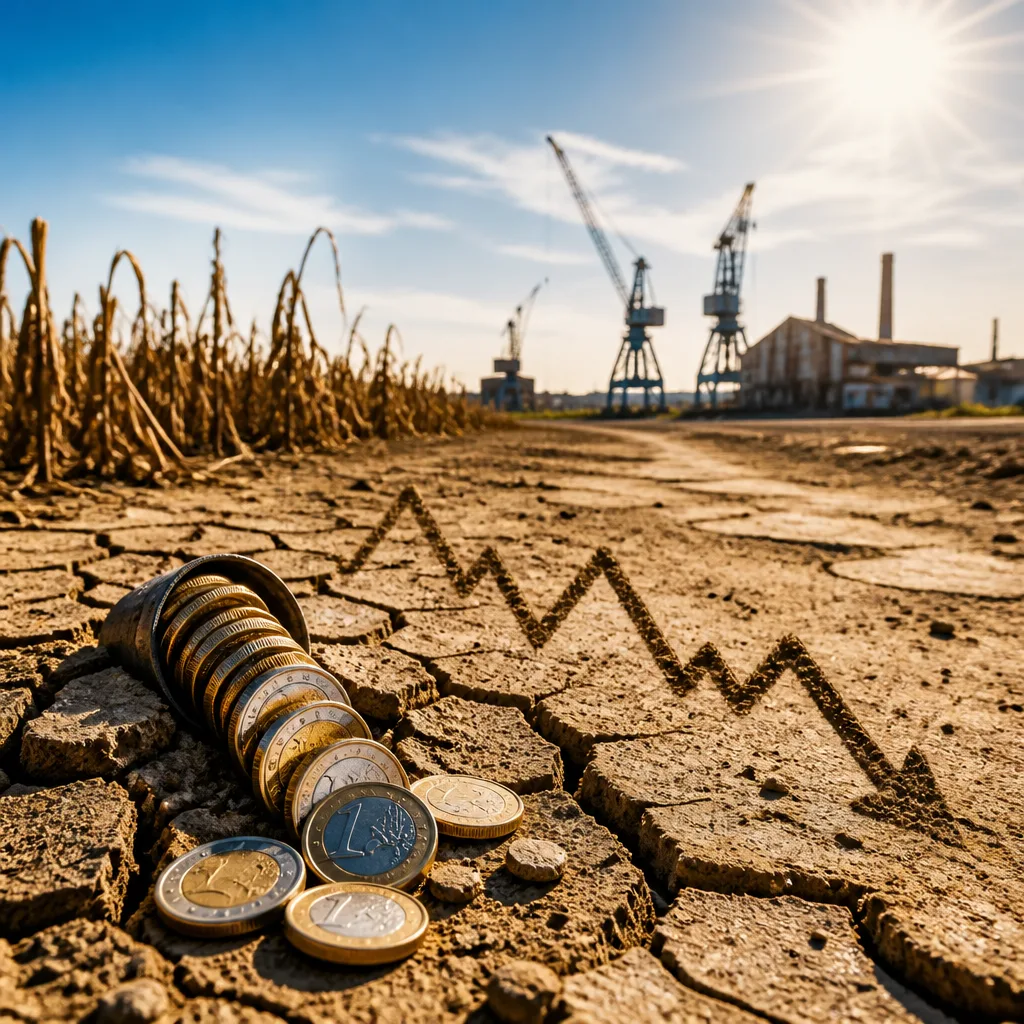
A severe drought that gripped Europe between 2015 and 2018 inflicted sustained economic damage far beyond the immediate losses to agriculture, according to a new sector‑by‑sector analysis. The researchers calculate the event cost the EU‑27 and the UK about €439 billion and reduced GDP growth per capita by 2.72 percentage points, with effects on investment and jobs that persisted for years.
Persistent, sectoral hits — not a single short shock
The study, led from the Euro‑Mediterranean Centre on Climate Change and Politecnico di Milano, is the first to map the medium‑ and long‑term economic repercussions of a multi‑year drought across different industries. The authors found the short‑term picture misses important dynamics: while farming bore the immediate brunt, construction and manufacturing experienced deeper and more persistent losses.
- Agriculture: largest immediate impact but mostly recovers in two to three years owing to insurance, price adjustments and crop switching.
- Construction and manufacturing: suffer lasting declines in output and investment, with losses deepening in the years after the drought begins.
- Investment and employment: overall investment fell by more than 12%, and the event is associated with about 5.8 million fewer jobs across the region.
Lead author Marta Mastropietro said the paper reveals effects overlooked by single‑year estimates. The team emphasised that drought raises the cost of capital and discourages productive spending for years after the initial shock.
"It's the first time we track the full economic impact of prolonged drought, sector by sector," said Marta Mastropietro.
How bad could it get as the planet warms?
The authors modelled a warmer climate and found the same‑severity drought would hit far harder if average global temperatures rise. Under a scenario with global temperatures about 2°C above late‑nineteenth‑century levels, an event similar to 2015–2018 would:
- reduce GDP by about 5.21 percentage points (compared with 2.72 observed);
- cost roughly €760 billion across the EU‑27 and the UK; and
- be associated with around 10.8 million fewer jobs.
Those figures underline how climate change can amplify not only physical impacts but also financial and macroeconomic vulnerabilities. The researchers note that firms postpone and cut investment long after drought conditions end, a mechanism that propagates and prolongs economic harm.
| Metric | 2015–2018 observed | Counterfactual at +2°C |
|---|---|---|
| Cost to EU‑27 & UK | €439 billion | €760 billion |
| GDP growth per capita hit | 2.72 percentage points | 5.21 percentage points |
| Jobs lost (approx.) | 5.8 million | 10.8 million |
Implications for policy and business
The paper’s findings have practical consequences. The persistence of losses in construction and manufacturing suggests adaptation and insurance instruments that focus only on agriculture will under‑insure economies as a whole. Policymakers and financial regulators should therefore consider drought risk when assessing capital costs, infrastructure planning and the resilience of supply chains.
Equally, businesses that rely on long‑lead investments — property developers, heavy industry and exporters — face an elevated probability of prolonged underperformance after major hydrological shocks. If drought raises the effective cost of capital, as the study argues, then borrowing costs, risk premia and investment appetites will need rethinking in climate‑vulnerable sectors.
The research does not prescribe specific policy instruments, but its clear quantification of sectoral pathways should help governments, central banks and insurers design interventions that reduce the transmission of physical climate shocks into lasting economic damage.
As Europe continues to warm, the study provides a candid reminder: drought is not merely a seasonal hit to farmers’ yields but a multi‑year economic stress test, one that will become costlier and more frequent if global warming is not contained.









