
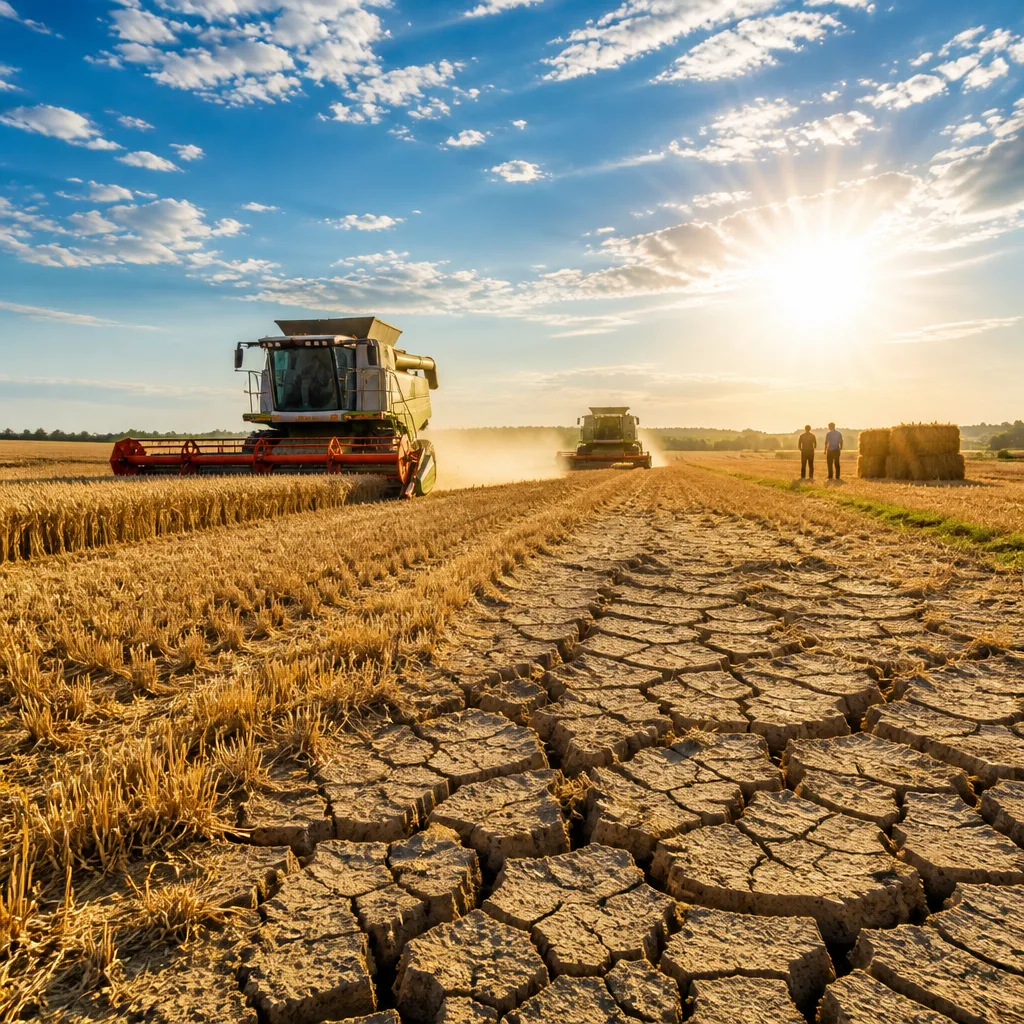
Large areas of England are experiencing severe drought, with farmers accelerating harvests and fields visibly damaged after an exceptionally dry July and a sequence of heatwaves.
What has happened
Farmers across eastern and central England have been harvesting crops earlier than usual because soils are extremely dry and plant growth has been curtailed by high temperatures. On one holding near Cambridge, a field has split with cracks deep enough to be plunged into by hand, a visible sign of the lack of moisture in the topsoil.
This summer has delivered repeated heat episodes — described in the report as the fifth heatwave of the season — coupled with exceptionally low rainfall. England and Wales recorded their driest July on record since 1836, and many regions received barely a tenth of the rain they would usually expect in an average month.
Impact on crops and farmers
The dry conditions have forced many arable growers to bring forward combines and cut crops before they deteriorate further. Industry figures quoted in the report say that more than half of the winter wheat crop had been harvested before the end of July on some farms — an unusually early completion of harvest work that reflects the pressure growers face.
“The fact that we’ve harvested more than half the winter wheat crop before the end of July reflects the challenging growing season many arable farmers have experienced,” said Jamie Burrows, chair of the National Farmers’ Union’s Combinable Crops Board.
Some farmers who have invested in soil resilience are still seeing damage, while others report losses or have been unable to establish cover crops earlier in the season because of the early onset of heat. One farmer interviewed described a cover crop that never established before the heat arrived.
- Extent of drought: Almost three-quarters of land in England is currently classed as being in drought.
- Record dry month: England and Wales had their driest July since 1836.
- Early harvests: More than 50% of winter wheat harvested in some areas before the end of July.
Practical consequences and outlook
Early harvesting can protect yield quality where crops are mature, but it can also reduce overall yields and place financial strain on farms if volumes are lower than usual. The loss of cover crops and increased soil cracking raise concerns about longer-term soil structure and resilience; repeated dry years make it harder for soils to retain moisture and support future crops.
While heatwaves may ease or rainfall may return, the report underlines that the current situation is the result of several months of below-average precipitation combined with high temperatures. Farmers and supply chains are already responding — by accelerating harvests and adjusting cropping plans — but the full seasonal impact will only become clear when yields and post-harvest assessments are completed.
| Metric | Reported value or description |
|---|---|
| Land in drought (England) | Almost three-quarters |
| July rainfall | Driest July since 1836 |
| Winter wheat harvest status | More than half harvested before end of July (on many farms) |
Forecast confidence in a rapid recovery is limited: a single spell of rain would help surface conditions but may not fully restore deeper soil moisture or reverse the need for altered crop management after this growing season. Farmers and farm advisers will be watching longer-range model guidance and reservoir or groundwater indicators for signs of recovery.
The situation emphasises the growing challenge for UK agriculture from extremes of temperature and rainfall. For the public and policymakers, the immediate focus is on supporting farmers through a difficult season while planning measures to improve soil resilience and water management for future years.









