
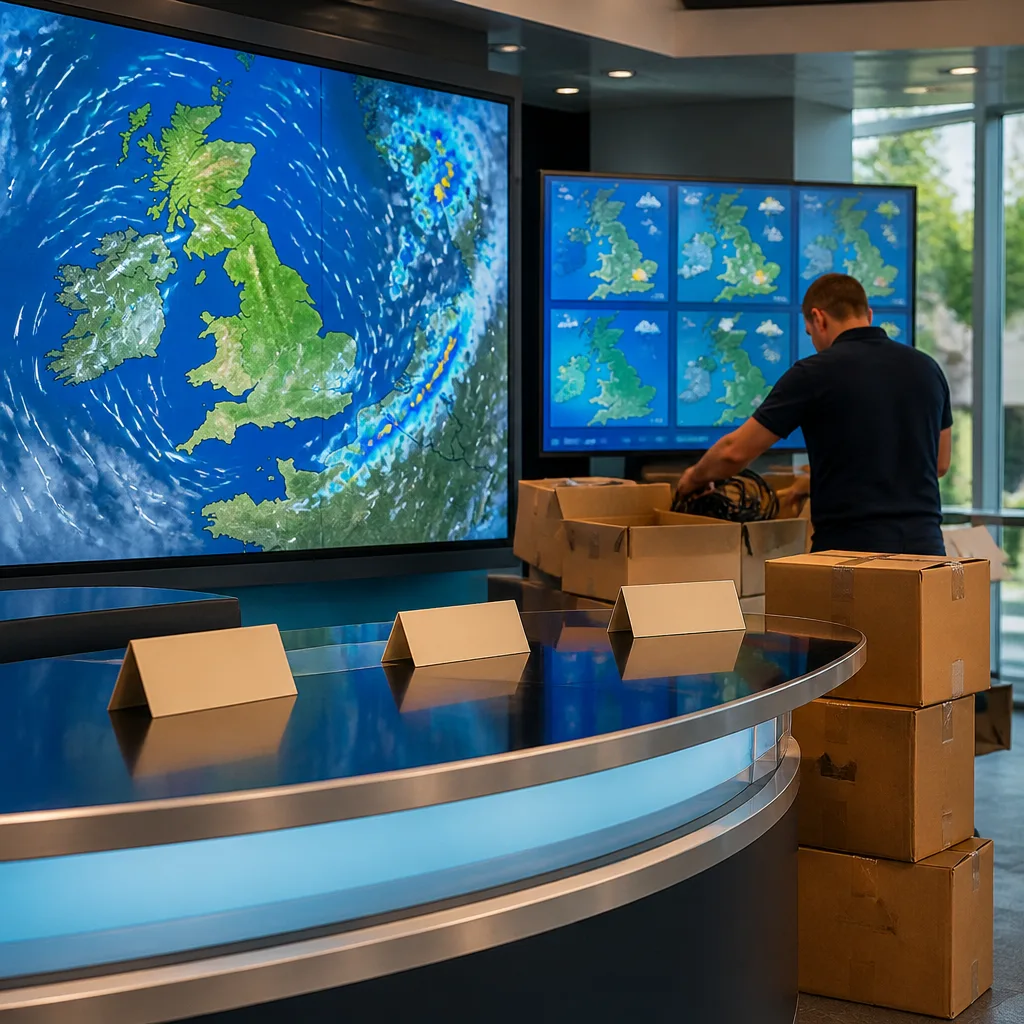
Senior figures in the BBC Weather team are reported to be considering voluntary redundancy as the corporation prepares a major reorganisation of its meteorological output, moving emphasis from a large national presenting team to a smaller, more digital-focused operation.
What is changing
According to media reports, three of the most familiar faces on the BBC’s national weather service — Tomasz Schafernaker, Louise Lear and Darren Bett — are among those reported to be considering voluntary redundancy. The planned restructure will reduce the number of national presenters and increase reliance on regional presenters and digital content produced in partnership with the Met Office.
The proposals, as reported, would see the remaining national presenter roles consolidated across the BBC’s London and Salford bases, with weather segments for BBC Breakfast and Today coming from the hub near Manchester. A new BBC weather centre will open at the Met Office headquarters in Exeter and will focus on producing articles, video and social media output.
Why this matters
The BBC is Britain’s most widely used public source for weather information and, in recent months, demand for timely forecasts has surged during heatwaves and other extreme events. The organisation says it is adapting its delivery model to meet changing audience habits while aligning more closely with the Met Office.
“As this summer’s heatwaves have proved, up-to-the minute and accurate weather information has never been more important,”
The quote above is attributed to Jonathan Munro, interim chief executive of BBC News, who welcomed the partnership with the Met Office as an opportunity to bring the two national institutions closer together.
Practical implications for audiences
For viewers and listeners, the changes are likely to mean:
- Fewer nationally presented weather bulletins from a dedicated national team.
- Greater use of regional presenters to deliver local forecasts.
- More emphasis on digital formats — articles, video clips and social media — produced from the new Exeter centre.
- On radio, weather updates increasingly read by programme presenters rather than specialist weather reporters.
The shift may not affect the accuracy of forecasts, which continue to rely on Met Office data, but it could change how and where audiences access live updates and contextual meteorological content.
Numbers and locations
Reports indicate a net reduction in national presenter posts, with the headline moves summarised in the table below.
| Element | Reported change |
|---|---|
| National presenter roles | Reduced and split between London and Salford |
| New centre | Met Office headquarters, Exeter |
| Radio updates | To be read by programme presenters |
Context and confidence
These changes come amid increasing public interest in weather information: during a recent heatwave, the BBC’s online weather output reportedly attracted large audiences. The organisation characterises the move as a modernisation of services to reflect shifting consumption patterns and to capitalise on the Met Office partnership.
At this stage the reports indicate that the presenters have not yet accepted redundancy offers. The BBC has been approached for comment. While the shift will reconfigure how meteorological journalism is produced at the corporation, the underlying forecasting capability provided by the Met Office remains unchanged.
For viewers and listeners, the practical takeaway is to expect more digital content and a greater role for local presenters in delivering forecasts, while national bulletins will be delivered from a smaller, redistributed team across existing BBC centres and the new Exeter hub.









