
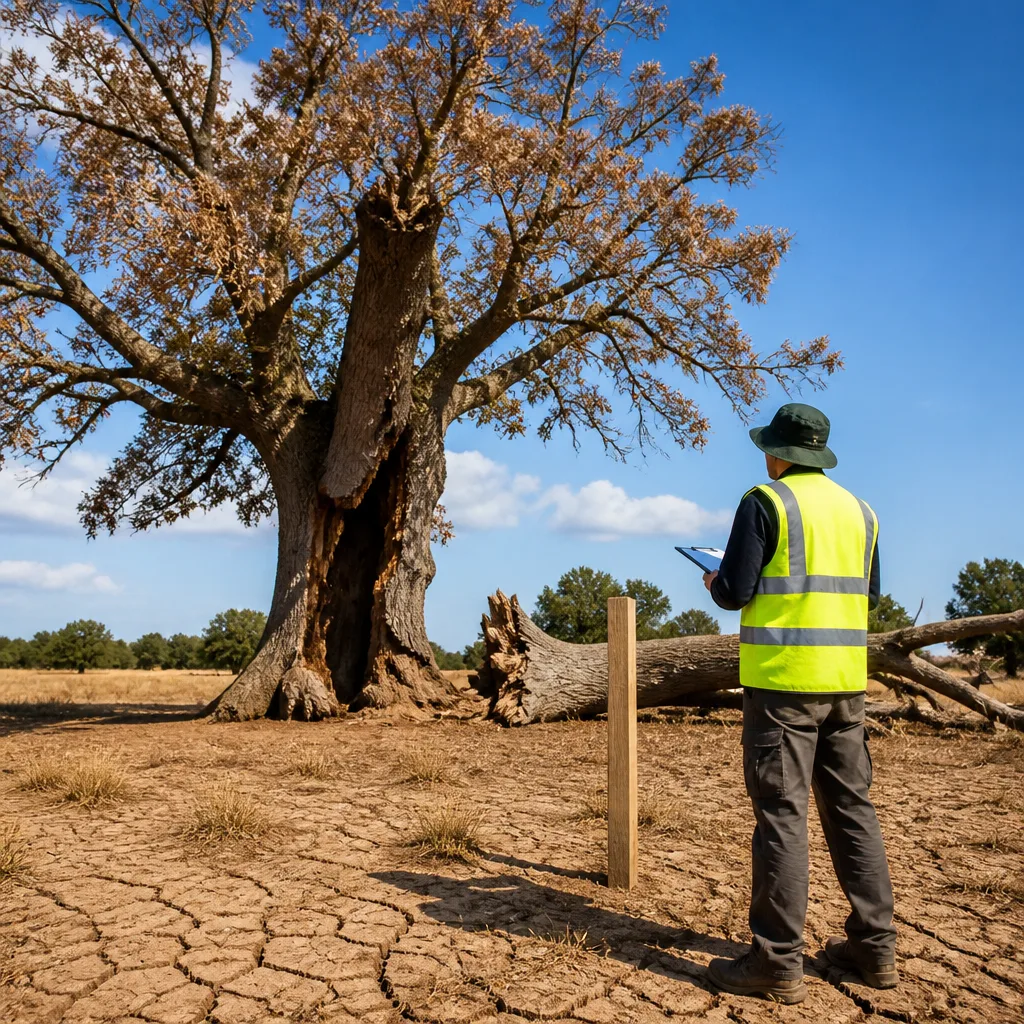
England’s ancient oak population is suffering significant damage this summer as prolonged hot and dry weather has led to widespread stress, premature leaf loss and, in some cases, tree death, according to the Woodland Trust. Conservation advisers say the pattern is consistent with what foresters describe as an "early autumn" response triggered by heat and lack of moisture.
What is happening and why it matters
Warm, dry conditions this summer have forced many mature oaks to close down water transport and shed leaves earlier than usual. That conserves moisture in the short term but leaves trees weakened, more vulnerable to pests, disease and secondary decline. Those effects are particularly acute in ancient and veteran trees, which, though long-lived and historically resilient, have reduced physiological vigour as they age.
“The signs of heat stress and dry weather is visible.” — John Parker, chief executive of the Arboricultural Association
Ed Pyne, a senior conservation adviser at the Woodland Trust, described the process in practical terms, comparing a tree’s internal water movement to a pipe that, when starved of water, cannot supply leaves and branches. This interruption produces wilting and premature leaf loss — what staff are increasingly describing as an early onset of autumnal behaviour among summer foliage.
Losses and the scale of the problem
The most symbolic example this year was the death in June of the Major Oak, a veteran tree that has stood for centuries and been a national landmark. Regional reports show losses are not isolated: Sherwood Forest alone lost eight ancient oaks in 2024 and 2025, and conservationists have identified additional named veterans now in critical condition, including the Crow Leasow oak in Shropshire.
To place the issue in context, recorded counts show a finite population of very large oaks across England and the UK:
| Category | Count (reported) |
|---|---|
| Oaks > 6 metres circumference in England | 3,300 |
| Oaks > 9 metres circumference in England | 114 |
| Oaks > 9 metres elsewhere in Europe, including Scotland and Wales | 98 |
Practical implications and likely short-term outlook
Decline among veteran oaks has immediate conservation and cultural consequences. These trees support specialised wildlife, are living records of landscape history and are often focal features of woodlands and parks. When veteran trees fail, associated species that depend on their cavities, deadwood and veteran-woodland microhabitats can decline too.
In the short term, expect continuing reports of wilting, early leaf drop and isolated dieback where dry soils and successive hot periods reduce resilience. While individual responses vary — and some trees will recover if autumn and winter bring replenishing rain — the pattern this summer reinforces concerns about increasing climate stress on long-lived trees.
What landowners and managers should consider now
- Prioritise monitoring of veteran and notable trees for canopy decline, bleeding, fungal fruiting bodies and pest activity.
- Where feasible and appropriate, reduce additional stresses such as root compaction and soil disturbance around veteran trees.
- Record and report significant deterioration or loss to local conservation bodies and tree registers so management and research can be informed.
The Woodland Trust and arboriculture bodies continue to assess the extent of damage and to identify particularly at-risk specimens. While some recovery is possible if wetter conditions return, the recent pattern of heat and drought underlines the increasing pressure on iconic trees that form part of England’s natural and cultural heritage.
Conservation advisers stress that vigilance and targeted management now will be important to protect remaining veteran trees and the complex ecosystems they support.









